

If there is one industry where "close enough" simply isn't acceptable, it's pharmaceutical and biotechnology manufacturing.
Whether producing life-saving medications, vaccines, diagnostic products, biologics, or nutritional ingredients, every process is built around precision. Temperatures are monitored continuously, production environments are carefully controlled, and every piece of equipment is expected to perform consistently day after day.
Behind many of these highly controlled manufacturing processes are heat exchangers that quietly manage product temperatures, protect sensitive ingredients, and help maintain stable operating conditions.
While shell & tube and plate heat exchangers are common throughout pharmaceutical facilities, tube-in-tube heat exchangers continue to serve an important role in many applications where reliable heat transfer, durable construction, and straightforward operation are priorities.
Let's explore how tube-in-tube heat exchangers contribute to pharmaceutical and biotechnology manufacturing—and why they continue to be a dependable choice for many critical processes.
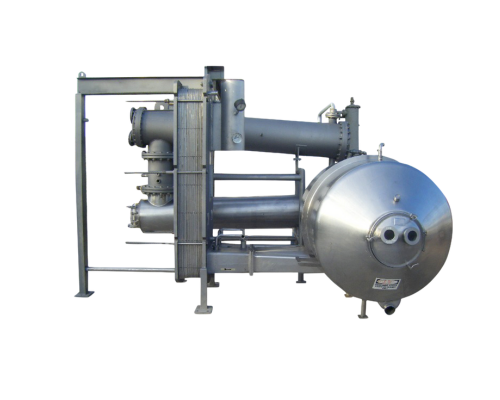
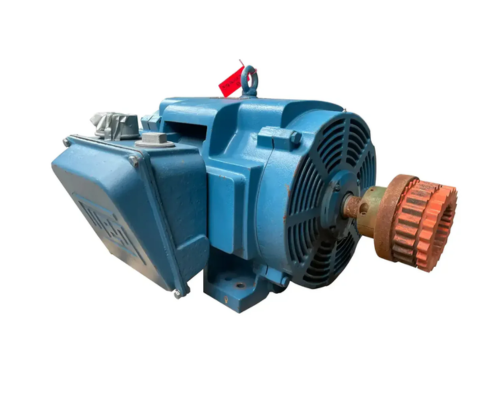
Image from Genemco
Link to Tube-in-Tube Heat Exchangers
In Pharmaceutical Manufacturing, Temperature Is More Than a Process Variable
In many industries, temperature affects efficiency.
In pharmaceutical and biotechnology production, temperature often affects product quality, process consistency, regulatory compliance, and ultimately patient safety.
Whether preparing purified water, conditioning ingredients, cooling process solutions, or supporting cleaning systems, maintaining controlled temperatures helps manufacturers produce consistent, repeatable results.
That level of consistency doesn't happen by accident. It depends on equipment designed to perform reliably every production cycle.
How Tube-in-Tube Heat Exchangers Work
Tube-in-tube heat exchangers use two concentric tubes to transfer heat between separate fluids without allowing them to mix.
A process fluid typically flows through the inner tube while a heating or cooling medium flows through the outer tube. Heat passes through the wall of the inner tube, allowing temperatures to be adjusted while maintaining complete separation between the two streams.
Their relatively simple mechanical design, dependable performance, and ability to integrate into a variety of process systems make tube-in-tube heat exchangers a practical solution for many pharmaceutical and biotechnology applications.
Process Water Systems
Water is one of the most important utilities in pharmaceutical manufacturing.
Whether facilities are producing Purified Water (PW), Water for Injection (WFI), or other process water used throughout production, maintaining proper temperatures is essential to system performance and product quality.
Tube-in-tube heat exchangers may be incorporated into process water systems to help:
- Heat water during specific processing stages
- Cool water before storage or distribution
- Maintain stable operating temperatures
- Support continuous circulation systems
- Improve overall process efficiency
Reliable temperature control helps support consistent operation throughout the manufacturing process.
Clean-in-Place (CIP) Systems
Keeping equipment clean is every bit as important as producing the product itself.
Pharmaceutical manufacturers routinely use Clean-in-Place (CIP) systems to clean tanks, piping, heat exchangers, and production equipment without requiring complete system disassembly.
Tube-in-tube heat exchangers can help regulate cleaning solution temperatures, ensuring detergents and rinse solutions are delivered within the desired operating range.
Consistent cleaning temperatures contribute to repeatable cleaning cycles while supporting efficient plant operations.
Ingredient Temperature Control
Many pharmaceutical ingredients are sensitive to heat.
Active pharmaceutical ingredients (APIs), biologics, nutritional compounds, and specialty chemicals may require carefully controlled heating or cooling before blending, mixing, or additional processing.
Tube-in-tube heat exchangers help manufacturers condition ingredients to the appropriate temperatures while maintaining product separation and supporting consistent processing conditions.
By minimizing unnecessary thermal fluctuations, manufacturers can better protect sensitive materials throughout production.
Sterile Processing Support
Sterile manufacturing environments demand consistency at every stage.
Whether supporting pharmaceutical production, biotechnology manufacturing, or medical product processing, maintaining stable process temperatures contributes to reliable operations throughout sterile manufacturing systems.
Tube-in-tube heat exchangers may be used in supporting utility systems or process loops that require dependable heat transfer while maintaining separation between fluids.
Their durable construction and straightforward operation make them well suited for applications where reliability is essential.
Chemical Solution Cooling
Numerous pharmaceutical processes involve specialty chemical solutions that generate heat during mixing, reaction, or transfer.
Tube-in-tube heat exchangers are often used to cool these process fluids before they move to downstream equipment or storage.
Maintaining proper solution temperatures helps support:
- Stable process conditions
- Product consistency
- Equipment protection
- Improved operational efficiency
- Repeatable manufacturing cycles
When every batch must meet strict quality standards, dependable temperature control becomes one more layer of process confidence.
Why Tube-in-Tube Heat Exchangers Continue to Be Trusted
Although pharmaceutical manufacturing continues to evolve with increasingly advanced technologies, proven equipment designs remain valuable.
Tube-in-tube heat exchangers continue to offer advantages such as:
- Reliable heat transfer
- Durable industrial construction
- Straightforward maintenance
- Long operating life
- Flexible installation options
- Consistent thermal performance
- Compatibility with a variety of utility and process applications
- Dependable operation in continuous manufacturing environments
Sometimes reliability is the most valuable feature a piece of equipment can offer.
Why Pharmaceutical Manufacturers Choose Genemco
Every manufacturing facility eventually faces the same question:
"What happens if a critical piece of equipment fails before the replacement arrives?"
In pharmaceutical manufacturing, delays aren't just inconvenient—they can interrupt production schedules, delay customer deliveries, affect inventory planning, and increase operating costs.
That's why companies throughout the processing industries continue to rely on Genemco.
For decades, we've supplied quality used industrial refrigeration and processing equipment that helps facilities return to operation faster than waiting for newly manufactured equipment alone.
Our extensive inventory often includes heat exchangers and other processing equipment available for prompt shipment, helping manufacturers reduce downtime while maintaining production continuity.
When you work with Genemco, you benefit from:
- One of the industry's largest inventories of quality used processing equipment
- Equipment available for immediate shipment in many cases
- Experienced equipment specialists
- Inspection and testing services on many applicable units
- Global shipping capabilities
- More than three decades of industry experience
Whether you're replacing existing equipment, expanding production, or responding to an unexpected equipment failure, we're committed to helping you find practical solutions that fit your schedule.
Image from Genemco
Link to Tube-in-Tube Heat Exchangers
Helping OEMs Deliver More Than Equipment
At Genemco, we've always believed that partnerships create better outcomes than competition.
OEMs invest tremendous time designing and manufacturing equipment that advances pharmaceutical and biotechnology production. We respect that work, and we don't want to replace the sale you've already earned.
Instead, we want to help you protect it.
Picture this: you've worked closely with a pharmaceutical manufacturer, designed the right system, and secured the order. The only challenge is that manufacturing lead times mean the equipment won't arrive for several months.
Then, unexpectedly, the customer's existing heat exchanger fails.
Rather than leaving them with only one option—waiting—you can offer another path.
Genemco can often provide quality used equipment that keeps their operation running while they wait for the permanent solution you've already sold.
Think of it like scaffolding during the construction of a new building. The scaffolding isn't the finished structure, but without it, progress slows dramatically. Our equipment serves that temporary purpose, supporting production until the permanent installation is complete.
When your equipment is finally commissioned, your customer remembers that you solved a difficult problem instead of simply explaining why they had to wait.
That's a win for your customer, a win for your relationship, and a win for the project as a whole.
Final Thoughts
Pharmaceutical and biotechnology manufacturers operate in some of the world's most demanding production environments, where precision, consistency, and reliability are essential at every stage.
Tube-in-tube heat exchangers continue to support these operations through applications such as process water systems, Clean-in-Place (CIP) systems, ingredient temperature control, sterile processing support, and chemical solution cooling. Their dependable design and reliable thermal performance make them a practical choice for facilities that value long-term performance and operational stability.
Whether you're upgrading an existing process, replacing aging equipment, expanding manufacturing capacity, or simply looking for an interim solution while new equipment is being built, Genemco is ready to help.
Because when precision manufacturing depends on reliable equipment, having a trusted partner can be just as important as having the right technology.


