

The oil and gas industry operates in environments where equipment is pushed hard every single day.
Extreme temperatures. High pressures. Continuous operation. Remote locations. Tight production schedules. In many facilities, systems run around the clock with little margin for unexpected downtime.
That’s why reliability isn’t just important in oil and gas operations — it’s essential.
And when it comes to dependable thermal equipment, shell & tube heat exchangers continue to be one of the industry’s most trusted solutions.
For decades, shell & tube exchangers have been used throughout refineries, gas processing plants, compressor stations, petrochemical facilities, and energy operations because they’re designed to handle demanding industrial conditions where durability matters just as much as performance.
What Is a Shell & Tube Heat Exchanger?
A shell & tube heat exchanger transfers heat between two separate fluids without allowing them to mix together.
The design consists of:
- A bundle of internal tubes
- An outer cylindrical shell
- One fluid flowing through the tubes
- Another fluid circulating around the outside of the tubes
As the fluids move through the exchanger, heat is transferred efficiently between them.
The simplicity of the design is part of what makes shell & tube exchangers so effective in heavy industrial environments. They are engineered to handle:
- High operating pressures
- Large temperature swings
- Continuous-duty workloads
- Corrosive and industrial fluids
- Demanding process applications
In industries like oil and gas, equipment built for toughness tends to stay relevant for a very long time.
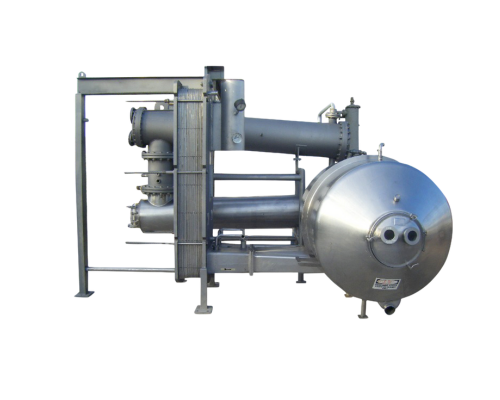
Image from Genemco
Link to Plate Heat Exchangers
Why Shell & Tube Heat Exchangers Are So Widely Used in Oil & Gas
Oil and gas operations depend heavily on controlling heat throughout production and processing.
Without effective heat transfer systems, facilities would struggle to:
- Maintain process efficiency
- Protect compressors and rotating equipment
- Stabilize temperatures
- Recover usable energy
- Cool process fluids
- Condense vapors
- Support refrigeration and gas treatment systems
Shell & tube exchangers are frequently chosen because they can perform reliably under these challenging industrial demands.
Common Oil & Gas Applications
Refining Operations
Refineries use shell & tube heat exchangers throughout multiple stages of production.
Applications commonly include:
- Crude oil heating and cooling
- Condensing operations
- Process temperature regulation
- Heat recovery systems
- Lubrication oil cooling
Because refinery systems often operate continuously, equipment reliability is critical.
Natural Gas Processing
Gas processing facilities frequently use shell & tube exchangers for:
- Gas cooling
- Condensation processes
- Compressor aftercoolers
- Glycol systems
- Refrigeration support
These systems help maintain efficient gas treatment and transportation operations.
Compressor Cooling
Compressors generate significant heat during operation.
Shell & tube exchangers are commonly used as:
- Oil coolers
- Intercoolers
- Aftercoolers
Proper cooling helps protect rotating equipment while improving operational efficiency and equipment longevity.
Petrochemical Processing
Petrochemical facilities utilize shell & tube heat exchangers in applications involving:
- Chemical temperature control
- Solvent recovery
- Utility systems
- Process cooling
- Heat recovery operations
Their ability to withstand industrial operating conditions makes them a practical fit for these demanding environments.
Why Shell & Tube Designs Continue to Be Preferred
In the oil and gas world, simplicity and durability often outweigh trends.
Shell & tube exchangers remain widely trusted because they:
- Handle high pressures effectively
- Perform well in continuous-duty environments
- Offer easier maintenance access in many applications
- Tolerate fouling better than some compact exchanger designs
- Have a long history of proven industrial performance
- Can be configured for a wide variety of operating conditions
For maintenance managers and plant operators, equipment that consistently performs without unnecessary complexity is often the equipment they prefer to keep running.
When Downtime Becomes Extremely Expensive
In oil and gas operations, downtime rarely affects just one piece of equipment.
A failed heat exchanger can impact:
- Production output
- Compressor performance
- Processing efficiency
- Product movement
- Utility systems
- Entire process lines
And unfortunately, replacing industrial heat exchangers isn’t always quick.
Depending on specifications and manufacturing schedules, new equipment lead times can stretch for months — especially for large industrial systems.
But production targets don’t pause simply because equipment is delayed.
That’s where Genemco helps many facilities, contractors, and OEMs find practical interim solutions.
Helping OEMs Deliver Solutions to Their Customers
Genemco understands something important about the industrial equipment industry:
relationships matter.
If you’re an OEM, engineering firm, or contractor working on a new equipment sale, Genemco is not looking to replace you or take the long-term project away.
Instead, Genemco often helps support those customer relationships when timing becomes a challenge.
For example:
- An OEM sells a new shell & tube heat exchanger package
- The customer urgently needs a solution
- The new equipment lead time is several months away
Rather than leaving the customer stuck waiting, Genemco may be able to provide available used or surplus equipment to help bridge the gap temporarily.
Think of it like:
- A short-term operational backup
- A temporary bridge solution
- A bandaid
- Or sometimes even a tourniquet to keep production alive until permanent equipment arrives
From the customer’s perspective, the OEM becomes the hero because they found a way to help maintain operations instead of simply delivering a long lead-time notice.
That type of problem-solving approach builds long-term trust.
Why Oil & Gas Professionals Choose Genemco
Genemco’s industrial equipment inventory includes a wide range of industrial refrigeration, process, and heat transfer equipment suitable for demanding industrial applications.
Companies often work with Genemco because of:
- Large available equipment inventory
- Faster equipment availability
- Cost savings opportunities
- Experience with industrial process systems
- Support during emergency replacement situations
- Equipment sourcing capabilities
- Knowledge of heavy industrial applications
When facilities are trying to minimize downtime and maintain production continuity, access to available equipment quickly can make a significant operational difference.
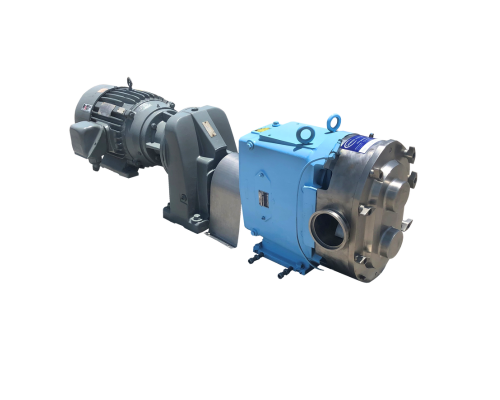
Image from Genemco
Link to Plate Heat Exchangers
Final Thoughts
The oil and gas industry depends on equipment capable of handling demanding conditions while operating reliably day after day.
That’s one reason shell & tube heat exchangers continue to play such an important role throughout refineries, gas processing plants, petrochemical facilities, and compressor systems worldwide.
Their rugged design, operational flexibility, and long-term durability make them a trusted solution for industrial heat transfer applications where performance and reliability matter most.
And when unexpected equipment failures or long manufacturing lead times threaten operations, companies like Genemco help facilities, OEMs, and contractors keep systems operational while permanent solutions are still on the way.


