

In the world of liquid food and ingredient processing, heat treatment is one of the most important steps in protecting both product quality and consumer safety. Whether you’re producing liquid eggs, sauces and dressings, dairy products, liquid sweeteners, or beverage bases, pasteurization systems are essential pieces of equipment that keep operations running safely and efficiently.
Two of the most widely used thermal processing methods are HTST (High Temperature Short Time) and UHT (Ultra-High Temperature) pasteurization. While both systems serve the same fundamental purpose—destroying harmful microorganisms and extending shelf life—the way they accomplish it, and the results they produce, are quite different.
Let’s take a closer look at how each system works, where they’re used, and the advantages they bring to food manufacturers.
Understanding HTST Pasteurization Systems
HTST pasteurization is one of the most common thermal processing methods used in the food and beverage industry. As the name suggests, it relies on heating a product to a high temperature for a short period of time, typically around 161°F (72°C) for 15 seconds, though exact parameters vary depending on the product.
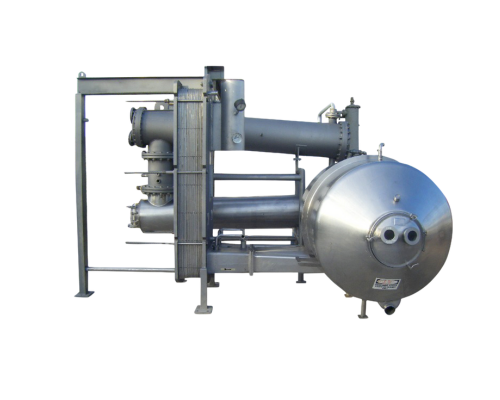
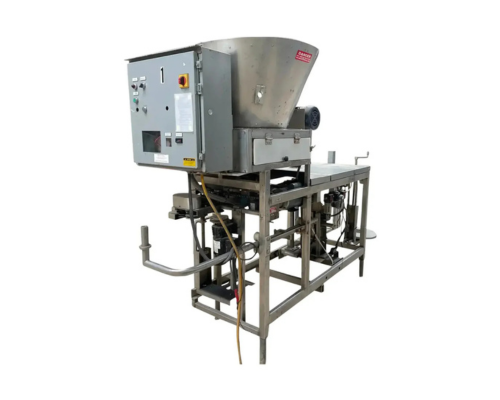
HTST systems are often built around plate heat exchangers or tubular heat exchangers, allowing precise temperature control and efficient heat recovery. Product flows continuously through the system where it is heated, held for the required time, and then rapidly cooled.
Image from Genemco
Link to HTST Pasteurization Systems

Where HTST Is Commonly Used
HTST systems are widely used across many liquid food sectors, including:
-
Dairy processing
-
Liquid egg products
-
Sauces and dressings
-
Liquid sweeteners and syrups
-
Beverage bases and concentrates
Advantages of HTST Systems
One of the main advantages of HTST processing is that it provides excellent microbial reduction while preserving product quality. Because the heating time is relatively short, flavors, textures, and nutritional components are better maintained compared to more aggressive processes.
Other benefits include:
-
High energy efficiency due to regenerative heat exchange
-
Continuous processing that integrates well into high-throughput production lines
-
Relatively lower equipment and operating costs compared to UHT systems
-
Flexibility for many liquid food applications
Potential Limitations
The trade-off with HTST is shelf life. Products processed through HTST typically still require refrigeration and have shorter shelf lives compared to UHT-treated products. For manufacturers targeting refrigerated distribution channels, this is usually not an issue—but for global or shelf-stable distribution, other options may be more suitable.
Understanding UHT Pasteurization Systems
UHT pasteurization takes thermal treatment one step further. In this process, products are heated to ultra-high temperatures—typically between 275°F and 320°F (135–160°C) for only a few seconds.
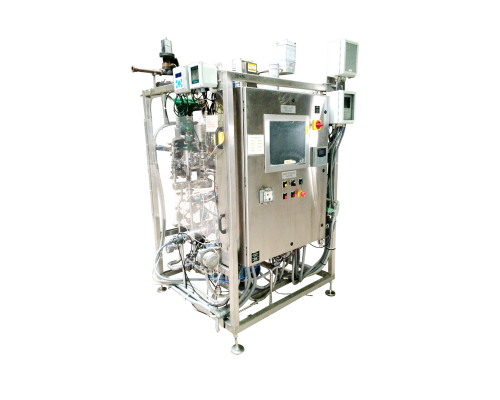
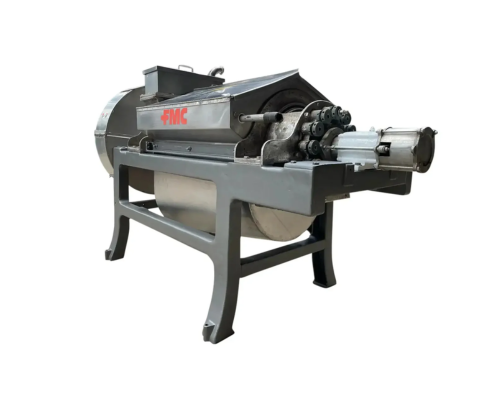
Immediately after heating, the product is rapidly cooled and packaged under aseptic conditions. When done correctly, this process produces commercially sterile products that can remain shelf-stable for months without refrigeration.
Image from Genemco
Link to UHT Sterilization Systems
Where UHT Is Used
UHT processing is widely used in products designed for long shelf life, such as:
-
Shelf-stable milk and dairy beverages
-
Creamers
-
Nutritional beverages
-
Shelf-stable soups and sauces
-
Certain juice and beverage products
Advantages of UHT Systems
The biggest benefit of UHT processing is extended shelf life without refrigeration, which opens the door to broader distribution and reduced cold-chain logistics.
Additional benefits include:
-
Long shelf life (often 6–12 months)
-
Shelf-stable distribution and storage
-
Reduced refrigeration costs
-
Ideal for export and large-scale distribution
Potential Limitations
The higher temperatures used in UHT systems can slightly affect product characteristics. Depending on the product formulation, manufacturers may see:
-
Subtle changes in flavor or color
-
Higher capital cost for equipment
-
More complex aseptic packaging requirements
For many processors, however, these trade-offs are well worth the extended shelf life and distribution flexibility.
Choosing the Right System for Your Operation
The decision between HTST and UHT processing often comes down to product type, target shelf life, distribution model, and capital investment strategy.
If your product is destined for refrigerated distribution with a focus on maintaining fresh flavor and texture, HTST systems are often the ideal solution.
If your goal is long shelf life and shelf-stable distribution, then UHT processing becomes the preferred option.
In many facilities, both technologies may exist side-by-side depending on the product lines being produced.
When Lead Times Get in the Way
In an ideal world, every processor would be able to plan equipment purchases well in advance. But in reality, things break. Capacity needs change. And sometimes lead times on new equipment stretch longer than anyone expected.
That’s where a practical solution can make all the difference.
At Genemco, we specialize in helping processors keep their operations moving by providing quality used and surplus food processing equipment, including pasteurization systems and supporting components. Many of these systems are available far faster than ordering new equipment from scratch.
Sometimes that means helping a plant bridge the gap while waiting for a new system to arrive. Other times it means providing a cost-effective long-term solution that allows operations to expand without the full capital expense of new equipment.
You could think of it as a temporary fix—a bandage or even a tourniquet—to keep the operation running until the permanent solution is in place.
Supporting OEM Partners, Not Competing With Them
It’s also important to say something that matters to many equipment manufacturers.
If you’re an OEM working on a new equipment sale, the last thing we want to do is interfere with that relationship. In fact, our goal is the opposite.
At Genemco, we often work alongside OEMs to support their customers when timing becomes a challenge. If your customer needs a solution while waiting on long lead times, we can help provide equipment that keeps production moving until the new system is installed.
When the new equipment finally arrives, you’re the hero—and the customer’s operation never had to stop.
Keeping Food Processing Operations Moving
The food processing industry runs on reliability. Equipment failures, supply delays, or capacity gaps can quickly ripple through production schedules and supply chains.
Whether you’re implementing HTST systems for refrigerated products or UHT processing for shelf-stable goods, having the right equipment—and the right partners—can make all the difference.
At Genemco, we work with processors, engineers, and OEMs across the industry to help solve these real-world challenges. Because sometimes what a facility needs most isn’t just equipment—it’s a practical way to keep the plant running.


