

Walk through almost any food processing facility and you'll notice a common theme—everything revolves around consistency. Whether it's a barbecue sauce that has to taste exactly like the last batch, chocolate that must cool at the right rate, or liquid egg products that require careful temperature control, consistency is what keeps customers coming back.
Behind the scenes, temperature management is one of the biggest contributors to that consistency. Heat too quickly, cool too slowly, or allow product temperatures to fluctuate, and quality can suffer. That's why heat exchangers play such an important role throughout the food processing industry.
While plate heat exchangers often dominate conversations about sanitary processing, tube-in-tube heat exchangers continue to earn their place in countless production facilities. Their straightforward design, ability to handle more challenging products, and dependable performance make them an excellent solution for many food processing applications.
Let's look at where tube-in-tube heat exchangers fit into modern food production and why processors continue to rely on them.
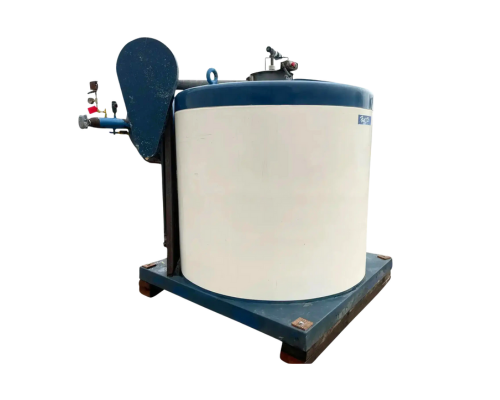
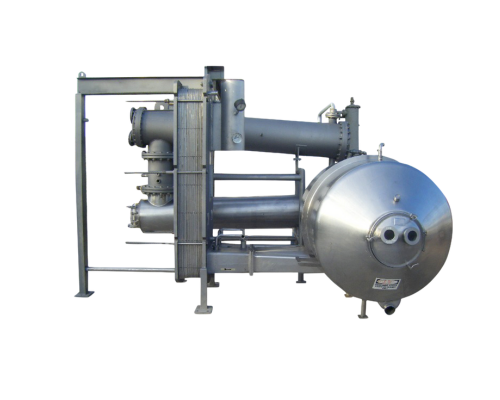
Image from Genemco
Link to Tube-in-Tube Heat Exchangers
Why Temperature Control Matters More Than Ever
Today's food manufacturers face increasing pressure from every direction.
Customers expect consistent products. Production schedules leave little room for downtime. Energy costs continue to rise. Food safety requirements grow more stringent every year.
In many processes, maintaining the right temperature isn't simply about heating or cooling a product—it's about protecting texture, preserving flavor, maintaining viscosity, extending shelf life, and ensuring every batch meets quality specifications.
Tube-in-tube heat exchangers quietly help accomplish all of those goals without adding unnecessary complexity to the process.
How Tube-in-Tube Heat Exchangers Work in Food Processing
A tube-in-tube heat exchanger transfers heat between two separate fluids that flow through concentric tubes. One product travels through the inner tube while a heating or cooling medium circulates through the outer tube.
Because the fluids remain completely separated, processors can safely heat or cool products while maintaining product integrity and sanitary process conditions.
Their relatively open flow paths also make tube-in-tube heat exchangers well suited for products that are thicker than water or contain small particulates—products that may not always be ideal candidates for other exchanger designs.
Processing Sauces Without Sacrificing Quality
Sauces are rarely simple.
Barbecue sauce, salsa, pasta sauce, gravies, cheese sauces, and marinades often contain spices, herbs, vegetable pieces, or varying viscosities that require careful temperature control throughout production.
Tube-in-tube heat exchangers are commonly used to:
- Heat ingredients before blending
- Cool finished sauces prior to packaging
- Maintain controlled temperatures during transfer
- Support pasteurization processes in certain applications
- Help preserve texture and flavor
By minimizing excessive product handling and providing consistent heat transfer, manufacturers can produce sauces that look and taste the way customers expect.
Managing Syrups and Liquid Sugars
Anyone who has worked with syrups or liquid sugars knows they can be challenging.
As temperatures change, viscosity changes. Products become easier—or much more difficult—to pump. Crystal formation can become a concern, and maintaining consistent flow becomes increasingly important.
Tube-in-tube heat exchangers help processors:
- Maintain pumping temperatures
- Preheat ingredients before mixing
- Cool finished syrup products
- Reduce production bottlenecks
- Improve process consistency
Whether producing pancake syrup, corn syrup, invert sugar, or confectionery ingredients, proper temperature control helps keep production running smoothly.
Supporting Dairy Ingredient Processing
The dairy industry depends heavily on precise temperature control.
From cream and condensed milk to whey concentrates and cultured dairy ingredients, processing temperatures influence product quality at nearly every stage.
Tube-in-tube heat exchangers can be used to:
- Warm dairy ingredients before blending
- Cool products before packaging
- Support ingredient preparation
- Maintain consistent process temperatures
- Improve overall production efficiency
Because many dairy ingredients are thicker than water, tube-in-tube designs often provide a practical solution where durability and dependable flow are priorities.
Beverage Concentrates and Flavor Consistency
Beverage manufacturers know that flavor consistency starts long before a drink reaches the bottle.
Concentrates used for juices, teas, coffees, sports drinks, and flavored beverages often require careful heating and cooling throughout production.
Tube-in-tube heat exchangers help maintain process temperatures while supporting efficient transfer of concentrated products that may be more viscous than finished beverages.
The result is better process control and more consistent product quality from batch to batch.
Processing Liquid Egg Products
Liquid egg processing requires careful handling from start to finish.
Processors often use tube-in-tube heat exchangers to help regulate temperatures during various production stages, supporting product quality while helping maintain food safety standards and consistent processing conditions.
Reliable temperature control helps preserve functionality, appearance, and product consistency before packaging.
Oils and Fats: Easier Flow, Better Processing
Many edible oils and fats become significantly easier to process within specific temperature ranges.
Tube-in-tube heat exchangers are frequently used to condition products such as:
- Vegetable oils
- Soybean oil
- Canola oil
- Palm oil
- Specialty cooking oils
- Animal fats
Maintaining proper temperatures helps improve pumping efficiency, blending operations, and downstream processing.
Flavorings and Specialty Ingredients
Many food manufacturers process high-value flavorings and specialty ingredients in relatively small production runs.
These ingredients often require gentle temperature changes to preserve delicate flavor compounds while maintaining production efficiency.
Tube-in-tube heat exchangers provide dependable temperature control without unnecessarily overcomplicating the process.
Chocolate Processing
Chocolate processing demands precision.
Whether producing liquid chocolate for molding, coatings, fillings, or inclusions, maintaining proper temperatures is essential for product quality and downstream processing.
Tube-in-tube heat exchangers may be used to help:
- Warm chocolate before processing
- Maintain flow during transfer
- Cool products between processing stages
- Prepare ingredients before tempering operations
- Support consistent production conditions
While scraped surface heat exchangers (often called Votators®) are commonly used for extremely viscous chocolate applications or where product fouling is a concern, tube-in-tube heat exchangers continue to serve many chocolate processes involving lower-viscosity formulations or ingredient conditioning.
Fruit Purees and Natural Ingredients
Fruit purees continue to grow in popularity as manufacturers produce smoothies, baby foods, sauces, fillings, frozen desserts, and fruit-based beverages.
Because these products often contain pulp or suspended solids, processors appreciate equipment that allows for gentle handling while maintaining consistent temperatures throughout production.
Tube-in-tube heat exchangers can help processors prepare fruit-based products while preserving their desired texture and quality characteristics.
Why Food Processors Continue to Choose Tube-in-Tube Designs
Food processing environments demand equipment that performs reliably day after day.
Tube-in-tube heat exchangers remain popular because they offer several practical advantages:
- Durable construction for demanding industrial environments
- Straightforward operation and maintenance
- Suitable for a wide variety of food products
- Ability to handle moderately viscous materials
- Effective heating and cooling performance
- Long service life
- Reliable operation in continuous processing environments
- Flexible installation into existing production systems
For many facilities, dependable equipment is every bit as valuable as cutting-edge technology.
When Production Can't Wait, Genemco Is Ready to Help
Anyone involved in plant operations knows that equipment failures never happen at a convenient time.
A heat exchanger doesn't usually announce it's about to fail. One day it's running normally. The next, production is slowed—or stopped altogether—and everyone from maintenance to operations is working the problem.
That's where having options becomes invaluable.
At Genemco, we've spent decades helping food processors find quality used industrial refrigeration and food processing equipment that can get operations back online faster than waiting for new equipment to be manufactured.
Many of our heat exchangers and other processing equipment are already in stock and ready for shipment, helping facilities reduce downtime and keep production schedules on track.
Whether you're replacing a failed unit, expanding capacity, or planning for future growth, our experienced team can help identify equipment that fits your process and timeline.
Image from Genemco
Link to Tube-in-Tube Heat Exchangers
A Resource for OEMs—Not a Competitor
One of the misconceptions about the used equipment industry is that it's always competing with equipment manufacturers.
At Genemco, we see it differently.
We value the relationships we've built with OEMs throughout the food processing and industrial refrigeration industries because we're ultimately working toward the same goal: helping processors succeed.
If you've sold a new heat exchanger but manufacturing lead times stretch several months—or even longer—your customer may not have the luxury of waiting. Production commitments, labor schedules, and customer orders don't pause simply because equipment is delayed.
That's where Genemco can step in.
Think of us as temporary support for your customer. Much like a bandage protects a wound while it heals—or a tourniquet helps stabilize a critical situation—we can often provide quality used equipment that keeps a facility operating until the new equipment arrives.
When installation day finally comes, your customer receives the new equipment they purchased from you, and you've helped them avoid months of unnecessary downtime along the way.
In our view, that's not taking a sale away from an OEM. It's helping make you the hero by giving your customer another option when timing matters most.
The Bottom Line
In food processing, success is measured one batch at a time. Reliable equipment, consistent temperatures, and uninterrupted production all contribute to delivering the products consumers expect.
Tube-in-tube heat exchangers continue to serve an important role because they provide dependable performance across a broad range of applications—from sauces and syrups to dairy ingredients, chocolate, fruit purees, beverage concentrates, oils, and liquid egg products.
And when production timelines don't align with equipment lead times, having a trusted partner with quality used equipment available can make all the difference.
At Genemco, we're proud to help processors stay productive, support OEM partners when customers need an interim solution, and provide dependable equipment that helps keep food moving from the production floor to consumers' tables.


