

When you pour a glass of milk, add cream to your coffee, or reach for your favorite dairy-based beverage, there's a lot more happening behind the scenes than most people realize.
Before dairy products reach the grocery store, they pass through carefully controlled processing steps designed to achieve the right flavor, consistency, and safety. Every piece of equipment in that process has a job to do—and sometimes, a specialized piece of machinery can make a meaningful difference in the finished product.
One example is the industrial flavorizer.
Although the name might sound like equipment used to add flavor to a product, dairy flavorizers often serve a different purpose. In certain milk processing systems, they help remove unwanted odors and volatile compounds that can affect the taste of the finished product.
For dairy processors, understanding how this equipment works—and having options when it's time to replace or upgrade it—can be an important part of keeping production on track.
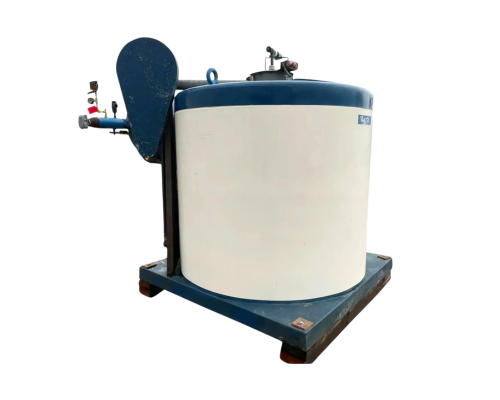
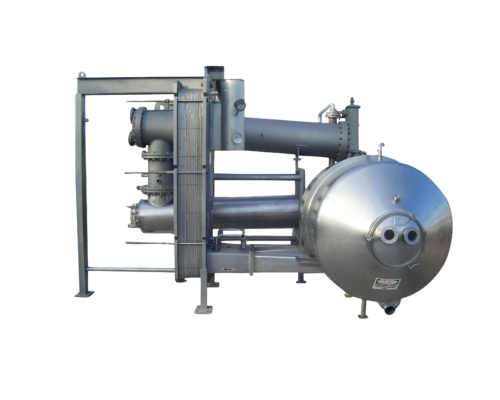
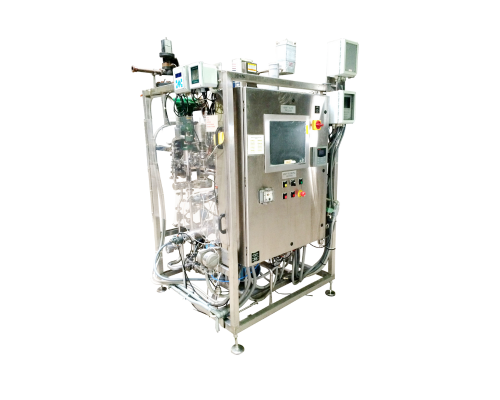
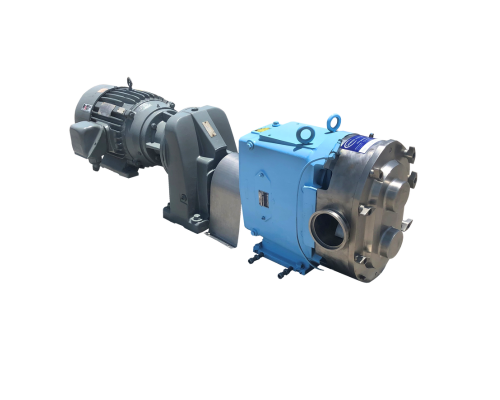
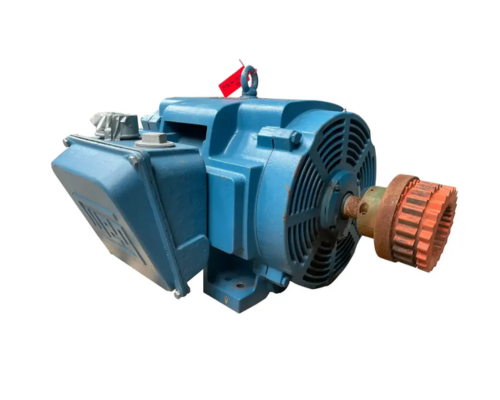
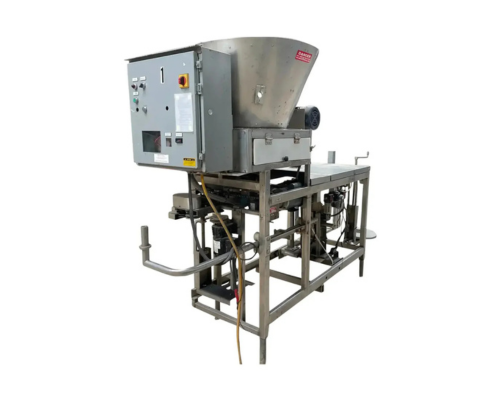
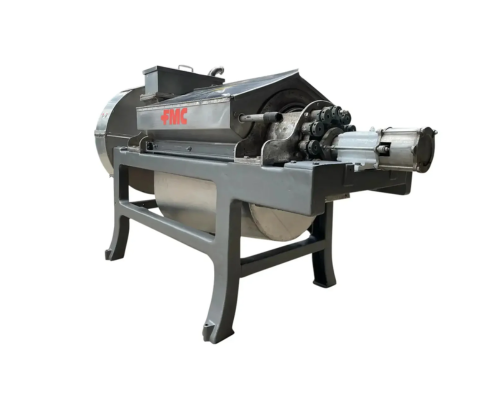
Image from Genemco
Link to Flavorizers, Vacuumizers, Deaerators & Food Additive Skids
What Is an Industrial Flavorizer?
An industrial flavorizer is a specialized piece of processing equipment used in certain dairy pasteurization systems to help manage the flavor and aroma of milk.
In a common application, steam is injected directly into the milk, rapidly heating it. The product then enters a vacuum chamber, where the pressure is reduced and some of the added moisture flashes off as vapor. This process can help remove unwanted volatile compounds responsible for off-flavors and odors.
Depending on the system design, direct steam injection and the associated vacuum treatment can also play a role in achieving the required processing temperature.
It's worth noting that the word flavorizer can be misleading. Rather than simply adding flavor, this equipment may help produce a cleaner, more desirable flavor profile by removing unwanted compounds.
The exact function depends on the manufacturer's design and the way the unit is integrated into the processing line. Not all flavorizers operate identically, and not every dairy plant uses one.
How Are Flavorizers Used in the Dairy Industry?
To understand where a flavorizer fits, it helps to look at the broader milk processing operation.
1. Helping Remove Unwanted Flavors and Odors
Milk can develop undesirable flavor characteristics from a variety of sources, including certain volatile compounds. When present, these compounds can affect the sensory quality of the finished product.
In appropriately designed systems, flavorizers use steam injection and vacuum treatment to help remove some of these unwanted compounds.
For dairy processors, that can be an important consideration when product flavor and consistency are central to customer expectations.
2. Supporting Certain Pasteurization Systems
Some high-temperature, short-time (HTST) pasteurization systems incorporate direct steam injection followed by vacuum treatment.
In these systems, steam rapidly heats the product, and the vacuum stage removes the condensed steam while allowing volatile compounds to be carried away. The system is engineered around specific temperature, pressure, flow, and holding-time requirements.
This is one reason the flavorizer cannot be viewed as an isolated piece of equipment. Its performance depends on how it works with the rest of the processing line.
3. Contributing to Consistent Product Quality
Dairy processors need to deliver a consistent product day after day. Consumers expect their milk to taste the way it should, and manufacturers need processes they can control and repeat.
When a flavorizer is part of the validated processing system, maintaining its performance and ensuring it is correctly integrated into the line can contribute to consistent product quality.
Of course, the flavorizer is only one part of the equation. Raw milk quality, storage conditions, temperature control, sanitation, and the performance of other processing equipment all matter.
4. Working Alongside Other Dairy Processing Equipment
Flavorizers don't work in isolation. Depending on the system, they may be integrated with heat exchangers, pumps, holding tubes, homogenizers, vacuum chambers, and other components.
Vacuum deaerators and vacuumizers can also be found in dairy processing, although they aren't interchangeable with flavorizers. Deaeration focuses on removing entrained or dissolved gases, while vacuum treatment can serve different purposes depending on the equipment design and process.
When replacing a unit, it's important to understand the original duty and the requirements of the complete line—not just the machine's name.
What Happens When a Flavorizer Needs to Be Replaced?
Here's a scenario that will sound familiar to many people in food processing.
A dairy plant is running production on a tight schedule when a critical piece of equipment begins to fail. The maintenance team starts troubleshooting. The engineering team evaluates the replacement options. Before long, everyone is looking at the same problem: the equipment is needed now, but a new unit may take weeks or months to arrive.
Meanwhile, production schedules don't pause just because a piece of machinery is unavailable.
Depending on the role of the equipment, the plant may need to adjust its production plan, reduce capacity, or temporarily take a processing line out of service. Even when a permanent replacement is already on order, the waiting period can create a difficult operational gap.
This is where exploring the used equipment market may be worthwhile.
A compatible pre-owned flavorizer or another appropriate processing unit may offer a way to address an immediate need while a permanent solution is being completed.
It isn't a shortcut around proper engineering, sanitation, or food safety requirements. It's another option to investigate when time is a critical factor.
Why Consider Genemco for Dairy Processing Equipment?
When a dairy processor needs specialized equipment, finding the right machine is only part of the challenge. Timing, compatibility, budget, and installation requirements all influence the decision.
Genemco specializes in used industrial food processing and refrigeration equipment, giving businesses another resource when searching for equipment for replacement projects, plant upgrades, or production challenges.
A Resource for Specialized Equipment
Flavorizers and related dairy processing equipment aren't necessarily items a facility can replace with an off-the-shelf alternative.
Genemco's used equipment inventory includes specialized machinery such as the Cherry Burrell Stainless Steel Flavorizer, providing dairy processors with a specific unit to investigate when evaluating their equipment needs.
The important next step is confirming whether the available machine's specifications, condition, and original application align with the requirements of your processing line.
Another Option When Lead Times Are Long
New equipment may be the best long-term choice, but the delivery timeline doesn't always match the urgency of the situation.
When a suitable used unit is available, it may provide an alternative worth considering while a new machine is being manufactured. Depending on the project, this could help a processor reduce disruption, maintain more of its planned production schedule, or avoid waiting without exploring other options.
Used equipment availability changes, and an existing unit may still require inspection, refurbishment, transportation, and installation. Even so, having another source to explore can be valuable when the timeline is tight.
Practical Choices for Different Project Needs
Not every equipment challenge calls for the same approach.
One facility may need a replacement for a failed component. Another may be expanding production. A third may be evaluating a larger system upgrade and looking for a way to manage the transition.
Genemco helps customers explore used equipment as one potential part of that decision. The goal is to identify options that make sense for the application, rather than assuming that either new or used equipment is always the right answer.
OEMs: Your New Equipment Sale Is Still Your Sale
For original equipment manufacturers, a long lead time can create an uncomfortable situation.
You've worked with your customer to understand their process, engineer the right solution, and move a new equipment purchase forward. The customer is counting on you—but they may also be facing an immediate production problem that can't wait for the new unit to arrive.
That doesn't mean the relationship or the sale needs to be at risk.
At Genemco, we want to help you protect the sale you've worked for and strengthen the relationship you've built.
Think of us as a resource you can turn to when your customer needs a temporary solution while your new equipment is on its way.
If an appropriate used flavorizer or compatible processing unit is available, it may help your customer get through the waiting period without abandoning the long-term project.
You remain the expert providing the new equipment. You remain the partner delivering the permanent solution. And you have another potential option to offer when your customer asks the inevitable question: What are we supposed to do until it gets here?
Sometimes, the answer is to help them find an interim unit.
We like to think of it as having an extra tool in your toolbox. In a less urgent situation, that tool might be a bandage that helps cover a temporary gap. When production is at risk, it might be more like a tourniquet—an option worth exploring to help keep the operation running until the permanent equipment arrives.
Of course, any temporary unit must be suitable for the application and meet the plant's engineering, hygienic, and regulatory requirements. But when the right fit exists, it can give everyone more flexibility.
We aren't trying to step into the middle of your customer relationship or replace the new equipment you're supplying. We want to help you find a way through the timing challenge.
Your customer needs a solution today. You're delivering the solution for the long run. Genemco may be able to help connect those two timelines.
Choosing the Right Equipment for Your Dairy Operation
Whether you're replacing an existing flavorizer, evaluating a vacuum processing system, or looking for a way to manage an equipment lead time, start with the details of your process.
Before selecting a unit, consider:
-
The manufacturer, model, and original equipment application
-
Required product throughput and operating conditions
-
Compatibility with the existing HTST or other processing system
-
Materials of construction and sanitary design requirements
-
Equipment condition, inspection needs, and available documentation
-
Installation requirements and the timeline for returning to production
For dairy applications, these details are especially important. Any replacement must be evaluated against applicable food safety requirements and the validated processing conditions of the system.
A machine that appears similar isn't necessarily a suitable substitute. Getting the application right matters just as much as finding the equipment.
Image from Genemco
Link to Flavorizers, Vacuumizers, Deaerators & Food Additive Skids
Keep Your Dairy Processing Plans Moving
Industrial flavorizers may not be the most visible equipment in a dairy plant, but in the right application, they play a meaningful role in processing and product quality.
When it's time to replace one, you deserve options. And when a new equipment lead time creates an immediate challenge, exploring the used equipment market may be a practical step toward keeping your operation on track.
Genemco is here to help dairy processors and OEMs explore those possibilities.
Looking for an industrial flavorizer or related dairy processing equipment? Visit Genemco to explore available equipment or contact our team to discuss your requirements.
And if you're an OEM with a customer waiting on a new system, remember: you don't have to solve the timing problem alone. Let's explore whether an interim equipment solution can help your customer keep moving while you deliver the right long-term answer.
Because in dairy processing, getting the right equipment matters—and so does getting through the wait.


