

In the frozen dessert world, co-packers and contract manufacturers are the quiet powerhouses behind a huge portion of what ends up in grocery store freezers. They’re the ones producing multiple brands under one roof—often switching formulations, packaging formats, and production requirements in the same day.
That kind of flexibility is impressive. It’s also demanding.
Because when you’re running shared production lines for multiple customers, there’s no such thing as “simple downtime.”
The Equipment That Makes Multi-Brand Production Possible
Co-packers operate in a very different environment than single-brand facilities. Their equipment has to be adaptable, fast, and built for constant changeovers without sacrificing consistency.
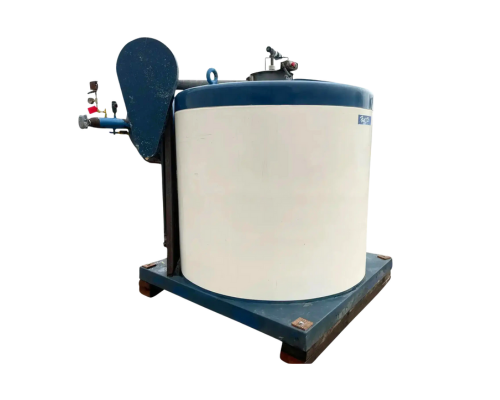
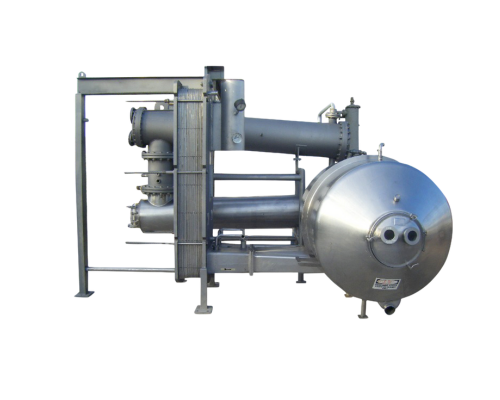
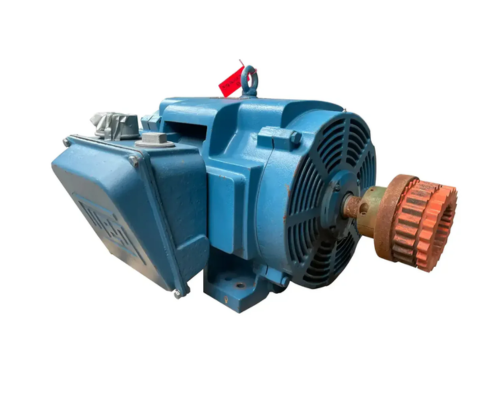
At the center of it all are industrial ice cream freezers. These systems define ice cream texture, overrun, and overall product quality—regardless of whose brand is running on the line that day. Consistency here is non-negotiable. A premium pint and a budget tub still need to meet their own exact specifications every single run.
Image from Genemco
Link to Ice Cream Equipment
Many facilities rely on rugged systems like Vogt freezers, known for handling continuous production environments where uptime and stability are critical. When you’re producing for multiple clients, equipment reliability directly impacts multiple revenue streams at once.
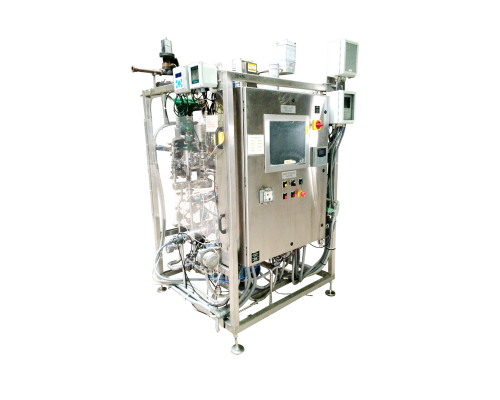
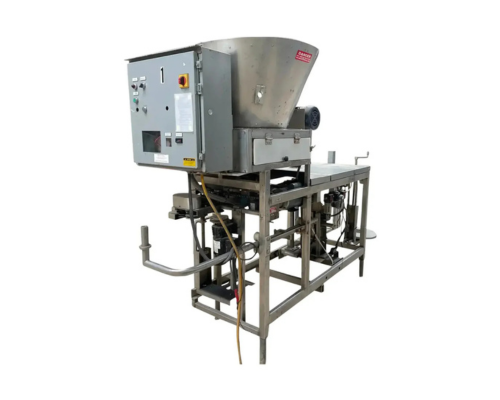
Next come ice cream ingredient feeding machines, which handle inclusions like fruit, cookie pieces, or candy. In a co-packing environment, these systems must be incredibly flexible—able to switch between product lines quickly without cross-contamination or downtime. One hour it’s chocolate swirl, the next it’s strawberry cheesecake mix-ins.
Image from Genemco
Link to Ice Cream Equipment
And then there’s packaging—arguably one of the most complex parts of co-packing operations.
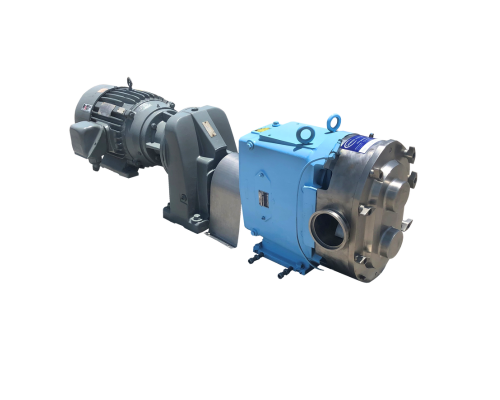
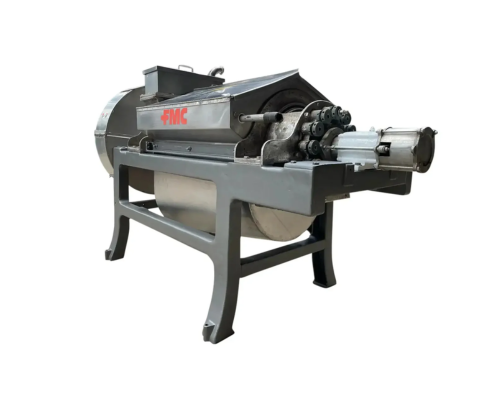
Shrink wrappers and automated packaging systems are what allow multiple brands to move through the same facility while still emerging with distinct identities on the shelf. Label accuracy, seal integrity, and speed all matter here, especially when production schedules are stacked back-to-back.
Image from Genemco
Link to Ice Cream Equipment
The Pressure Behind the Flexibility
Co-packers don’t just deal with one customer—they deal with many.
That means every delay, every equipment issue, and every bottleneck has a multiplied impact. One missed production window can affect multiple brands, seasonal launches, or retailer commitments at once.
And while demand planning may be precise, equipment availability often isn’t.
New systems can come with long lead times. Custom configurations take even longer. But retail timelines rarely wait.
That’s where adaptability becomes just as important as capacity.
A Practical Bridge When Timing Gets Tight
This is where Genemco fits into the equation.
Genemco provides readily available, high-quality used and surplus equipment that helps co-packers stay operational when timing doesn’t align with demand.
The idea isn’t to replace long-term capital investments—it’s to keep production flexible when reality doesn’t match the schedule.
If a freezer goes down or a packaging line upgrade is still months out, having access to immediate equipment options can keep production flowing. It’s not a permanent solution—it’s a continuity layer that keeps multiple customer commitments intact while longer-term equipment plans are still in motion.
Supporting OEMs Without Disrupting Relationships
There’s also an important dynamic in co-packing environments that often gets overlooked: OEM relationships.
Equipment manufacturers are essential partners in this space, especially when facilities are scaling or upgrading for new clients.
Genemco’s role is not to interfere with that pipeline.
If anything, it’s the opposite.
When lead times stretch and a co-packer is trying to bring on new business or fulfill a contract, Genemco can help bridge the operational gap without disrupting the OEM sale. That way, the end user stays running, the OEM continues moving forward with their delivery, and production commitments stay intact.
In a sense, it allows OEMs to stay focused on delivering long-term value—while someone else helps handle the “right now” problem in the background.
It’s not about taking over the moment. It’s about keeping the moment from falling apart before the long-term solution arrives.
The Reality of Multi-Brand Manufacturing
Co-packers live in a constant state of coordination—balancing product specs, cleaning cycles, changeovers, and customer expectations across multiple brands.
It’s fast-paced, detail-heavy work where margins for error are thin and expectations are high.
When everything is running smoothly, it looks effortless. When something breaks, it becomes immediately visible across multiple supply chains.
That’s why flexibility in equipment sourcing matters so much.
Because in this world, uptime isn’t just about one product line—it’s about keeping an entire ecosystem of brands moving without interruption.
And sometimes, staying ahead isn’t about having everything brand new and perfectly timed.
It’s about having options when the unexpected shows up—and knowing where to turn when it does.


