

Frozen food production is a little more complicated than putting food in a freezer and calling it a day.
Before a product ever reaches the freezing stage, it may have been cooked, blanched, baked, fried, seasoned, mixed, filled, or otherwise processed. Then comes the important transition from a hot or warm product to one that needs to be frozen quickly and consistently.
That is where heat tunnels—and the cooling and freezing equipment that follows them—can become an important part of the process.
For frozen food manufacturers, industrial heat tunnels can provide controlled heating, cooking, drying, warming, or pasteurizing as part of a continuous production line. They help create a predictable product before it moves into the cooling and freezing stages.
And when you're producing frozen food at an industrial scale, predictable is a pretty good thing to have.
Where Do Heat Tunnels Fit Into Frozen Food Production?
There isn't one universal frozen-food production line. The process depends heavily on the product.
Frozen vegetables may go through washing, sorting, cutting, blanching, cooling, and freezing. A frozen entrée could involve cooking, assembling, heating, cooling, freezing, and packaging. Meat, poultry, seafood, potatoes, pasta, and prepared meals all have their own processing requirements.
Heat tunnels can be used in different places throughout these processes.
Depending on the application, a tunnel may be used to:
- Cook or heat food products
- Pasteurize products
- Warm products before another processing step
- Dry or set food products
- Heat sauces, fillings, or prepared components
- Provide controlled thermal treatment before cooling and freezing
- Support continuous, high-volume production
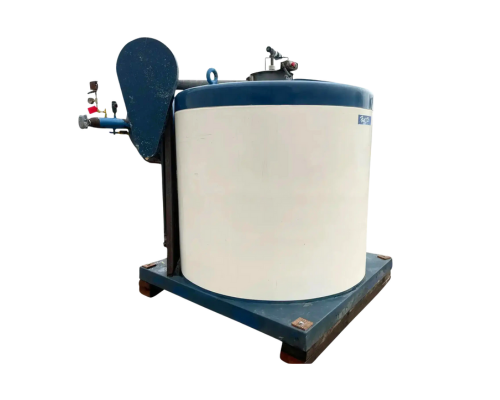
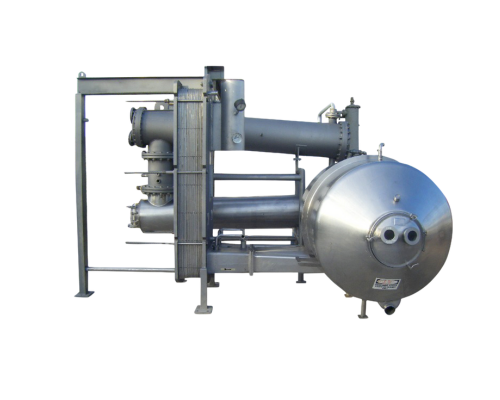
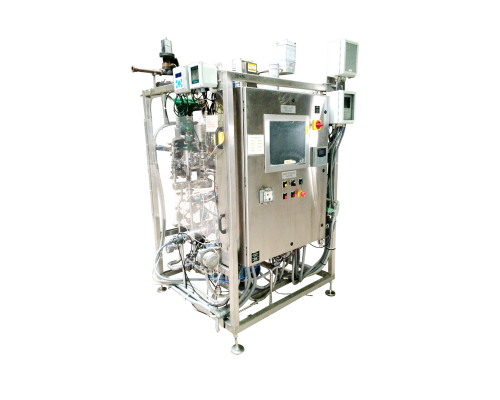
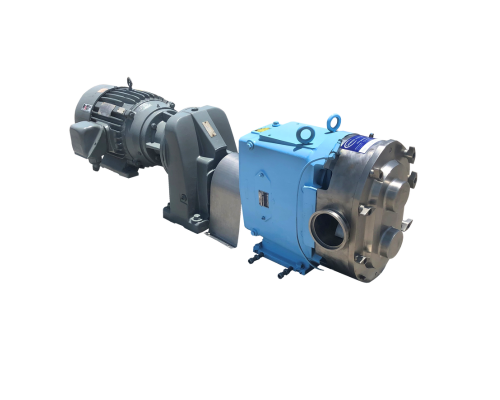
Genemco's process-tunnel inventory includes equipment for applications such as heating, pasteurizing, cooling, and other continuous food-processing operations.
The tunnel itself may only be one piece of the line, but how it performs can have an impact on everything that comes afterward.
Image from Genemco
Link to Blanchers & Heat Tunnels
Heating Comes Before Freezing for a Reason
One of the biggest things to remember about frozen food is that freezing is often the end of a process—not the beginning.
Take a frozen prepared meal.
The food may need to be cooked or thermally treated first. Once that process is complete, the product needs to be brought down to the appropriate temperature before freezing and packaging.
The same basic idea applies to many frozen products.
A thermal process may establish the desired texture, doneness, or other product characteristics. Then the cooling and freezing stages need to take over without creating unnecessary delays or compromising the finished product.
In a continuous operation, each piece of equipment has a job to do—and ideally, nobody is standing around waiting for the previous machine to finish its job.
Heat Tunnels Can Help Create a More Consistent Process
Consistency is one of the biggest reasons industrial food manufacturers use controlled processing equipment.
FDA guidance on food-processing equipment emphasizes the importance of equipment being properly sized for the volume being processed and capable of maintaining the necessary time-temperature controls with acceptable variation.
That's especially important when you're running a frozen-food line at production scale.
A heat tunnel can provide a controlled environment where product moves through defined heating conditions at a controlled rate. Instead of relying on operators to manage individual batches, a continuous tunnel can help create a more repeatable process.
And repeatability matters.
If you're making a few meals at home, nobody is measuring whether every piece of pasta received exactly the same amount of heat.
If you're making thousands of meals for customers across the country, that's a different conversation.
From Heat Tunnel to Freezer
One of the most important relationships in a frozen-food line is what happens between the heating process and the freezer.
After a product has been cooked, blanched, baked, or otherwise heated, it may need to be cooled before freezing. Cooling tunnels can rapidly reduce product temperature following heat-based processes, helping prepare the product for the next stage.
That transition can matter to the overall efficiency of the freezing operation.
A product carrying unnecessary heat into a freezer means the refrigeration system has more work to do. And in a high-volume frozen-food facility, seemingly small inefficiencies can become much more noticeable when they're repeated thousands of times a day.
That's why the heating, cooling, and freezing equipment should be viewed as connected parts of the same production process—not isolated machines.
Heat Tunnels in Frozen Prepared Foods
Frozen prepared foods are a particularly good example of how versatile these systems can be.
Think about products such as:
- Frozen entrées
- Ready-to-eat meals
- Frozen pasta dishes
- Casseroles
- Vegetable-based meals
- Potato products
- Pizza and pizza toppings
- Breaded or coated foods
- Meat and poultry products
- Seafood products
- Sauces and prepared meal components
The exact process will vary, but many of these products require some combination of cooking or thermal treatment followed by cooling and freezing.
Tunnel systems can provide a way to keep that movement continuous.
And when production volumes are high, continuous processing can make a major difference in throughput and consistency.
What About IQF Products?
Individual quick freezing, or IQF, is another area where the relationship between thermal processing and freezing becomes important.
Products such as vegetables, fruits, mushrooms, and prepared foods can be individually quick frozen using continuous tunnel-style systems. These systems move product through a controlled low-temperature environment while cold air rapidly removes heat from the product.
But the freezer isn't working in isolation.
Depending on the product, the overall line may include washing, blanching, cooling, dewatering, and then freezing. That means the equipment leading into the freezer needs to deliver product in a condition the freezer can handle efficiently.
A good frozen-food line is less like a collection of individual machines and more like a relay race.
Each piece of equipment has to do its job and hand the product off cleanly to the next one.
Choosing the Right Used Heat Tunnel
If you're looking for a used heat tunnel for a frozen-food application, it's important to start with the product and process rather than simply searching for a particular machine.
Consider:
- What product will be processed?
- What type of thermal treatment is required?
- What temperature and residence time are needed?
- What is the desired production rate?
- What conveyor width and speed are required?
- How is the tunnel heated?
- How many zones does the process require?
- What utilities are available?
- What controls and instrumentation are included?
- How will it connect to the existing line?
- What cooling and freezing equipment comes immediately afterward?
The right tunnel isn't necessarily the biggest tunnel or the newest tunnel.
It's the one that fits the job.
Image from Genemco
Link to Blanchers & Heat Tunnels
Why Consider Genemco for Used Heat-Tunnel Equipment?
Sometimes buying new is exactly what a project calls for.
Other times, the timeline doesn't cooperate.
Maybe a frozen-food manufacturer needs additional capacity. Maybe an existing tunnel has reached the end of its useful life. Maybe a production expansion is moving faster than expected. Or maybe a critical piece of equipment went down and waiting months for a new one simply isn't an option.
That's where used equipment can provide another path forward.
Genemco has been serving the industrial refrigeration and food processing industries since 1989. Our inventory includes used food-processing and refrigeration equipment, and our available equipment changes regularly.
One of the biggest advantages of used equipment is simple: the equipment already exists.
Instead of starting with a new manufacturing order and waiting for the equipment to be built, a used machine may already be sitting in inventory and ready to be evaluated for your application.
For a frozen-food manufacturer trying to keep production moving, that difference in timeline can be significant.
OEMs: Your Customer Is Still Your Customer
If you're an OEM, we want to make something very clear:
We're not trying to take your sale.
If you have sold your customer a new heat tunnel or another piece of processing equipment, we don't want to replace that purchase with used equipment.
We want to help you get your customer through the time between placing the order and receiving the equipment.
Because sometimes the customer doesn't have the luxury of waiting.
Maybe they have production commitments. Maybe demand has increased. Maybe an existing machine failed. Maybe they're already losing money every day they're operating below capacity.
And you're doing everything you can to get their new equipment built and delivered as quickly as possible.
That's where Genemco can step in.
Think of us as the temporary fix that helps keep the wheels turning while you work on the permanent solution.
A used heat tunnel could act as the bandaid—or, if the situation is serious enough, the tourniquet that keeps production moving until the new equipment arrives.
And when that new equipment is ready?
Your customer transitions to the solution you originally sold them.
That's why we don't see ourselves as competing with the OEM in this situation. We see ourselves as another resource you can put in your toolbox.
You sold the solution. We can help solve the waiting problem.
And ultimately, that can make you look even better to your customer.
Keep the Line Moving
Frozen-food production is built around timing.
Heat has to happen when it's supposed to. Cooling has to happen when it's supposed to. Freezing has to happen when it's supposed to. And the product has to keep moving.
When one piece of equipment becomes the reason everything else has to stop, the problem can quickly become much bigger than the machine itself.
That's why having options matters.
A used industrial heat tunnel may provide additional capacity, replace equipment that is down, support a production expansion, or simply give a manufacturer a way to keep moving while a new machine is being built.
At Genemco, that's what we're here for.
Quality used equipment. In stock. Ready to ship. And ready to help keep your operation moving.


