

When you think about canned and shelf-stable foods, the obvious stars are probably the can, the retort, and the filling and sealing equipment.
But before a product ever gets sealed into its container, there can be some important preparation happening upstream.
For many fruits and vegetables, blanching is one of those steps.
In a commercial food processing environment, an industrial blancher can help prepare raw product for filling and thermal processing by applying a controlled heat treatment. Depending on the product and process, blanching can help inactivate enzymes, remove gases from plant tissue, soften the product, improve filling characteristics, and prepare the food for what comes next.
It may be one piece of a much larger processing line, but that doesn't make it an unimportant one.
In fact, when you're producing thousands of cans or containers per hour, consistency at this stage matters.
What Does a Blancher Do Before Canning?
At its most basic, blanching is a short, controlled heat treatment using hot water, steam, or another heating method.
In canning operations, however, the purpose can go well beyond simply heating the product.
The FDA identifies several reasons commercial processors may blanch fruits and vegetables before canning, including enzyme inactivation, expelling gases from the product, softening food for easier packing, improving preparation for cutting or peeling, setting natural color, and removing raw flavors.
That makes the blancher less of a standalone heating machine and more of a preparation step for the entire canning process.
And that distinction is important.
The goal isn't necessarily to fully cook the product inside the blancher. The goal is to get the product into the right condition for filling, sealing, and subsequent thermal processing.
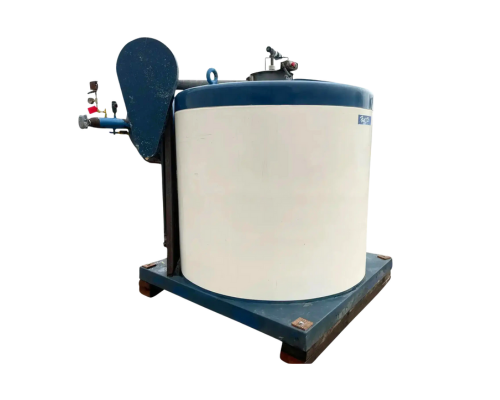
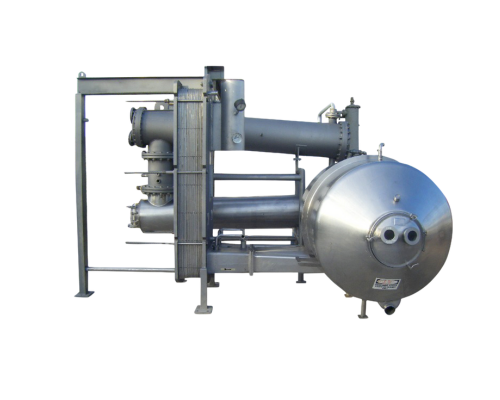
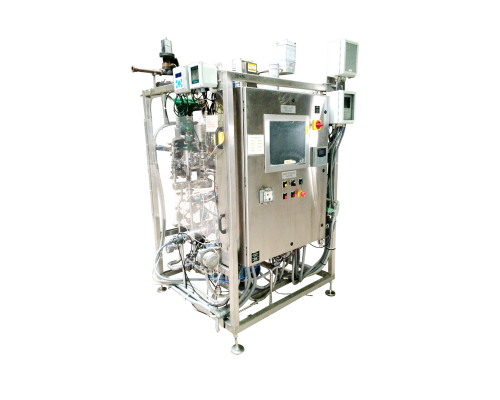
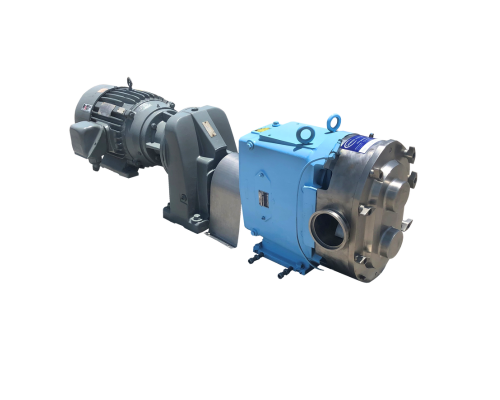
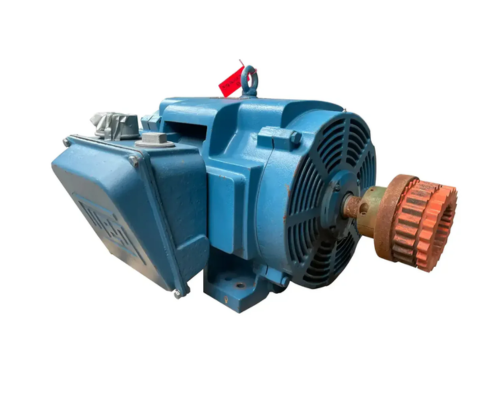
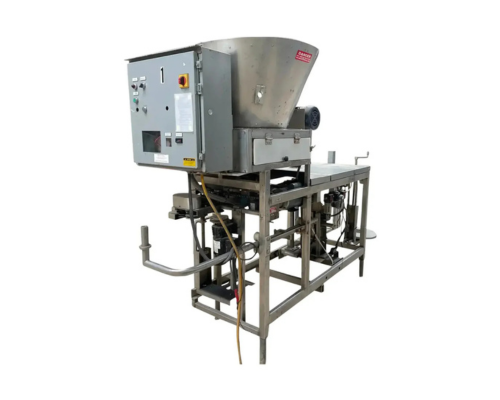
Image from Genemco
Link to Blanchers & Heat Tunnels
Why Remove Air Before Canning?
Here's one of the less obvious jobs a blancher can perform—and one that's particularly relevant to canned food.
Fresh fruits and vegetables naturally contain gases within their tissues. Blanching can help drive some of that air out before the product is packed into its container.
Why does that matter?
Because trapped air can affect the vacuum and headspace conditions inside a container.
The USDA notes that heating food before packing can help remove air from food tissues, shrink the product, increase vacuum, and improve packing characteristics.
In commercial canning, that's more than a nice-to-have.
Air in the product can affect the container's internal conditions during subsequent thermal processing. USDA FSIS training materials note that blanching can drive air out of food, while residual air can affect vacuum and, in some containers, contribute to issues such as buckling or reduced heat penetration.
So that seemingly simple step of heating the product before it gets into the can can have a downstream effect on the entire process.
Blanching Can Help With Product Fill
Anyone who has worked around a food processing line knows that consistency is everything.
You don't want one batch behaving differently from the next when you're trying to maintain a consistent fill.
Blanching can soften and shrink certain products, making them easier to pack and potentially allowing more product to fit into a container. The FDA specifically identifies softening as one purpose of blanching and notes that it can make some foods easier to pack and allow higher fill and drained weights.
This can be especially relevant with products that change significantly in volume or structure when heated.
For example, USDA inspection guidance for canned mushrooms notes that blanching can shrink mushrooms substantially and help achieve the appropriate fill.
In other words, the blancher isn't just preparing the product from a quality standpoint.
It can also help prepare the product physically for the container.
Helping Prepare Produce for the Next Step
Blanching can also make certain fruits and vegetables easier to handle during subsequent processing.
Depending on the product, thermal treatment can soften the food enough to make operations such as peeling, cutting, dicing, or packing easier.
That can make the blancher an important part of the overall process flow.
Consider a simplified vegetable canning line:
Receive → Wash → Sort → Trim → Blanch → Fill → Seal → Thermal Process → Cool → Label → Ship
The blancher isn't responsible for the entire process.
But it helps make sure the product arriving at the filler is in a condition that's appropriate for the next stage.
And in a continuous industrial operation, every stage has to work with the one before it and the one after it.
Blanching Can Help Protect Product Quality
There's also the quality side of the equation.
Fresh fruits and vegetables contain enzymes that can contribute to undesirable changes in color, flavor, and texture. Thermal blanching helps inactivate those enzymes. Research from USDA Agricultural Research Service describes enzyme inactivation as one of the primary purposes of blanching in fruit and vegetable processing.
Blanching can also help stabilize characteristic color.
But, as with most thermal processing, more heat isn't automatically better.
Too little treatment may not achieve the intended result. Too much can negatively affect color, flavor, texture, and other quality characteristics. USDA guidance notes that over-blanching can result in dull color, flavor loss, sloughing, and poor texture.
That's why industrial blanchers need to provide controlled, repeatable processing—not simply high temperatures.
Hot Water or Steam?
There isn't one universal blanching method for every canning application.
Industrial blanchers can use hot water, steam, or other thermal approaches depending on the product and the processing requirements.
Hot-water blanching provides direct contact between the product and heated water, while steam blanching exposes the product to steam in a controlled environment.
The right choice depends on the product, desired treatment, throughput, equipment configuration, utilities, and the rest of the processing line.
For example, USDA inspection guidance for canned mushrooms describes both water blanching and continuous steam blanching as commercial approaches.
The important question isn't necessarily, "Which type of blancher is better?"
It's:
"Which blanching process makes sense for this product and this line?"
Where Are Blanchers Used in Shelf-Stable Food Production?
Blanchers can be used across a wide range of fruit and vegetable processing applications.
Depending on the facility, you may find blanching equipment involved in the production of:
- Canned vegetables
- Canned fruits
- Canned mushrooms
- Potatoes and potato products
- Beans
- Peas
- Corn
- Carrots
- Mixed vegetables
- Leafy vegetables
- Specialty produce products
- Other shelf-stable fruit and vegetable products
The exact process varies significantly from product to product.
That's why application knowledge matters when selecting equipment.
A blancher that works well for one product may not be the right choice for another.
Choosing a Used Blancher for a Canning Operation
When a processor starts looking for a replacement or additional blancher, the conversation usually begins with questions about capacity and dimensions.
Those are important.
But they're not the only questions worth asking.
What product will run through it?
What type of heating system does it use?
How is the product conveyed?
What is the belt width?
What was the original throughput?
What are the steam, water, electrical, and utility requirements?
What kind of controls does it have?
How will it tie into the existing filling and processing equipment?
And perhaps one of the biggest questions:
How quickly can you get it running?
That's where used equipment can become particularly interesting.
Why Consider Genemco for Used Blanching Equipment?
At Genemco, we understand that food processing equipment doesn't exist in isolation.
A blancher is part of a production system, just like a freezer, evaporator, compressor, pump, conveyor, filler, or packaging machine.
We've been working with industrial refrigeration and food processing equipment since 1989, giving us decades of experience helping customers find equipment for real-world production environments.
Our used food processing inventory changes regularly and can include blanchers and other thermal processing equipment.
One of the biggest advantages of buying used is pretty simple:
The equipment already exists.
You don't necessarily have to start from a blank sheet of paper and wait for a new machine to be engineered, manufactured, and delivered.
For a processor facing an equipment failure, capacity issue, expansion project, or unexpected production demand, that can be a significant advantage.
And we're not interested in simply pointing at a machine and saying, "There it is."
The goal is to help you determine whether the equipment actually makes sense for what you're trying to accomplish.
Because the best used equipment purchase isn't necessarily the cheapest machine or the machine with the biggest capacity.
It's the machine that makes sense for your process.
OEMs: Your Customer Still Needs to Run Today
Here's where we see an opportunity to work alongside OEMs rather than against them.
Let's say you're an OEM and you've just made a sale.
You've worked with the customer, figured out their requirements, engineered the right solution, and sold them a new blancher or processing system.
That's your customer and your sale.
We don't want to take it.
What happens, though, when the new equipment has a long lead time?
Maybe your customer has six months before the new machine arrives.
But their existing blancher is already struggling.
Or production has increased.
Or they're staring down a busy season and know the current equipment isn't going to make it comfortably to the finish line.
That's when we'd like to be the company you can call.
Not because we want to replace the equipment you're selling.
Because we want to help your customer survive the wait.
Think of Genemco as the emergency kit in the truck.
Maybe the used blancher is the bandaid that keeps a manageable problem from becoming a shutdown.
Maybe it's the tourniquet you need when the situation is a little more serious.
Either way, the objective is temporary support—not taking the permanent solution off the table.
You still deliver the new equipment.
You still get the customer up and running with the system you've engineered for them.
And, in the meantime, we've helped give them another option to keep production moving.
That's a pretty good outcome for everybody.
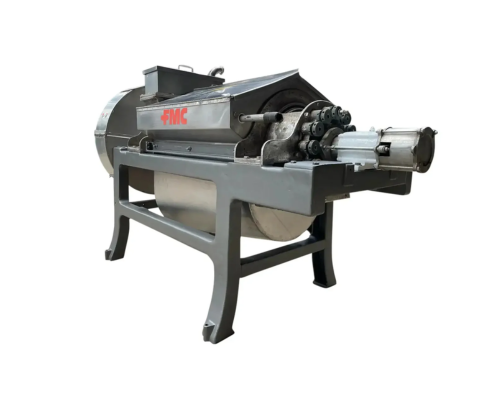
Image from Genemco
Link to Blanchers & Heat Tunnels
Make the OEM the Hero
We actually like the idea of making the OEM the hero here.
Your customer shouldn't have to choose between "wait for the new machine" and "stop producing."
If there's a practical used-equipment option that can help them get through the lead time, you can bring that option to the table.
You get to tell your customer:
"We've got a temporary solution that may help keep you running until your new equipment arrives."
That's not us taking your sale.
That's you finding another way to take care of your customer.
And when the new equipment finally arrives, the temporary equipment has done its job.
You made the long-term solution happen. We helped keep the lights on while you got there.
That's the relationship we'd like to have with OEMs.
Keeping Shelf-Stable Production Moving
Canning and shelf-stable food production is built around consistency.
The product needs to be prepared correctly. The container needs to be filled properly. The thermal process needs to be controlled. And the equipment needs to keep doing its job batch after batch, shift after shift.
When a blancher becomes a problem, everything downstream can feel it.
That's why having options matters.
A quality-used blancher can provide an alternative when a processor needs equipment sooner than a new machine can be delivered. It can provide additional capacity, serve as a replacement, or help keep production moving while a permanent solution is being built.
And for OEMs, it can be another tool in your toolbox when your customer needs help right now.
At Genemco, that's where we want to fit in.
We're not trying to replace your long-term solution. We're trying to help you keep your customer's operation moving until you can deliver it.
Because in food processing, "eventually" doesn't keep the line running.
Today does.


