

In a dairy processing plant, the smallest details can have a big impact. A little air in the wrong place, an unwanted odor in a milk product, or a change in processing conditions can create challenges that ripple through an entire production line.
That's why specialized equipment matters.
Industrial vacuumizers are used in certain dairy processing applications to help remove air and volatile compounds, support temperature control, and maintain the conditions needed for consistent processing. While the term may not be familiar to everyone outside the industry, vacuum technology plays a role in producing many of the dairy products people use every day.
And when a vacuumizer needs replacing, finding the right equipment becomes about more than filling a space on the production floor. It's about finding a solution that works with the process, the production schedule, and the realities of running a plant.
What Is an Industrial Vacuumizer?
An industrial vacuumizer is a vessel or processing unit that uses reduced pressure as part of a manufacturing process. In dairy applications, vacuum treatment can help remove entrained air and dissolved gases, strip certain unwanted volatile compounds, and control product temperature through evaporation.
One important application is milk processing. In certain high-temperature, short-time (HTST) systems, milk may be heated using direct steam injection or infusion before entering a vacuum chamber. When the pressure drops, some of the added moisture evaporates, helping cool the product while removing certain volatile compounds that can contribute to undesirable flavors or odors.
The equipment's exact function depends on the system design and where the vacuumizer is installed in the process.
It's also worth distinguishing a vacuumizer from a standalone vacuum pump. The pump creates the vacuum, while the processing vessel provides the space and conditions needed for the product treatment. In a complete system, both must be suited to the application.
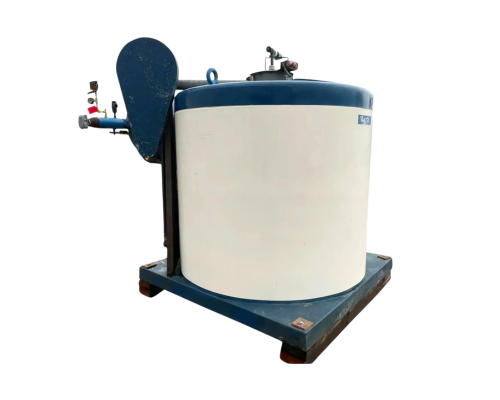
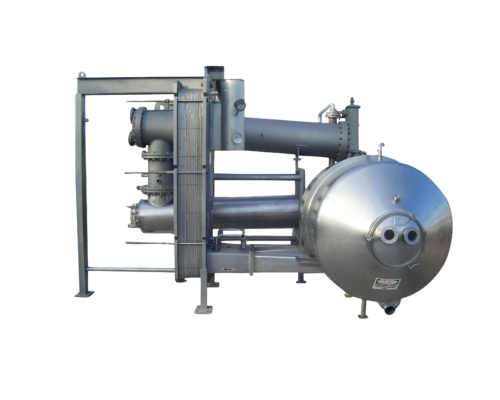
Image from Genemco
Link to Flavorizers, Vacuumizers, Deaerators & Food Additive Skids
How Are Industrial Vacuumizers Used in Dairy Processing?
Vacuum technology has several applications across the dairy industry. For a processing engineer or plant manager, understanding the differences can help when evaluating equipment for a new project or replacement.
1. Milk Pasteurization and Flavor Treatment
One established application involves vacuum treatment within certain milk pasteurization systems.
Milk can contain volatile compounds that contribute to undesirable odors or off-flavors. In systems designed for this purpose, the product may be heated using culinary steam and then introduced into a vacuum chamber. The reduced pressure allows evaporation to occur, helping remove certain volatile compounds.
The process also helps manage the temperature of the product following direct steam heating.
For dairy processors, the objective is to achieve the intended treatment while maintaining control over the product's characteristics. The vacuumizer works as part of a larger system, alongside the heating equipment, pumps, holding section, and cooling stages.
2. Removing Entrained Air and Dissolved Gases
Air can enter dairy products during handling and processing. Depending on the application, unwanted air can affect product measurement, downstream equipment performance, and processing consistency.
Vacuum deaeration exposes the product to reduced pressure, encouraging air and dissolved gases to separate from the liquid. Certain volatile compounds may also be removed in the process.
This can be useful in milk treatment lines and other dairy applications where controlling air content is important.
The distinction matters: a vacuumizer or vacuum chamber may perform a particular treatment within a process, while a dedicated deaerator is specifically designed for gas removal. The equipment should be selected according to its intended duty rather than assuming the terms are interchangeable.
3. Processing Cream, Dairy Ingredients, and Other Products
Vacuum technology is used in a wider range of dairy manufacturing operations, including the processing of cream, concentrated milk products, and other dairy ingredients.
Depending on the application, vacuum may help remove gases, evaporate moisture at reduced temperatures, or support a controlled processing environment.
For example, vacuum evaporation is widely used when concentrating milk or whey before further processing. Because lowering the pressure lowers the boiling temperature, it can help processors remove water without relying on the higher temperatures that would otherwise be required at atmospheric pressure.
However, not every vacuumizer is designed for concentration or evaporation. The vessel's configuration, capacity, operating conditions, and original purpose determine which applications are appropriate.
4. Supporting Consistency Across the Processing Line
Dairy production is a connected process. A change in one stage can affect the equipment and product downstream.
A properly selected and maintained vacuum treatment system can help a facility maintain its intended processing conditions. That makes equipment condition, control systems, operating parameters, and integration with the rest of the line important considerations.
When a vacuumizer needs to be replaced, finding a unit with the right specifications is only the beginning. It must also be suitable for the product, sanitation requirements, and validated process.
What Should You Consider When Replacing a Dairy Vacuumizer?
Imagine a dairy plant that has been operating reliably for years. The processing team knows the equipment, maintenance has a routine, and production is scheduled around a predictable workflow.
Then a critical vessel develops a problem.
Now the engineering team needs to identify a replacement, purchasing needs to understand the available options, and operations needs to know how long production might be affected.
If a new machine has a lengthy manufacturing lead time, the challenge becomes finding a way to manage the gap.
Before selecting a replacement vacuumizer, consider these important factors:
-
Capacity: Does the unit support the required product throughput? For continuous processing, even a seemingly small difference in capacity can affect the line.
-
Process conditions: Are the operating pressure, temperature, and product characteristics compatible with the intended application?
-
Connections and layout: Do the inlets, outlets, dimensions, and mounting arrangements work with the existing installation?
-
Materials and sanitary design: Are the materials of construction, surface condition, cleanability, and hygienic features appropriate for the product and applicable requirements?
-
Equipment condition: What inspections, repairs, documentation, or testing are needed before the unit can be considered for service?
-
Project timeline: How much time is available for sourcing, preparation, shipping, installation, and commissioning?
A used unit may offer an additional option, but it isn't automatically a drop-in replacement. The engineering and food safety requirements still come first.
Why Explore Used Vacuumizers Through Genemco?
When a specialized piece of equipment is needed, finding a comparable unit can take time. The original manufacturer may have a long lead time, the existing model may no longer be readily available, or the cost of a new system may prompt a closer look at alternatives.
Genemco specializes in used industrial food processing and refrigeration equipment, giving processors another resource to consider when evaluating their options.
A Specific Unit to Explore
Genemco lists a DeLaval Model 650 Stainless Steel Vacuumizer for an HTST system.
The listing identifies a stated capacity of 35,000 pounds per hour, along with stainless steel construction and specified vessel dimensions and connections.
For a facility evaluating a replacement or planning a project, having a specific piece of equipment to investigate can help move the conversation from a general search toward a more practical technical evaluation.
The important question isn't simply whether the equipment is available. It's whether the unit's specifications, condition, and intended duty match the requirements of your system.
Another Route When the Clock Is Ticking
New equipment is often the right choice for a long-term investment. But when an existing unit fails or a project timeline changes, the immediate need may be different from the long-term plan.
An available used vacuumizer may be worth evaluating while a new system is being manufactured. Depending on compatibility and project requirements, it could provide an interim option or help support a planned equipment change.
Used equipment can also offer a different initial purchase cost, although the full project cost should account for inspection, refurbishment, transportation, installation, and any necessary modifications.
Availability changes, and a used unit isn't guaranteed to be a faster or less expensive solution in every situation. The benefit is having another option to investigate.
A Resource for Specialized Equipment Needs
Not every processing plant operates the same way. Differences in throughput, product formulations, line configurations, and operating conditions mean that equipment selection often requires a closer look.
Genemco gives customers a place to start when exploring used equipment for replacement projects, upgrades, or other operational needs.
Whether you're a plant manager trying to understand your options or an engineer working through the specifications for a replacement, sharing the details of the application is the best first step.
OEMs: Help Your Customer Through the Wait Without Losing Sight of the Sale
OEMs know that delivering a new piece of equipment is about much more than the machine itself. It takes engineering, manufacturing, project coordination, and a relationship built on trust.
But even when the customer has committed to the right long-term solution, the production schedule may not leave much room for waiting.
What happens when your customer needs a vacuumizer now, but your new equipment won't be ready for several months?
You don't want your customer to feel stranded. And you certainly don't want a temporary timing problem to put a carefully developed project at risk.
Genemco wants to be a resource that helps you protect the relationship and deliver on the promise you've made to your customer.
Here's another way to look at it: your new equipment is the destination, but your customer still needs a way to get there.
If a suitable used vacuumizer is available, it may be possible to explore a temporary solution that helps bridge the gap while your new equipment is being built.
Think of it as a contingency plan. Sometimes it's a bandage for a manageable production challenge. In a more urgent situation, it might be the tourniquet that helps keep an operation going while the permanent solution is on its way.
The important point is that the temporary equipment doesn't have to replace the new equipment sale. It may help make that sale work for everyone.
Your team continues with the new system. Your customer has another option to consider in the meantime. And rather than being left to manage the delay alone, they know you're actively working to help them through it.
We don't want to take the sale from you. We want to help you be the hero.
That means respecting the customer relationship you've built, supporting the project you've secured, and helping you explore an interim equipment option when the application makes sense.
Naturally, the proposed unit must be technically appropriate, and any installation must meet the customer's engineering, hygienic, and regulatory requirements. A temporary solution is only useful if it can be implemented safely and effectively.
But when the right fit exists, having another resource available can turn a difficult conversation about lead times into a more constructive conversation about options.
Finding the Right Vacuumizer Starts With the Details
If you're evaluating an industrial vacuumizer for a dairy operation, begin with the equipment's original application and the demands of your process.
Manufacturer and model information, throughput, operating conditions, vessel dimensions, connection details, materials of construction, and installation requirements can all help determine whether an available unit deserves further consideration.
For OEMs, including the new equipment's anticipated delivery date and the customer's immediate operational requirements can help clarify whether an interim option is realistic.
The more you know about the application, the better positioned you are to evaluate the alternatives.
Keep Moving While the Long-Term Solution Takes Shape
Vacuumizers play an important role in certain dairy processing applications, from milk treatment and volatile-compound removal to other vacuum-based operations. Choosing the right unit requires an understanding of both the equipment and the process it supports.
When a replacement is needed, exploring used equipment may offer another way to approach the challenge.
Genemco helps food processors and OEMs investigate available used equipment and consider whether an existing unit could meet their requirements.
Looking for an industrial vacuumizer for a dairy processing application? Explore Genemco's DeLaval Vacuumizer listing or contact our team to discuss your project.
And if you're an OEM working with a customer facing a long lead time, let's talk about the options. Your new equipment project can remain the long-term goal while we help you explore whether another solution could make the wait more manageable.
Because good equipment planning isn't only about what comes next. It's also about helping your customer get there.


