

There is something pretty impressive about a can of food.
It can sit on a shelf for months—or even years—and still be ready to become dinner.
Of course, getting food from a fresh or perishable state to a commercially shelf-stable product takes a lot more than putting a lid on a container. It takes carefully controlled processing, the right equipment, and a production system designed around food safety and product quality.
Industrial heat tunnels can be one piece of that system.
Depending on the application, tunnel equipment can be used for heating, blanching, pasteurizing, warming, cooking, or cooling products and packages as they move through a continuous process.
For canning and shelf-stable food manufacturers, that can make them an important part of keeping product moving through the plant.
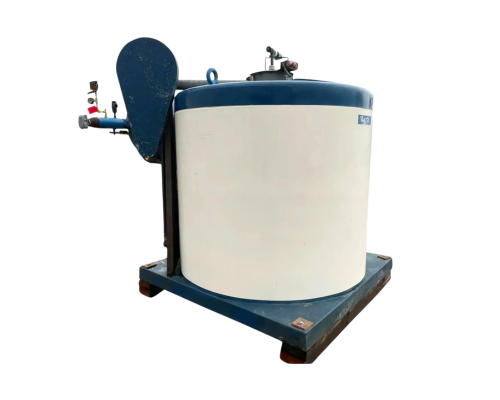
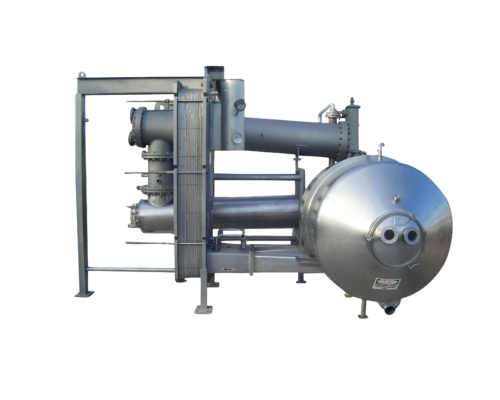
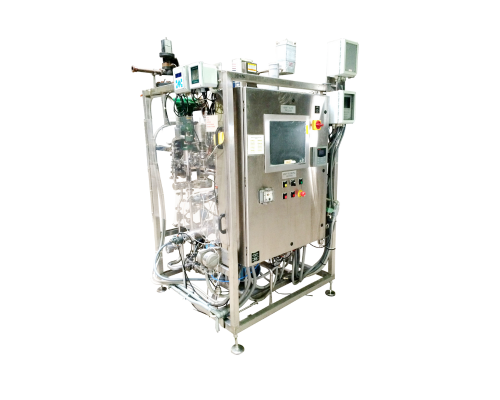
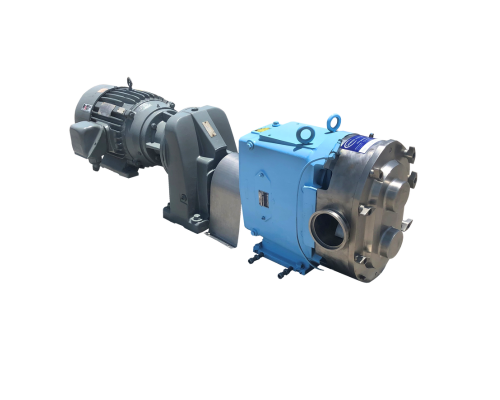
Image from Genemco
Link to Blanchers & Heat Tunnels
Where Do Heat Tunnels Fit Into Canning?
Canning is a carefully controlled thermal process.
Products are prepared, filled into containers, sealed, and then subjected to a scheduled thermal process designed around the characteristics of the food and the container. For low-acid canned foods, commercial sterility depends on controlling the process to address microorganisms of public-health significance and prevent spoilage under normal storage conditions.
Heat tunnels can support different parts of that overall operation, depending on the product and equipment configuration.
They may be used for:
- Blanching fruits and vegetables before canning
- Heating or cooking food products
- Pasteurizing certain products
- Warming products before downstream processing
- Supporting continuous thermal treatment
- Cooling containers after a heat process
- Preparing products for packaging, handling, or storage
The tunnel isn't necessarily responsible for the entire preservation process.
Instead, it performs a specific job within a much larger system.
And in food processing, getting that one job right matters.
Blanching: One of the Steps Before the Can Goes on the Shelf
For fruits and vegetables, thermal treatment may happen well before the product is sealed into its final container.
Blanching can help inactivate enzymes, soften vegetables, remove raw flavors, expel gases from plant tissue, and prepare produce for subsequent processing. It can also make certain products easier to fill and pack.
This is where the line between a blancher and a heat tunnel can get interesting.
A blancher is designed specifically around the blanching process, while a heat tunnel can provide a broader controlled thermal environment for a variety of heating applications.
Depending on the product and production line, a processor may use one, the other, or multiple types of thermal-processing equipment.
The important thing is matching the equipment to the process.
Why Controlled Heating Matters
In a canning or shelf-stable operation, “hot enough” isn't exactly a useful process specification.
Time and temperature have to work together.
The required process can depend on factors such as the product formulation, acidity, container size and type, fill characteristics, and other processing conditions. FDA guidance emphasizes that thermal processes need to be established and controlled for the specific product and process rather than treated as a one-size-fits-all recipe.
That's why industrial thermal equipment is designed around things like:
- Temperature control
- Residence time
- Product throughput
- Heat distribution
- Conveyor speed
- Product characteristics
- Container configuration
- Process controls
The goal is repeatability.
Because when you're processing thousands of containers, you don't want the process to depend on whether the machine “seems hot enough” that day.
Heat Tunnels and Shelf-Stable Prepared Foods
Canned and shelf-stable foods can include a huge variety of products:
- Canned vegetables
- Canned fruits
- Soups
- Sauces
- Beans
- Peas
- Corn
- Carrots
- Potatoes
- Pasta products
- Prepared meals
- Meat and protein products
- Shelf-stable sauces and fillings
- Other commercially processed foods
Each one can have different thermal-processing requirements.
A soup isn't processed the same way as canned green beans. A sauce isn't necessarily processed the same way as a ready-to-eat meal.
That's why equipment selection starts with the product.
The thermal system needs to fit what is actually going through it.
What Happens After the Heat?
Here's a part of the process that's easy to overlook:
Eventually, the heat needs to come back out.
Depending on the product and process, containers may need to be cooled following thermal treatment before they move into labeling, case packing, storage, or distribution.
That can make cooling tunnels and other cooling equipment just as important to the overall line as the heating equipment.
The general flow may look something like:
Prepare → Fill → Seal → Heat/Treat → Cool → Label → Pack → Store
The exact sequence varies by product and process, but the principle remains the same.
Every step needs to keep pace with the one before it.
If one piece of equipment slows down, the rest of the line may eventually feel it.
Continuous Processing Can Keep Production Moving
Canning operations can involve significant production volumes.
When containers are moving continuously through a thermal-processing system, equipment capacity and throughput become important considerations.
A heat tunnel can provide a controlled environment where product or packaging travels through a defined process instead of relying entirely on individual batch handling.
That can help manufacturers maintain a more predictable production rhythm.
And anyone who's spent time around a busy food plant knows that a predictable production rhythm is a beautiful thing.
The fewer surprises, the better.
Selecting a Used Heat Tunnel for Canning & Shelf-Stable Applications
If you're considering used tunnel equipment, it's tempting to start by looking at what is available and then figuring out where it might fit.
A better approach is usually the opposite.
Start with the process.
Ask:
- What product are we processing?
- Is the product low-acid or acidified?
- What thermal treatment is required?
- What temperatures and residence times are needed?
- What is the production rate?
- What type and size of containers are being processed?
- What conveyor width and speed are required?
- What heating method does the tunnel use?
- What utilities are available?
- What controls and instrumentation are included?
- What cooling equipment follows the thermal process?
- How will the equipment integrate with the existing line?
- What floor space is available?
A used tunnel that looks like a great deal isn't much of a deal if it can't keep up with the process.
The right equipment is the equipment that fits the job.
Why Consider Genemco for Used Heat-Tunnel Equipment?
There are times when a brand-new system is exactly what a canning or shelf-stable food operation needs.
There are also times when the production schedule doesn't leave room for a long equipment lead time.
Maybe a processor needs additional capacity.
Maybe an existing tunnel needs to be replaced.
Maybe a plant is expanding into a new product.
Or maybe a critical piece of equipment went down and suddenly “we'll have it in six months” isn't a particularly helpful answer.
That's where used equipment can provide another option.
Genemco has been serving the industrial refrigeration and food processing industries since 1989, with used food-processing equipment and thermal-processing equipment available as inventory changes.
One of the biggest advantages of used equipment is simple:
It's already been built.
A used heat tunnel may already be sitting in inventory rather than waiting for a manufacturing slot.
That can potentially shorten the path from needing equipment to having equipment available for your operation.
Used doesn't have to mean settling.
It means looking at what already exists and determining whether it can make sense for the application.
And when production is waiting on equipment, having another option can be valuable.
Image from Genemco
Link to Blanchers & Heat Tunnels
OEMs: Let Us Help With the Part Between “Sold” and “Delivered”
If you're an OEM, we understand that your customer relationship is the most important part of the equation.
You've made the sale.
You've engineered the solution.
You've earned the customer's trust.
We don't want to take any of that away from you.
In fact, we want to help you protect it.
The challenge comes when your customer needs the equipment sooner than the new-equipment lead time allows.
You may have sold them exactly what they need—but if the new system won't arrive for several months, their production still has to continue in the meantime.
That's where Genemco can step in without stepping between you and your customer.
If an appropriate used heat tunnel or other piece of processing equipment is available, it may give your customer a temporary way to maintain production while their new equipment is being built.
Think of it as a bridge between the equipment they have today and the equipment you've sold them for tomorrow.
It isn't the destination.
It's how they get there.
And that's an important distinction.
We're not asking your customer to abandon the new equipment.
We're helping them avoid having to shut everything down while they wait for it.
Maybe it's a bandaid.
Maybe it's a tourniquet.
Whatever the situation calls for, the idea is the same: stabilize the operation now so you can deliver the permanent solution later.
And when the new equipment arrives, you remain the OEM who delivered the long-term answer.
That's the outcome we're after.
We don't want your sale. We want to help you keep your customer.
The Goal Is Simple: Keep Production Moving
Canning and shelf-stable food production may look simple from the grocery-store shelf, but behind that shelf is a carefully controlled process involving heat, cooling, packaging, refrigeration, and plenty of moving parts.
Industrial heat tunnels can play an important role in that process, whether they're being used for heating, blanching, pasteurization, cooking, warming, or other thermal applications.
And when a new tunnel isn't available on the timeline a plant needs, quality used equipment can provide another option.
At Genemco, we're here to help manufacturers find equipment that fits the application and the timeline.
Because sometimes the long-term solution is already on order.
You just need something to keep the operation running until it gets there.


