

Walk through any large cold storage warehouse or industrial refrigeration facility and you’ll notice something immediately: nothing ever really stops moving.
Evaporators are pulling heat out of rooms around the clock. Compressors are cycling continuously. Forklifts are loading product. Freezers are maintaining critical temperatures. Refrigeration systems are working 24/7 behind the scenes to protect millions of dollars’ worth of inventory.
And supporting many of those systems is one of the most dependable pieces of equipment in industrial refrigeration: the shell & tube heat exchanger.
While newer technologies continue entering the market, shell & tube exchangers remain a trusted solution throughout industrial refrigeration and cold storage because they’re built for exactly what these facilities demand — reliability, durability, and long-term performance under pressure.
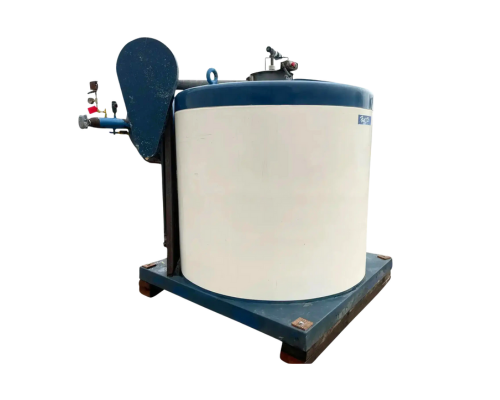
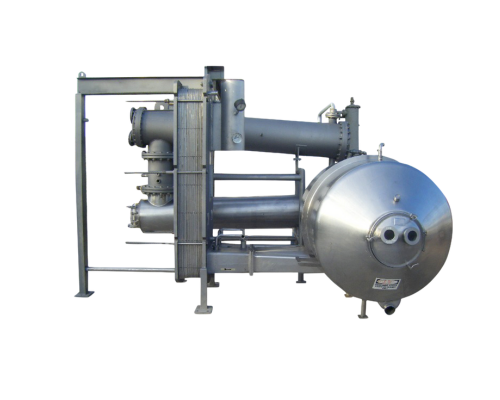
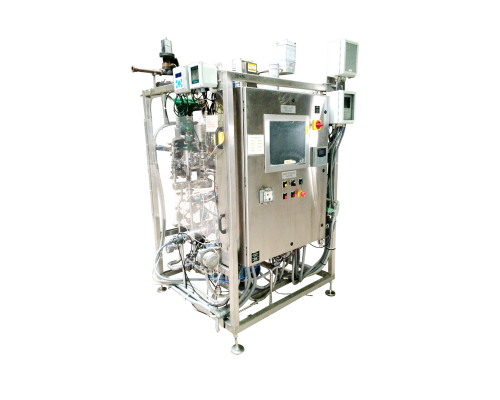
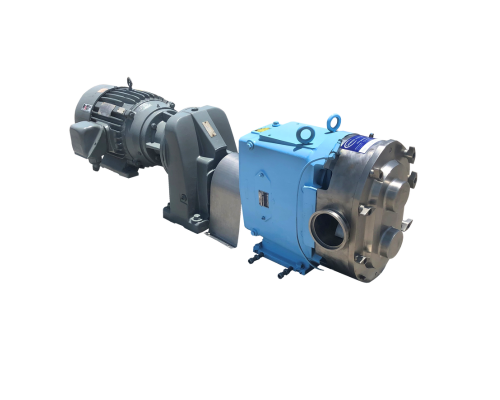
Image from Genemco
Link to Shell & Tube Heat Exchangers
The Role of Heat Exchangers in Industrial Refrigeration
Industrial refrigeration systems are all about moving heat.
Whether a facility is freezing food products, storing pharmaceuticals, cooling production areas, or maintaining refrigerated warehouses, refrigeration systems continuously transfer unwanted heat away from products and spaces.
Shell & tube heat exchangers play a major role in that process.
These exchangers allow heat to transfer between two fluids without the fluids mixing together. One fluid moves through a bundle of tubes while another flows around the outside of the tubes within the shell. This simple but highly effective design allows facilities to cool, condense, evaporate, or regulate temperatures throughout the refrigeration cycle.
In industrial refrigeration systems, shell & tube heat exchangers are commonly used as:
- Condensers
- Evaporators
- Oil coolers
- Economizers
- Intercoolers
- Suction accumulators with heat exchange functions
They are especially common in ammonia refrigeration systems because of their ability to handle demanding industrial operating conditions.
Why Cold Storage Facilities Depend on Shell & Tube Heat Exchangers

Cold storage operations don’t get the luxury of “downtime windows.”
A refrigeration issue at a cold storage facility can quickly become a product loss issue. Whether storing frozen foods, pharmaceuticals, dairy products, meat, or temperature-sensitive ingredients, maintaining stable temperatures is critical.
That’s one reason shell & tube exchangers remain such a popular choice in these environments.
They’re known for:
- Continuous-duty performance
- Rugged industrial construction
- Long service life
- Ability to handle large refrigeration loads
- Compatibility with ammonia systems
- Easier maintenance access compared to some compact exchanger designs
For maintenance managers and refrigeration operators, dependable equipment matters more than flashy specifications.
Common Industrial Refrigeration Applications
Ammonia Refrigeration Systems
Many industrial refrigeration facilities utilize ammonia because of its efficiency and effectiveness as a refrigerant.
Shell & tube heat exchangers are widely used in ammonia systems because they can handle:
- High pressures
- Large capacities
- Industrial operating conditions
- Heavy refrigeration demands
They are often selected for evaporative and condensing applications throughout food plants and refrigerated warehouses.
Blast Freezing Operations
Blast freezers rely on rapid heat removal to freeze products quickly while preserving quality and texture.
Shell & tube exchangers help support:
- Refrigerant cooling loops
- Compressor cooling
- Oil cooling systems
- Process refrigeration support
In facilities running high-capacity freezing operations, reliable heat transfer becomes essential to maintaining throughput.
Refrigerated Warehousing
Cold storage warehouses operate around the clock to maintain strict environmental conditions.
Shell & tube exchangers are frequently integrated into centralized refrigeration systems supporting:
- Freezer rooms
- Cooler spaces
- Loading docks
- Refrigerated distribution areas
The durability of shell & tube designs helps support long operational cycles with demanding workloads.
Food Processing Refrigeration
Food plants often combine processing and refrigeration systems into one integrated operation.
Shell & tube exchangers assist with:
- Refrigeration loops
- Product cooling
- Compressor oil cooling
- Heat recovery systems
- Glycol and secondary cooling applications
Their flexibility makes them useful across multiple parts of a facility.
Why Many Facilities Still Prefer Shell & Tube Designs
In today’s industrial world, compactness and efficiency are important — but uptime is king.
That’s why many refrigeration professionals still favor shell & tube exchangers for large industrial systems.
These exchangers are often preferred because they:
- Handle fouling better than some compact exchanger styles
- Offer easier serviceability
- Perform well under demanding industrial loads
- Have proven reliability over decades of use
- Can be mechanically cleaned and maintained
- Are familiar to operators and technicians
In environments where equipment runs continuously, simplicity and dependability often win.
The Reality of Equipment Failures & Long Lead Times
Anyone in industrial refrigeration knows the situation.
A critical heat exchanger fails unexpectedly. Production is impacted. Storage temperatures become a concern. The replacement equipment has a 20-week lead time.
Meanwhile, the customer doesn’t have 20 weeks.
That’s where Genemco helps many facilities, contractors, and OEMs bridge the gap.
Helping OEMs Support Their Customers
One thing Genemco understands well is that industrial refrigeration is a relationship-driven industry.
If you’re an OEM, contractor, or refrigeration engineering firm, Genemco is not trying to take the long-term equipment sale away from you.
In many cases, it’s exactly the opposite.
Let’s say your customer has already committed to purchasing a new shell & tube heat exchanger, but the factory lead time stretches several months. That customer still has product to protect and operations to maintain right now.
That’s where Genemco can help provide temporary solutions using quality used or surplus equipment already available.
Think of it as:
- A stopgap solution
- A temporary bridge
- A bandaid
- Or sometimes even a tourniquet to keep operations alive until the permanent equipment arrives
And from the customer’s perspective, you become the hero because you found a way to help keep their facility operational instead of simply delivering bad news about lead times.
That kind of partnership approach matters in this industry.
Why Industrial Refrigeration Professionals Choose Genemco
Genemco’s available equipment inventory includes a broad range of industrial refrigeration and heat transfer equipment used in cold storage and processing facilities around the world.
Companies often work with Genemco because of:
- Large in-stock equipment inventory
- Faster availability compared to new manufacturing lead times
- Cost savings opportunities
- Knowledge of industrial refrigeration systems
- Experience with ammonia refrigeration applications
- Equipment sourcing support
- Emergency replacement solutions
When downtime costs thousands of dollars per hour, speed and availability can become just as important as specifications.
Image from Genemco
Link to Shell & Tube Heat Exchangers
Final Thoughts
Industrial refrigeration and cold storage facilities depend on equipment that can perform day after day under demanding conditions.
That’s one reason shell & tube heat exchangers continue to play such an important role throughout the industry. Their durability, flexibility, and long-term reliability make them a trusted solution for ammonia refrigeration systems, freezer operations, refrigerated warehousing, and food processing facilities alike.
And when equipment failures or manufacturing lead times threaten operations, companies like Genemco help facilities, OEMs, and refrigeration contractors find practical ways to keep systems running while permanent solutions are on the way.
Because in industrial refrigeration, staying operational isn’t optional — it’s mission critical.


