

Think about the products people use every morning without giving them a second thought.
The shampoo that creates the perfect lather. The lotion that spreads smoothly across the skin. The cream that maintains the same texture from the first use to the last. The soap that looks, feels, and performs exactly how customers expect.
Behind each of these products is a carefully controlled manufacturing process where temperature plays a much bigger role than most consumers realize.
In the personal care and cosmetics industry, temperature control impacts everything from viscosity and texture to ingredient stability and final product consistency. A few degrees can influence how a cream fills into a container, how a lotion blends, or how a cosmetic ingredient performs.
That's why reliable heat transfer equipment is essential throughout cosmetic manufacturing facilities.
Tube-in-tube heat exchangers provide manufacturers with a dependable solution for heating, cooling, and conditioning a wide variety of personal care products. Their durable design, straightforward operation, and ability to handle thicker liquid products make them a valuable tool in modern cosmetic and personal care production.
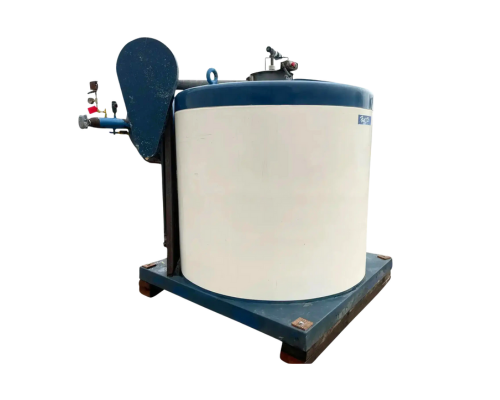
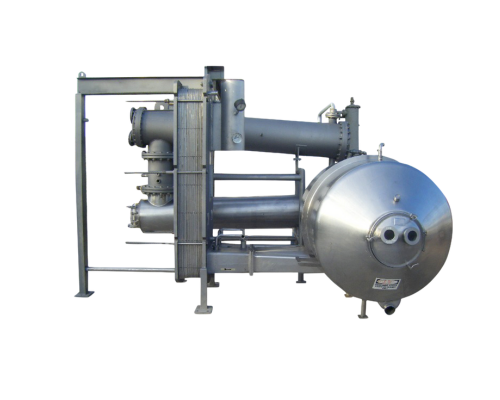
Image from Genemco
Link to Tube-in-Tube Heat Exchangers
Why Temperature Control Matters in Personal Care Manufacturing
Personal care products may appear simple when sitting on a store shelf, but manufacturing them involves a complex balance of ingredients, mixing, temperature control, and timing.
Many products contain combinations of:
- Oils and water-based ingredients
- Emulsifiers
- Fragrances
- Active ingredients
- Botanical extracts
- Thickeners
- Specialty additives
These ingredients must often be heated to blend properly, cooled to protect sensitive components, or maintained at specific temperatures to achieve the desired final characteristics.
For manufacturers, temperature control is not just about moving heat—it is about creating a product that customers recognize, trust, and continue purchasing.
How Tube-in-Tube Heat Exchangers Work
A tube-in-tube heat exchanger uses two concentric tubes to transfer heat between separate fluids.
One product stream flows through the inner tube while a heating or cooling medium moves through the surrounding outer tube. Heat transfers through the tube wall while keeping both fluids completely separated.
This design offers several advantages for personal care manufacturers because it provides reliable temperature control while accommodating products that may be thicker or more viscous than typical liquids.
Supporting Lotion Manufacturing
Lotions are carefully balanced emulsions made from oils, water, moisturizers, fragrances, and specialty ingredients.
During production, temperature affects how ingredients combine, how emulsions form, and how the finished product feels when applied.
Tube-in-tube heat exchangers may be used to help:
- Heat ingredients before blending
- Cool finished lotion products
- Maintain proper processing temperatures
- Improve transfer and pumping conditions
- Support consistent batch production
A lotion that feels smooth and consistent every time is the result of careful process control behind the scenes.
Cream Processing and Viscosity Control
Creams are often thicker and more sensitive than traditional lotions, making temperature management especially important.
Products such as:
- Facial creams
- Body creams
- Moisturizing treatments
- Anti-aging formulations
- Specialty skin care products
require controlled processing to achieve the correct texture and appearance.
Tube-in-tube heat exchangers can help manufacturers condition cream products by managing temperatures throughout production while supporting smooth product flow.
Proper temperature control helps ensure the finished product has the consistency customers expect—from the manufacturing line to the bathroom shelf.
Shampoo Manufacturing
Shampoo production involves much more than simply combining ingredients.
Manufacturers must carefully blend surfactants, conditioners, fragrances, botanical extracts, and other additives while maintaining the desired viscosity and appearance.
Tube-in-tube heat exchangers can support shampoo manufacturing by helping with:
- Ingredient preparation
- Heating before blending
- Cooling after processing
- Temperature conditioning before packaging
Consistent thermal control helps manufacturers maintain product quality while improving production efficiency.
Soap Production
Liquid soaps, specialty cleansers, and personal care washes often require precise temperature management during production.
Temperature can affect:
- Ingredient blending
- Viscosity
- Flow characteristics
- Final appearance
- Packaging performance
Tube-in-tube heat exchangers help maintain controlled temperatures during manufacturing, allowing producers to create consistent products across multiple production batches.
Cosmetic Ingredient Processing
Modern cosmetic products often contain advanced formulations designed to deliver specific benefits.
Ingredients such as botanical extracts, oils, active compounds, and specialty additives may require careful temperature handling to maintain their intended properties.
Tube-in-tube heat exchangers can assist manufacturers with:
- Ingredient conditioning
- Gentle heating and cooling
- Process temperature control
- Supporting ingredient preparation before final blending
For high-value cosmetic formulations, protecting ingredient quality throughout production is essential.
Why Tube-in-Tube Heat Exchangers Are a Practical Choice for Cosmetics
Personal care manufacturers need equipment that performs reliably while handling products with unique characteristics.
Tube-in-tube heat exchangers continue to be a valuable option because they offer:
- Durable construction
- Reliable heat transfer
- Ability to handle thicker liquid products
- Straightforward operation
- Long service life
- Flexible installation options
- Consistent performance during repeated production cycles
- Compatibility with a wide range of cosmetic formulations
In an industry where product feel, appearance, and consistency define brand reputation, dependable processing equipment matters.
Why Personal Care Manufacturers Choose Genemco
In manufacturing, downtime has a way of showing up at the worst possible time.
A heat exchanger failure doesn't wait until after a production run is complete. A processing issue doesn't consider customer deadlines or shipment schedules. When equipment is unavailable, the entire operation can feel the impact.
That's why having access to quality replacement equipment can make a significant difference.
Genemco has spent decades helping companies across the food processing, industrial refrigeration, and manufacturing industries find dependable used equipment solutions when timing matters.
Our inventory includes a wide range of processing equipment, including heat exchangers and other critical components that can help manufacturers reduce downtime and keep production moving.
When you work with Genemco, you gain access to:
- A large inventory of quality used industrial equipment
- Equipment available for quick shipment in many cases
- Experienced equipment specialists
- Inspection and testing services on many applicable units
- Global shipping capabilities
- Decades of experience serving industrial processing industries
Whether you are replacing failed equipment, adding production capacity, or searching for a temporary solution, our goal is to help you find equipment that fits your needs.
Image from Genemco
Link to Tube-in-Tube Heat Exchangers
Supporting OEMs Without Competing With Them
At Genemco, we understand the importance of OEM relationships.
Manufacturers invest significant time engineering equipment solutions, supporting customers, and delivering systems designed specifically for their applications. We don't want to take the sale away from you—we want to help you protect it.
Consider this scenario:
You've worked with a cosmetics manufacturer, helped design the right equipment solution, and secured the project. The customer is ready to move forward, but the manufacturing lead time for the new equipment is several months.
Then an unexpected failure occurs.
The customer's production schedule cannot simply wait.
This is where Genemco can step in as a temporary resource.
Think of us like a spare tire on a long road trip. The spare tire isn't replacing the vehicle, and it isn't the destination. It is there to keep the journey moving until the permanent solution is back in place.
By providing quality used equipment while your new system is being manufactured, we help your customer maintain production and avoid unnecessary downtime.
When the new equipment arrives, you remain the company that delivered the long-term solution. Your customer remembers that you helped solve their immediate challenge instead of leaving them stuck waiting.
That's how we believe partnerships should work—by making each other stronger.
Final Thoughts
The personal care and cosmetics industry is built on consistency. Customers expect their favorite products to look, feel, and perform the same every time they use them.
Behind that consistency are manufacturers relying on dependable processing equipment to control temperatures, protect ingredients, and maintain production quality.
Tube-in-tube heat exchangers continue to support this industry by helping process lotions, creams, shampoos, soaps, and cosmetic ingredients with reliable heating and cooling performance.
Whether you are expanding production, replacing aging equipment, responding to unexpected downtime, or looking for a temporary solution while waiting on new equipment, Genemco is ready to help. Because in personal care manufacturing, the smallest process details often make the biggest difference—and having the right equipment partner helps keep those details under control.


