

A great sauce has to do more than taste good once.
Whether it’s ketchup, barbecue sauce, hot sauce, salsa, gravy, pasta sauce, dressing, or another specialty condiment, customers expect the same flavor, texture, color, and quality every time they open the bottle or jar.
Behind that consistency is a carefully controlled production process—and industrial heat tunnels can play an important role in keeping that process moving.
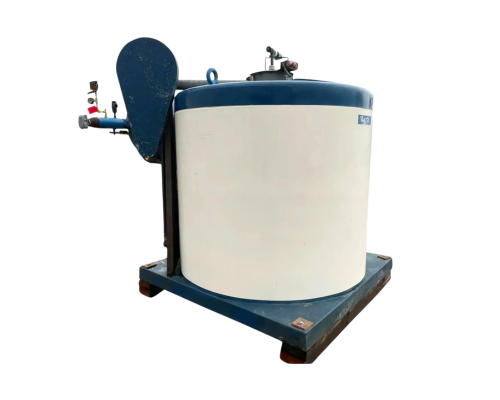
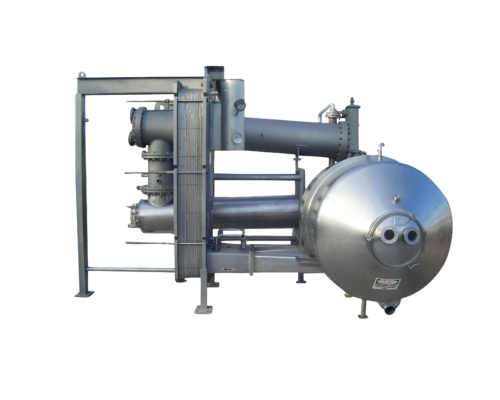
Image from Genemco
Link to Blanchers & Heat Tunnels
Where Heat Tunnels Fit Into Sauce & Condiment Production
Sauce and condiment production can involve several heating, cooling, filling, and packaging steps. Depending on the product and process, an industrial heat tunnel may be used for heating, pasteurizing, warming, cooking, or cooling.
The exact application depends on the recipe, packaging format, required processing conditions, and overall production line.
For example, a sauce may be heated as part of its cooking or pasteurization process before being filled into containers. After filling, additional controlled heating may be used as part of the product's thermal process. Cooling equipment may then be needed to bring the product or package down to an appropriate temperature before labeling, packaging, or storage.
The heat tunnel isn't necessarily responsible for the entire thermal process. Instead, it can be one important piece of a much larger system.
And in food processing, those pieces have to work together.
Why Controlled Heating Matters
Sauces and condiments can be surprisingly sensitive to processing conditions.
Temperature that is too low, too high, or inconsistent can affect the final product. Depending on the recipe, changes in processing can influence things like viscosity, color, flavor, texture, separation, and overall product quality.
That makes controlled and repeatable heating especially important.
Industrial heat tunnels can provide a controlled environment where products or packages move continuously through a defined thermal zone. Depending on the equipment, factors such as temperature, residence time, airflow, conveyor speed, and heating method can be managed to achieve the desired process.
For a high-volume producer, consistency isn't just a nice-to-have.
It's the goal.
If you've ever opened two bottles of the "same" sauce and wondered why one seems thicker, darker, or tastes slightly different, you already understand why process control matters.
Applications Across Sauce & Condiment Production
Industrial heat tunnels can support a wide range of products, including:
- Ketchup
- Barbecue sauce
- Hot sauce
- Salsa
- Pasta and tomato sauces
- Gravies
- Marinades
- Salad dressings
- Cheese and specialty sauces
- Fruit sauces and toppings
- Dipping sauces
- Mustards
- Relishes and other condiments
Depending on the application, tunnel systems may be incorporated into processes involving pasteurization, warming, cooking, drying, cooling, or other controlled thermal treatments.
The right equipment depends heavily on the product and the production line surrounding it.
Heat Tunnels Are Part of a Bigger Picture
One of the easiest mistakes to make when looking at food-processing equipment is to focus on one machine in isolation.
A heat tunnel doesn't operate in a vacuum.
It has to fit into the production line.
That means considering what happens before the tunnel, what happens inside it, and what happens afterward. Product flow, conveyor speed, heating method, temperature requirements, cooling requirements, packaging, available utilities, floor space, controls, and production capacity can all influence equipment selection.
For example, a producer may need a tunnel capable of handling a specific container size or conveyor configuration. Another facility may be looking for additional capacity to keep up with growing demand. Someone else may simply need a replacement for equipment that unexpectedly went down.
And that last situation is where things can get stressful.
Because production schedules don't always care that the equipment you need has a six-month lead time.
Why Consider Used Heat Tunnel Equipment?
When a heat tunnel needs to be replaced or additional capacity is needed, buying new isn't always the only option.
New equipment can be the right long-term solution, but new equipment can also come with manufacturing schedules and lead times that don't necessarily line up with the needs of a production facility.
That's where used equipment can make sense.
At Genemco, we specialize in quality used industrial refrigeration and food processing equipment. With more than 37 years in the industry, we've seen plenty of situations where a facility doesn't necessarily need the perfect piece of brand-new equipment tomorrow—they need a practical solution that can help keep production moving today.
Our inventory of used food processing equipment changes regularly and includes equipment such as blanchers, heat tunnels, tunnel ovens, pasteurizing tunnels, warming tunnels, cooling tunnels, and other processing equipment.
A used machine that's already built and available can sometimes provide an option when waiting for a new machine simply isn't practical.
And "used" doesn't have to mean "settling."
The important question is whether the equipment fits the application.
What to Look for When Choosing a Used Heat Tunnel
When evaluating a used heat tunnel for sauce or condiment production, it's important to look beyond the machine itself.
Consider:
- Product: What sauce or condiment will be processed?
- Container: What size and type of package will run through the system?
- Temperature: What heating or thermal-treatment conditions are required?
- Residence time: How long does the product or package need to remain in the thermal zone?
- Production rate: How much product needs to move through the line?
- Conveyor: Does the belt width and configuration work for the application?
- Heating method: Is the system designed for steam, hot water, air, or another method?
- Cooling: What needs to happen after the heating process?
- Utilities: Does the facility have the required steam, water, electrical, or other connections?
- Controls: Can the equipment be integrated into the existing control system?
- Footprint: Is there enough room on the production floor?
- Overall line integration: Will the tunnel work with the equipment before and after it?
The goal isn't simply to find a heat tunnel.
It's to find a heat tunnel that makes sense for your process.
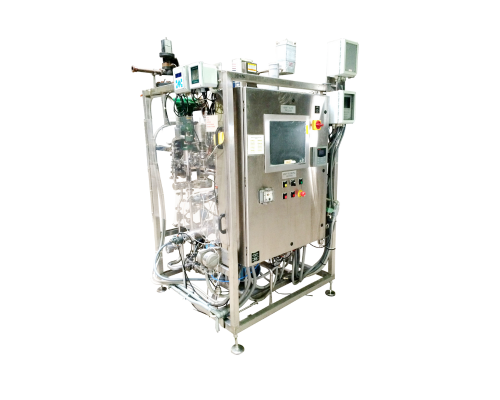
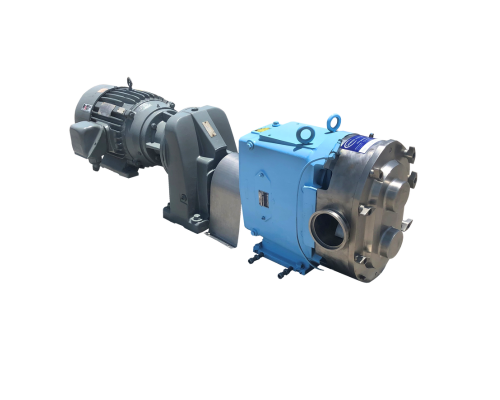
Image from Genemco
Link to Blanchers & Heat Tunnels
If You're an OEM, We're Not Here to Take Your Sale
If you're an OEM selling a new heat tunnel or processing system, we understand the last thing you need is someone getting between you and your customer.
That's not what we're trying to do.
You made the sale. You designed the long-term solution. You should be the one your customer remembers for solving their problem.
But sometimes the problem is happening right now.
Maybe their existing tunnel failed unexpectedly. Maybe production has increased faster than anticipated. Maybe the new equipment is being manufactured, but the customer can't afford to sit idle while they wait for it.
That's where Genemco can potentially help.
Think of us as the bandaid—or, when things are really serious, the tourniquet.
We're not trying to replace the new equipment you've sold. We're helping your customer bridge the gap between what they have today and what you've sold them for tomorrow.
Instead of your customer hearing, "You'll have to wait until the new equipment arrives," there may be another option:
Let's see if Genemco has something available that can help keep you running in the meantime.
That lets you stay focused on delivering the right long-term solution while your customer has a chance to keep their operation moving.
And when that new equipment is ready?
The bandaid comes off.
The long-term solution goes in.
Everybody wins.
Keeping Sauce & Condiment Production Moving
In sauce and condiment production, consistency matters from the first batch of the day to the last bottle on the pallet.
Industrial heat tunnels can be an important part of achieving that consistency, whether they're being used for heating, pasteurization, warming, cooking, cooling, or another controlled thermal step.
And when equipment needs to be replaced, expanded, or brought online quickly, used equipment can provide a practical alternative to simply waiting for new machinery.
At Genemco, our goal is straightforward: help keep your operation in motion.
Whether you're a food processor looking for equipment or an OEM trying to help a customer through an unexpected equipment gap, we're here to help find a solution.


