

Walk into a prepared food manufacturing facility and you're likely to see a lot happening at once.
Vegetables are being washed and cut. Ingredients are moving down conveyors. Sauces are being mixed. Proteins are being cooked. Products are being portioned, packaged, chilled, frozen, or sent to another part of the plant.
It's a coordinated operation where one piece of equipment can affect everything that comes after it.
That includes the industrial blancher.
Blanchers are used throughout food processing to provide a controlled heat treatment to fruits and vegetables before they move into the next stage of production. In prepared foods, that might mean getting vegetables ready to become part of a soup, side dish, sauce, entrée, filling, or ready-to-eat meal.
The blancher may not be the most glamorous machine on the floor, but when you're producing food at industrial scale, consistent preparation matters.
What Does a Blancher Do in Prepared Food Processing?
Blanching is a relatively simple concept: expose a food product to controlled heat for a specific amount of time, typically using hot water or steam.
But in a commercial prepared-food operation, that simple concept can serve several purposes.
Blanching can help:
- Inactivate enzymes that can affect color, flavor, and texture
- Soften vegetables before additional processing
- Prepare ingredients for cutting, mixing, or filling
- Set or preserve natural color
- Remove certain raw flavors
- Help drive gases from plant tissue
- Prepare ingredients for freezing, drying, cooking, or other downstream processes
The FDA identifies several of these functions in commercial food processing, including enzyme inactivation, softening, preparation for cutting, color setting, and removal of raw flavors.
The important takeaway is that blanching isn't necessarily the final cooking step.
Think of it more as getting an ingredient ready for the job it has to do next.
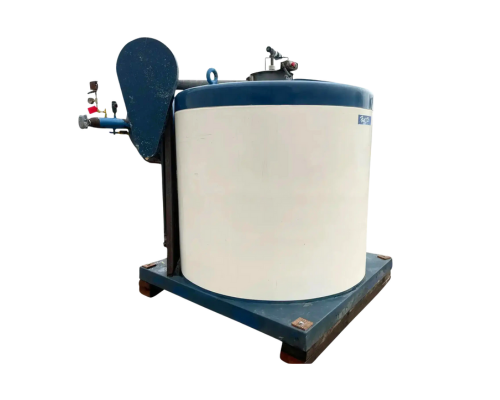
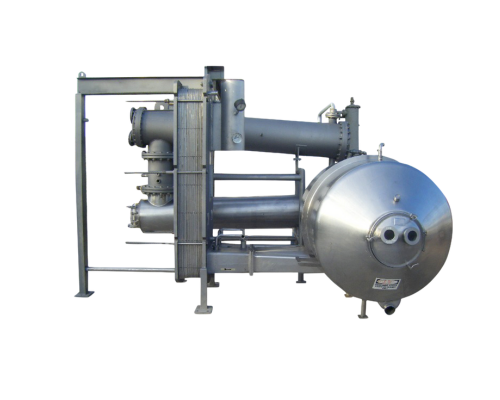
Image from Genemco
Link to Blanchers & Heat Tunnels
Where Do Blanchers Fit Into Prepared Foods?
"Prepared foods" covers a pretty broad portion of the food industry.
We're talking about products that may be assembled, cooked, portioned, packaged, refrigerated, or frozen before they ever reach the consumer.
Blanching may be incorporated into processing for products and ingredients such as:
- Prepared vegetable side dishes
- Soups and soup mixes
- Stews
- Frozen meals
- Ready-to-eat meals
- Vegetable-based entrées
- Pasta and vegetable dishes
- Sauces and prepared fillings
- Meal kits and component ingredients
- Mixed vegetables
- Potato products
- Specialty prepared foods
The exact process will vary from facility to facility.
A processor making frozen vegetable blends may have a very different blanching setup from a manufacturer preparing vegetables for a soup or ready-meal line.
That's why the equipment needs to be considered in the context of the entire production process, rather than as an isolated machine.
Why Blanch Vegetables Before They Become Part of a Prepared Food?
Imagine a prepared meal containing broccoli, carrots, peas, and other vegetables.
Those ingredients have to arrive at the next stage with the right characteristics.
If they're too firm, too soft, inconsistent in size, or significantly different from batch to batch, that can create problems further down the line.
Blanching gives processors a way to apply a controlled thermal treatment before those ingredients become part of the finished product.
Consistency Starts Upstream
Prepared food manufacturing depends heavily on consistency.
The customer expects the same soup to taste the same next week.
The same frozen entrée should have the same vegetables, texture, appearance, and portion from one production run to the next.
That starts long before the product is sealed in its final package.
A properly controlled blanching process can help standardize the condition of vegetables before they move into mixing, cooking, freezing, or packaging.
And at industrial production rates, that's a big deal.
Blanching Can Help Control Enzyme Activity
Fresh fruits and vegetables naturally contain enzymes that can contribute to changes in color, flavor, and texture.
Blanching uses heat to deactivate those enzymes, helping maintain the desired characteristics of the product during subsequent processing and storage.
This is particularly useful when an ingredient is going to spend additional time in the production system before becoming part of the finished food.
For example, a vegetable may be blanched, cooled, mixed with other ingredients, cooked or processed again, packaged, and eventually refrigerated or frozen.
The blancher is one part of that chain.
Getting that step right can help the rest of the process start with a more predictable ingredient.
Texture Matters—Especially in Prepared Foods
Texture is where things can get particularly interesting.
A vegetable in a prepared meal needs to be cooked enough to be enjoyable, but not so much that it turns into mush before the consumer ever opens the package.
And the ideal texture can depend on what happens later.
A vegetable destined for a soup may have different requirements from one going into a frozen entrée. A vegetable being mixed into a sauce may need to behave differently from one that will remain a visible component of the finished meal.
Blanching can soften product and prepare it for additional processing, but the process has to be controlled.
Under-processing and over-processing can both create problems.
University of Minnesota Extension notes that insufficient blanching can allow enzymes to remain active, while over-blanching can lead to overly soft vegetables and nutrient loss.
For an industrial processor, that makes temperature, residence time, product size, throughput, and equipment configuration important considerations.
Blanching Before Freezing, Cooking, or Mixing
One reason blanchers are so versatile in prepared food manufacturing is that they're not tied to one particular downstream process.
A blanched ingredient might go on to be:
Blanched → Cooled → Frozen
or:
Blanched → Mixed → Cooked → Packaged
or:
Blanched → Drained → Combined With Other Ingredients → Packaged
or:
Blanched → Further Processed → Refrigerated → Distributed
The blancher is essentially helping prepare the ingredient for whatever comes next.
That flexibility makes blanching useful in facilities producing everything from frozen meals to soups, vegetable sides, and other prepared foods.
Hot-Water vs. Steam Blanching
Industrial blanchers commonly use hot water or steam.
Hot-water systems expose the product to heated water, while steam systems use controlled steam to transfer heat to the product.
The right approach depends on the product and application.
Factors can include:
- Product type
- Product size and thickness
- Required treatment time
- Production rate
- Desired texture
- Water usage
- Steam availability
- Existing plant utilities
- Downstream processing
- Available floor space
There isn't one universal blancher that's right for every prepared-food manufacturer.
The equipment needs to fit the process.
What to Consider When Buying a Used Blancher
When a processor needs a blancher, it's tempting to start with one number:
"How many pounds per hour can it handle?"
Capacity is obviously important.
But it's only one piece of the puzzle.
You also want to understand the equipment's heating method, conveyor configuration, belt width, product-contact surfaces, controls, residence time, utility requirements, physical footprint, and previous application.
And perhaps most importantly, you need to understand what you want the equipment to accomplish.
A blancher used for one prepared-food application may not be the best fit for another.
That's why an equipment search should involve more than matching a product name to a machine name.
Why Choose Genemco for Used Blanching Equipment?
At Genemco, we understand that food processing equipment is part of a bigger picture.
A blancher has to work with the equipment around it and the production process happening before and after it.
We've been in the used industrial equipment business since 1989, with experience across both industrial refrigeration and food processing applications.
Our inventory changes regularly and can include used blanchers and other food processing equipment.
One of the biggest advantages of looking at used equipment is simple:
You may be able to get your hands on equipment that's already built.
That's valuable when a prepared-food operation needs additional capacity, has an unexpected equipment issue, or needs a replacement without waiting through the entire manufacturing cycle of a new machine.
Used doesn't have to mean "settling."
It means looking at what is already available and determining whether it can accomplish the job you need it to do.
And sometimes the answer is surprisingly practical.
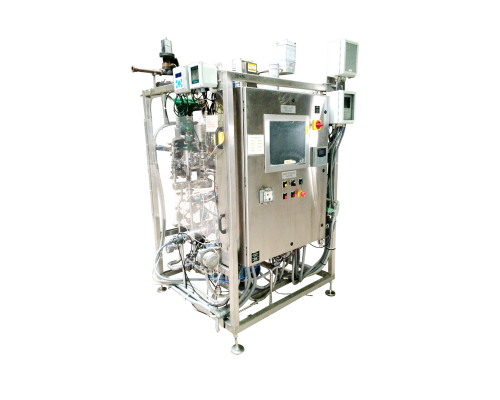
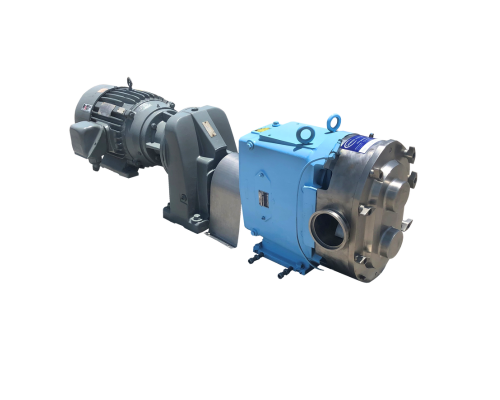
Image from Genemco
Link to Blanchers & Heat Tunnels
When Your Customer Can't Wait for the New Equipment
Here's a situation we think deserves more attention—especially for OEMs.
Maybe you're an OEM who just sold a customer a new blancher.
You've done the engineering. You've worked through the application. You've recommended the right machine. You've earned the order.
Then the customer asks:
"When can we get it?"
And the answer isn't next week.
It might be several months.
Meanwhile, their existing equipment is getting older, production demand isn't slowing down, and the customer still has orders to fill.
That's where Genemco can be useful.
We're Not Looking to Take Your Sale
If you're the OEM, we don't want your sale.
Seriously.
We're not trying to replace the new equipment you've sold or convince your customer to abandon the solution you've engineered for them.
We'd rather help you make that solution possible.
If there's a long lead time, consider whether a quality-used blancher could help your customer stay operational while the new equipment is being manufactured.
Think of it as the equipment equivalent of keeping a spare tire in the truck.
You hope you don't need it.
But when you do, you're pretty glad it's there.
And depending on the situation, maybe it's less of a spare tire and more of a bandaid or tourniquet—something that keeps a production problem from turning into a full-blown shutdown.
Let the OEM Be the Hero
We actually like the idea of putting the OEM front and center.
You sold the customer the long-term solution.
You should get to be the one who solves their problem.
Genemco can simply be the resource you call when the calendar doesn't cooperate.
Maybe you tell your customer:
"Your new equipment is on the way. In the meantime, let's see if we can find something to keep you running."
That's a much better conversation than:
"You'll have to wait six months."
Your customer gets an option.
You keep the project moving.
And when the new equipment arrives, they can transition to the permanent solution you've provided.
We're not trying to be the hero.
We want to help you be the hero.
Because Prepared Food Production Doesn't Have an "Off" Button
Prepared food manufacturing is built around schedules.
Ingredients arrive when they're supposed to. Production runs when it's scheduled. Trucks show up. Orders leave. Employees and customers are counting on the line doing what it's supposed to do.
When one piece of equipment goes down, the effects can travel quickly.
That's why having options matters.
A used industrial blancher may provide a processor with additional capacity, a replacement option, or a way to keep production moving while a new machine is being built.
And for OEMs, it can provide another tool for taking care of a customer when the permanent solution has a long lead time.
At Genemco, that's the role we'd like to play.
Not replacing the equipment you've sold. Helping your customer keep producing until it arrives.
Because sometimes the best thing you can do for a customer isn't finding them a different long-term solution.
It's helping them make it through the next few months with the right temporary one.


