

Walk through a fruit or vegetable processing facility and you'll see a lot of equipment doing very different jobs. Washers, cutters, sorters, conveyors, freezers, dryers, packaging systems—and somewhere in that process, you may find an industrial blancher quietly doing one of the most important jobs on the line.
Blanching might not be the most talked-about part of food processing, but for many fruits and vegetables, it's an important step in protecting the quality of the product as it moves from fresh produce to a finished, processed food.
So, what exactly does a blancher do, and why does it matter?
What Is Blanching?
At its simplest, blanching is a short, controlled heat treatment.
Produce is exposed to hot water, steam, or another heat source for a specific amount of time and is often cooled rapidly afterward. The goal isn't necessarily to fully cook the product. Instead, blanching is used to achieve a particular processing result before the product moves on to the next stage.
One of the primary reasons for blanching fruits and vegetables is to deactivate enzymes that can continue causing changes in the product after harvest. Those enzymes can contribute to changes in color, flavor, texture, and nutritional quality during storage. Freezing slows those reactions, but it doesn't necessarily stop them, which is why blanching is an important step for many frozen vegetables.
In other words, blanching helps the processor get the product ready for what comes next.
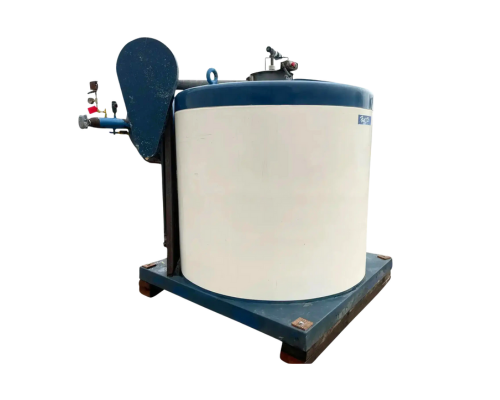
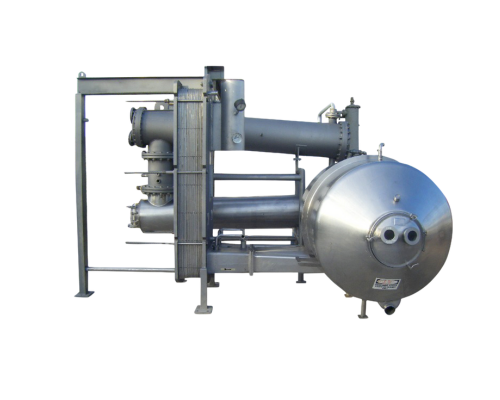
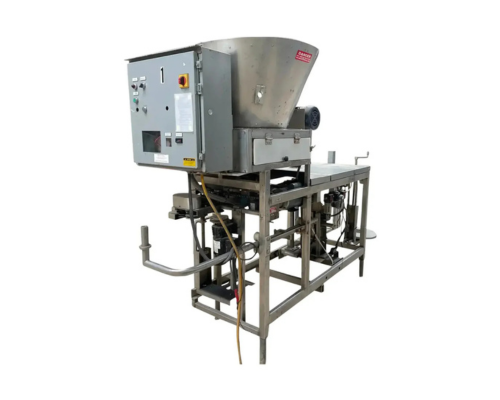
Image from Genemco
Link to Blanchers & Heat Tunnels
Why Do Fruit & Vegetable Processors Use Blanchers?
There isn't just one reason a processor blanches a product. The exact purpose depends on the crop, the final product, and the rest of the processing line.
1. Enzyme Inactivation
This is one of the biggest reasons blanching is used.
Fresh produce contains naturally occurring enzymes. If those enzymes remain active, they can contribute to undesirable changes during storage—including loss of color, changes in flavor, and deterioration of texture.
A properly controlled blanching process helps deactivate those enzymes before freezing, drying, canning, or other processing takes place. USDA guidance specifically recognizes enzyme inactivation as a key purpose of blanching vegetables.
For a processor, that means the blancher isn't simply "heating vegetables." It's helping control what happens to that product after it leaves the processing line.
2. Protecting Color
Color matters.
A bright green vegetable that arrives at the grocery store looking like it came straight from the field is going to have a very different consumer appeal than one that has turned dull or brown.
Blanching can help stabilize the natural color of many vegetables by controlling enzyme activity. USDA research notes that proper blanching helps retain characteristic vegetable color, while insufficient or excessive blanching can negatively affect quality.
The challenge is finding the right balance.
Too little heat or too little residence time may not accomplish the intended process. Too much can negatively affect texture, flavor, and overall product quality.
That's why the blancher's ability to provide a consistent, repeatable process matters.
3. Managing Texture
Blanching can soften fruits and vegetables and prepare them for subsequent processing.
That can be particularly useful when the product needs to be cut, packed, frozen, canned, dried, or otherwise handled after blanching.
But again, there's a line between properly treated and over-processed. Over-blanching can lead to undesirable texture and other quality issues.
For processors, controlling temperature and residence time isn't just about hitting a number on a control panel. It's about producing a product that behaves the way it is supposed to throughout the rest of the process.
4. Preparing Product for Freezing
Blanching is especially important in frozen vegetable processing.
Once vegetables are harvested, their natural enzymatic activity doesn't simply stop. Freezing slows that activity, but blanching before freezing helps address it first. USDA guidance notes that most vegetables intended for freezing should be blanched to help maintain quality.
A typical process may look something like:
Harvest → Wash → Sort → Cut → Blanch → Cool → Freeze → Package
Of course, every product and processing facility is different, but the blancher can be an important link between preparation and preservation.
5. Preparing Product for Canning and Other Processing
Blanching can also play a role before canning and other thermal processing operations.
In some applications, the heat treatment softens the product and can make subsequent handling and packing easier. It can also help remove air from plant tissue, which can be important during packaging and thermal processing.
The blancher may be one piece of a much larger system, but what happens inside that piece of equipment can influence what happens farther down the line.
What Products Are Commonly Blanched?
Blanching is widely used throughout fruit and vegetable processing, particularly where produce will be frozen, canned, dried, or otherwise processed.
Depending on the facility and application, blanchers may be used for products such as:
-
Green beans
-
Peas
-
Corn
-
Carrots
-
Broccoli
-
Cauliflower
-
Potatoes
-
Spinach and leafy vegetables
-
Other mixed vegetables
-
Certain fruits and specialty produce
Potatoes are a good example of how the blanching process can be tailored to the final product. In frozen French fry production, blanching can help create more uniform color, inactivate enzymes, and influence texture and oil absorption before frying.
And while vegetables are probably the first thing that comes to mind when most people hear "blanching," the technology can also be used with certain fruit-processing applications. Research has explored blanching methods for products including pears and apples, among others.
What Happens Inside an Industrial Blancher?
Industrial blanchers are designed to process much more product, much more consistently, than anything you'd find in a kitchen.
Depending on the equipment, product can be conveyed through a controlled hot-water or steam environment. The processor manages factors such as:
-
Product throughput
-
Temperature
-
Residence time
-
Product thickness or size
-
Conveying speed
-
Heating method
-
Water or steam conditions
-
Cooling requirements
Some systems use continuous conveyors to move product through the treatment zone. Others are designed around different conveying or immersion configurations.
The basic concept is relatively simple:
Get the product to the required temperature, hold it there for the required amount of time, and move it along to the next step.
Doing that consistently at industrial production rates is where the engineering comes in.
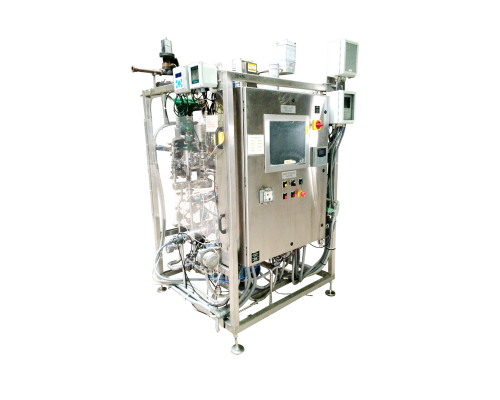
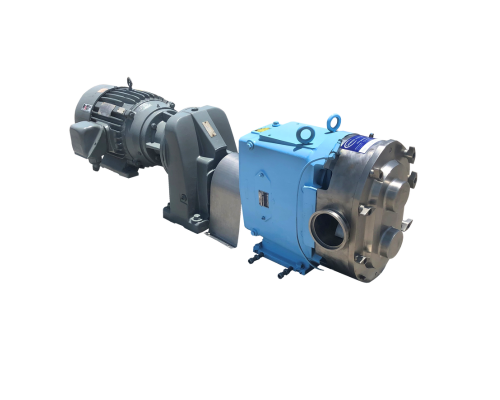
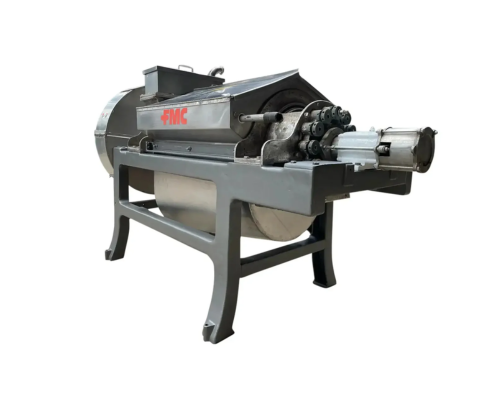
Image from Genemco
Link to Blanchers & Heat Tunnels
Finding the Right Used Blancher Isn't Just About Finding a Machine
If you're looking for a used blancher, it's tempting to start with capacity and dimensions.
Those things matter—but they're not the whole story.
The right equipment needs to make sense for the product and the process.
Is it a steam blancher or hot-water system? What type of conveyor does it use? What is the available belt width? What production rate was it designed for? What utilities does it require? What are the heating and controls configurations? How does it fit into the equipment already in the plant?
A machine can look perfect on paper and still not be the right fit for a particular processing line.
That's where working with an equipment company that understands industrial food processing can make the search a lot easier.
Why Choose Genemco for Used Blanching Equipment?
At Genemco, we've spent more than 37 years working with industrial equipment used in refrigeration and food processing applications.
That experience matters when you're trying to locate a piece of equipment that needs to do more than simply turn on and run.
Genemco offers used and pre-owned food processing equipment, including blanchers and related thermal processing equipment, with inventory that changes regularly.
One of the biggest advantages of used equipment is straightforward:
You may not have to wait for a machine to be manufactured.
When production needs to keep moving, having equipment already in inventory can be a major advantage.
And sometimes the equipment search isn't about finding the exact same machine that was originally specified. It's about finding a practical piece of equipment that can accomplish the job, fit the process, and get the plant where it needs to go.
That's the kind of problem we're used to helping customers work through.
OEMs: Let Us Help You Keep Your Customer Running
Here's another situation we're very familiar with.
You're an OEM. You've worked with your customer, selected the right new equipment, built the proposal, answered the questions, and finally got the purchase order.
Then comes the timeline.
"Six months until delivery."
Your customer understands. They want the new equipment. They know it's the right long-term answer.
But their production schedule doesn't necessarily care about that six-month timeline.
Maybe their existing blancher is becoming unreliable. Maybe demand has increased. Maybe they're trying to keep an aging line alive until the replacement arrives.
This is where we want to help—not compete.
We don't want your sale. We want to help you protect it.
If you've sold your customer the right new equipment, let Genemco help bridge the gap between "we ordered it" and "it's installed and running."
Think of a used piece of equipment as a temporary patch.
Maybe it's a bandaid for a manageable problem.
And when things are more urgent, maybe it's the tourniquet that keeps production going until the permanent solution gets there.
Either way, the objective is the same: keep your customer producing.
You remain the OEM partner they trusted to provide the long-term solution. Genemco simply becomes another resource in your toolbox when timing becomes a problem.
Because sometimes making your customer the happiest isn't about getting everything installed tomorrow.
It's about helping them get through today.
A Practical Solution for a Very Real Problem
Food processing doesn't always follow the schedule on the project timeline.
Equipment fails. Harvest seasons arrive. Orders increase. Production demands change. Lead times stretch.
The good news is that processors don't always have to choose between waiting for new equipment and shutting down production.
A quality-used blancher may provide another option.
For food processors, it can mean additional capacity, a replacement, or a way to bridge an unexpected equipment gap.
For OEMs, it can mean having another resource to call when a customer's needs can't wait for the new machine.
And for Genemco, that's exactly where we want to be.
Not replacing the long-term solution. Helping you get there.
When your operation—or your customer's operation—needs a little help keeping the line moving, Genemco is ready to help find a practical path forward.


