

In dairy processing, the smallest details can have a noticeable impact on the finished product. Air is one of them.
From receiving raw milk to producing yogurt, cream, and other dairy products, air can enter the process during pumping, mixing, transportation, and handling. While it may not seem like a major concern, excess air can contribute to foaming, measurement inaccuracies, processing challenges, and unwanted changes in product quality.
That is where an industrial deaerator comes in.
For dairy processors, deaeration can be an important step in maintaining consistent production. And when a deaerator needs to be replaced, upgraded, or added to an existing line, finding the right equipment at the right time can make a real difference.
What Is an Industrial Deaerator?
An industrial deaerator is a piece of processing equipment designed to remove unwanted air and gases from liquids. In dairy applications, this may include dissolved gases and tiny air bubbles present in milk or other dairy products.
Depending on the system, deaeration can use vacuum conditions to help release trapped air and gases from the product. The released gases are then removed from the processing vessel.
Think of it this way: even when a product looks smooth and uniform, it may contain air that can interfere with the next step in production. A deaerator helps address that issue before it creates bigger headaches downstream.
Not every dairy process requires the same type of deaeration equipment. The right solution depends on the product, processing conditions, production rate, and the goals of the operation.
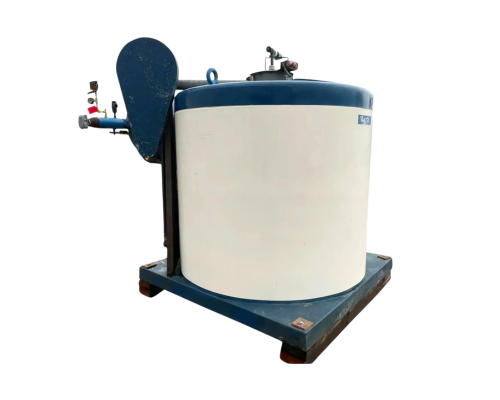
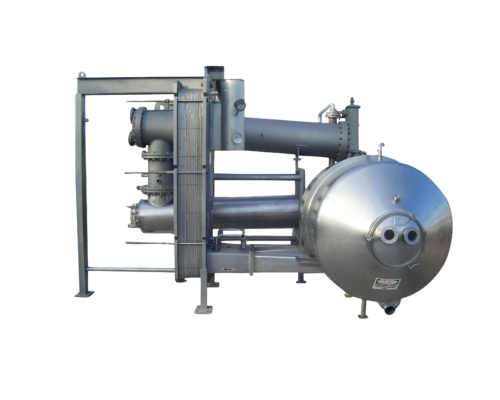
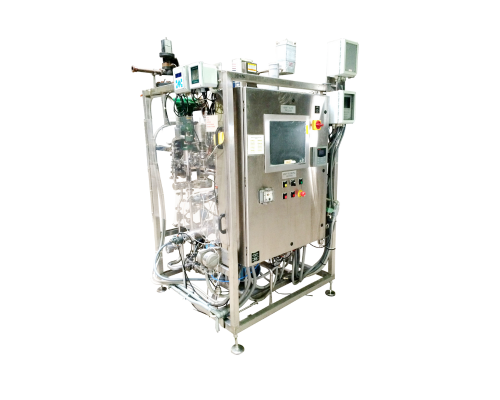
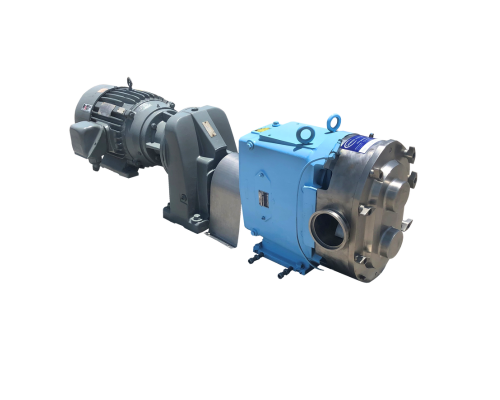
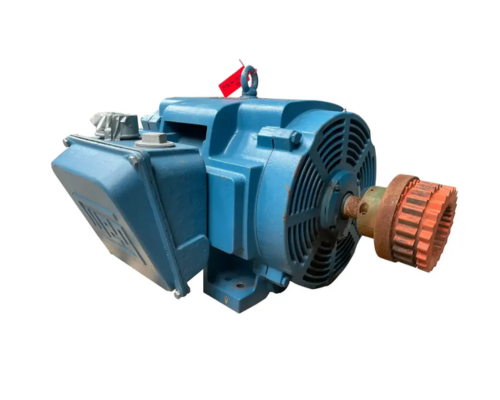
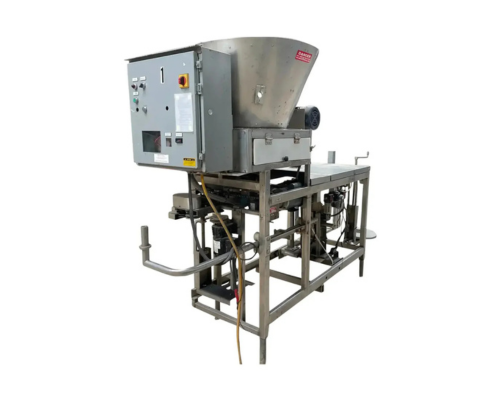
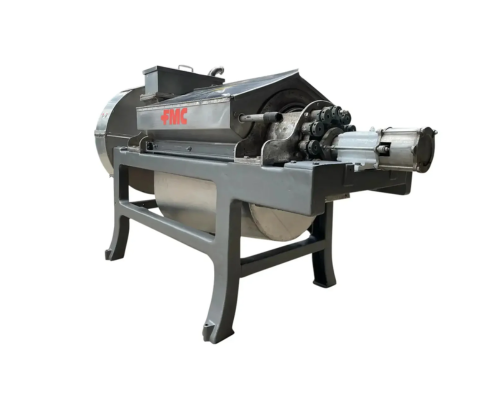
Image from Genemco
Link to Flavorizers, Vacuumizers, Deaerators & Food Additive Skids
How Are Deaerators Used in Dairy Processing?
Deaerators can serve several purposes throughout dairy production. Here are some of the ways they help processors keep their lines running consistently.
1. Milk Processing and Pasteurization
Raw milk can contain both dissolved and dispersed air. Additional air may be introduced during collection, transportation, pumping, and handling.
In certain milk-processing lines, deaeration is incorporated into the treatment process to remove unwanted air before subsequent processing steps. Vacuum deaeration can also help remove certain volatile compounds that contribute to undesirable flavors or odors.
Reducing excess air can support more consistent processing and help limit some of the problems associated with air in the product, including inaccurate measurements and deposits on heat-transfer surfaces.
2. Yogurt and Cultured Dairy Products
Air management is also important when producing yogurt and other cultured dairy products.
Excess air can affect product stability, texture, and viscosity. Deaeration may help improve the consistency of the product and support more reliable downstream processing.
For processors working with concentrated milk bases or incorporating milk powders, air introduced during mixing can be an additional consideration. Depending on the process, deaeration may be used to help remove that air before heat treatment or fermentation.
The goal is straightforward: give the product the conditions it needs to move through the process as intended.
3. Cream and High-Fat Dairy Products
Air can create challenges when processing cream and other high-fat dairy products. In some applications, excess air can contribute to measurement inconsistencies, fouling, or unwanted changes in the product's behavior during processing.
For example, air in cream can contribute to premature fat destabilization or pre-churning under certain conditions. This can be especially important in operations where consistent fat handling and product yield matter.
A properly selected deaeration system can help address air-related issues when they are relevant to the process.
4. Improved Process Consistency
Sometimes, the biggest benefit of deaeration is not one dramatic improvement. It is the reduction of small, recurring problems that make a production line harder to manage.
Depending on the application, effective deaeration can help with:
-
More reliable measurements: Reducing entrained air can improve the accuracy of certain volumetric measurement systems.
-
Less foaming and air-related disruption: Removing excess air can help stabilize product flow and handling.
-
Heat-transfer performance: Reducing air-related deposits may help limit fouling in some processing systems.
-
Product quality: Removing unwanted gases and certain volatile compounds can support the desired flavor, stability, and consistency.
-
Downstream processing: Better control of air content can help equipment such as separators, homogenizers, and filling systems operate more consistently.
These benefits depend on the product, equipment design, and operating conditions. A deaerator is not a one-size-fits-all solution, but in the right application, it can be an important part of an efficient dairy processing line.
Choosing the Right Deaerator for Your Operation
If you're evaluating a deaerator for your facility, start with the requirements of the process rather than simply looking for a vessel that appears to match the existing equipment.
Consider the following:
-
Product and application: Is the equipment intended for raw milk, cream, yogurt base, or another dairy product?
-
Required capacity: Can the unit handle your actual production rate?
-
Operating conditions: Are the temperature, vacuum level, pressure, and flow requirements compatible with your process?
-
System integration: Will the equipment work with your existing pasteurizer, separator, homogenizer, pumps, and controls?
-
Sanitary requirements: Does the design meet the hygienic and cleaning requirements of your application?
-
Condition and documentation: For used equipment, what is known about its history, condition, specifications, and maintenance needs?
It is also important to distinguish between a deaerator and a general-purpose tank. Although some equipment may look similar from the outside, its design, internal components, and operating requirements can make a significant difference in how it performs.
Taking time to confirm these details helps reduce the risk of purchasing equipment that looks right on paper but does not fit the process.
Why Consider Genemco for Dairy Processing Equipment?
At Genemco, we understand that processing equipment is more than a line item on a purchasing list. It plays a role in keeping production moving, meeting customer commitments, and avoiding unnecessary downtime.
As a family-owned and operated company serving the industry since 1989, Genemco buys and sells used and pre-owned industrial food processing and refrigeration equipment. Our inventory spans a broad range of equipment categories, and availability changes as equipment comes in and ships out.
For processors looking for a deaerator or related equipment, working with Genemco offers several potential advantages:
Explore used equipment options. A pre-owned unit may provide a practical alternative when a suitable machine is available and meets your application's requirements.
Look for a solution that fits your timeline. If your existing equipment needs attention or a production expansion cannot wait, exploring used equipment may help you identify an option sooner than a new-equipment order.
Work with a team that understands industrial equipment. Finding the right unit involves more than matching a nameplate. Capacity, process requirements, configuration, and overall condition all matter.
Keep your options open. Whether you're replacing equipment, adding capacity, or evaluating a temporary solution, Genemco can help you explore what's available and determine whether a used unit is worth considering.
For example, Genemco has featured equipment such as a Crepaco deaerator tank. As with any pre-owned equipment, its suitability for a specific dairy application should be confirmed against the unit's specifications and the facility's process requirements. Contact Genemco to discuss current availability and potential options for your operation.
OEMs: Your Equipment Sale Is Still the Goal
For original equipment manufacturers, the path from a customer's first conversation to a completed installation can take time. A customer may be ready to move forward, but manufacturing schedules, component availability, and installation planning can leave a gap between the decision to buy and the day the new equipment is running.
Meanwhile, production doesn't necessarily stop to accommodate the schedule.
That's where Genemco may be able to help.
If your customer needs a deaerator or related processing equipment while waiting for a new system, a suitable used unit could provide a temporary bridge. It might not be the long-term solution you've designed and quoted, but it may help the customer maintain production while the permanent equipment is being built.
We're not here to replace your sale. We're here to help protect it.
Think of Genemco as an additional resource you can bring into the conversation when timing becomes a challenge. If a temporary unit is appropriate, we can explore available used equipment that may help cover the gap until your new system is ready.
That gives you another way to support your customer instead of leaving them to figure out the immediate problem on their own. You remain focused on delivering the right long-term solution, and your customer has another potential option to consider in the meantime.
And when the new equipment arrives and is ready for installation, you are still the partner delivering the solution your customer originally needed.
The result? You help your customer navigate a difficult timeline, keep the project moving forward, and strengthen the relationship that matters long after the equipment is installed.
Keep Your Dairy Processing Operation Moving with Genemco
A deaerator may not always be the most visible piece of equipment in a dairy plant, but when air starts affecting product quality or process performance, its role becomes much more apparent.
Whether you're evaluating a replacement, planning an expansion, or looking for a way to bridge a gap while new equipment is on order, Genemco can help you explore used industrial processing equipment options.
Need a deaerator or related dairy processing equipment? Visit Genemco.com to explore our inventory or contact our team to discuss what you need. We'll help you look at the available options so you can make an informed decision for your operation.
Genemco — quality used equipment, in stock and ready to ship globally.


