
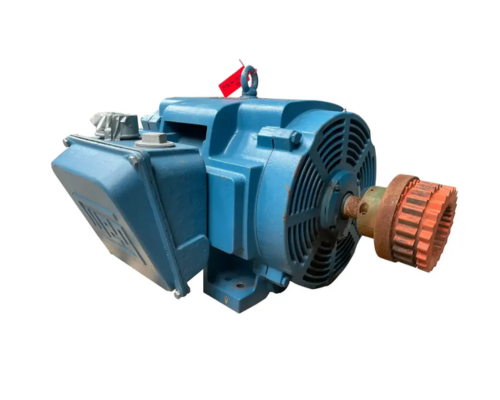
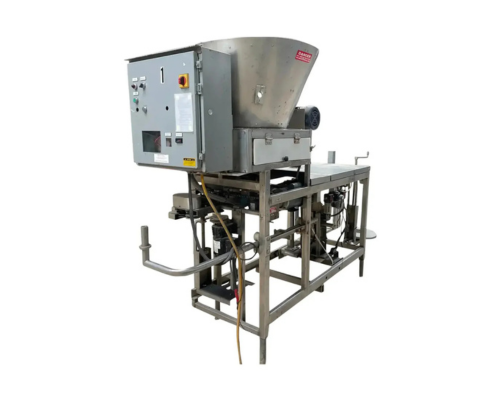
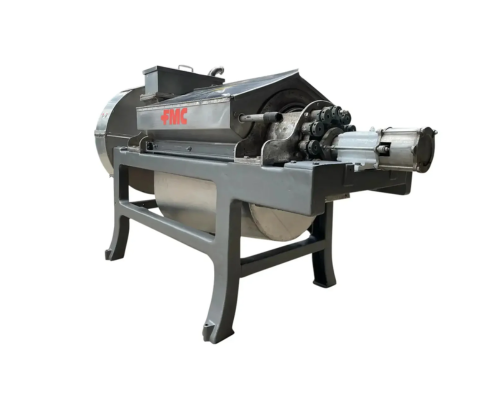

From barbecue sauce and ranch dressing to hot sauce, marinades, and specialty condiments, flavor is what makes a product stand out. But behind every familiar bottle on a grocery store shelf is a manufacturing process that must deliver that same taste, texture, and quality batch after batch.
For food processors, getting the flavor right isn't just about the recipe. It's also about how ingredients are introduced, blended, dispersed, and processed at scale.
That raises an interesting equipment question: Can industrial flavorizers be used in sauce, dressing, and condiment manufacturing?
Yes, depending on the equipment's design and intended application. Flavor-related processing equipment can help manufacturers incorporate flavor ingredients into a product, but the term flavorizer can describe different types of machinery. Understanding what a specific unit is designed to do is essential when evaluating it for a production line.
What Is an Industrial Flavorizer?
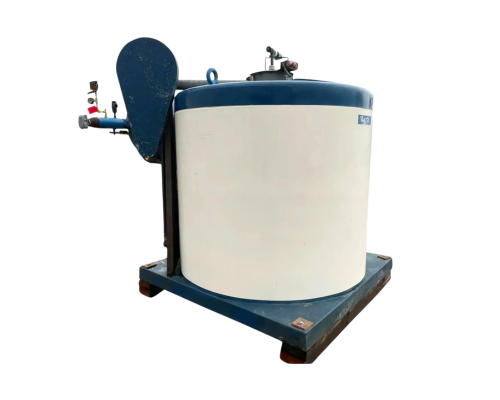
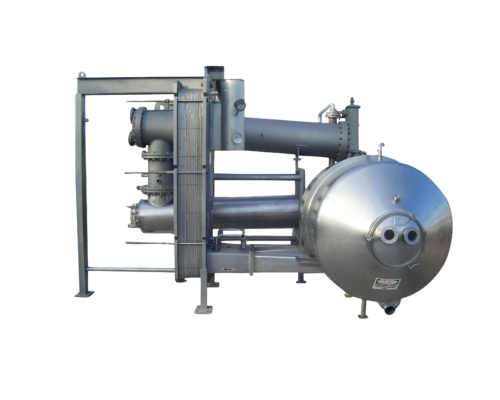
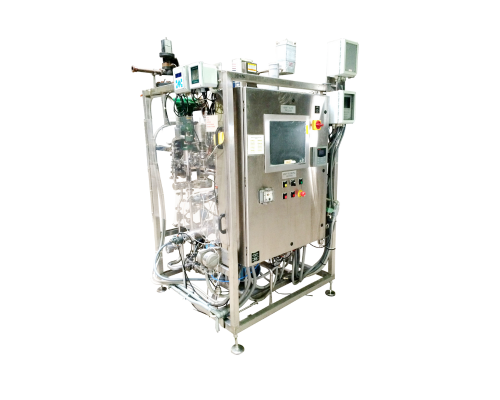
An industrial flavorizer is a term that may be used for equipment designed to introduce, combine, or develop flavor in a product. Depending on the manufacturer and machine design, that could involve blending flavor ingredients, incorporating liquid or powdered additions, or supporting a particular processing step.
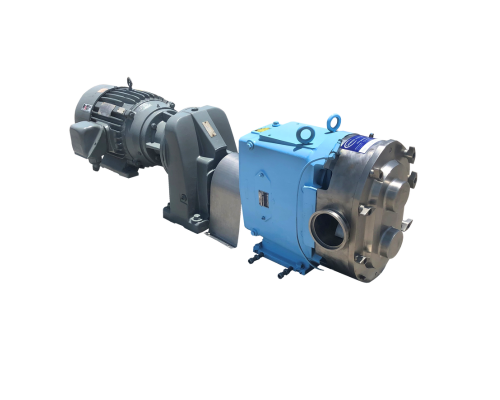
In sauce and condiment production, similar functions are often handled by mixing tanks, agitated vessels, high-shear mixers, inline blending systems, and other specialized processing equipment.
The goal is straightforward: help bring the ingredients together in a controlled, repeatable way.
Of course, not every machine marketed as a flavorizer performs all these functions. Some equipment is designed for a specific process, so manufacturers should verify the unit's capabilities before assuming it can handle a particular recipe.
Image from Genemco
Link to Flavorizers, Vacuumizers, Deaerators & Food Additive Skids
How Are Flavorizers Used in Sauce, Dressing, and Condiment Manufacturing?
Sauces and condiments can have surprisingly complex formulations. A recipe might combine water, oils, vinegar, spices, sweeteners, stabilizers, herbs, extracts, and other ingredients that behave very differently during processing.
Equipment selection depends on how those ingredients need to come together.
1. Incorporating Flavor Ingredients
Think about a hot sauce made with vinegar, peppers, spices, and flavor extracts—or a marinade containing herbs, seasonings, and liquid flavorings.
Those ingredients must be distributed throughout the product rather than concentrated in one part of the batch. Depending on its design, flavoring or blending equipment may help incorporate these additions and produce a more uniform mixture.
For manufacturers, consistent ingredient distribution helps support a repeatable product from one production run to the next.
2. Producing Dressings and Emulsified Sauces
Dressings such as ranch, creamy Italian, and mayonnaise-based products present a different challenge. Oil and water don't naturally stay combined without the right formulation and processing conditions.
These products may require specialized mixing, high-shear processing, or homogenization to develop the desired texture and maintain a stable emulsion.
An industrial flavorizer may contribute to a broader flavoring or blending process, but it should not automatically be considered an emulsifier. If a stable oil-and-water emulsion is the goal, the equipment must be specifically suited to that duty.3. Blending Spices, Herbs, and Seasonings
Barbecue sauces, spice-forward marinades, mustard products, and specialty condiments often rely on a carefully balanced combination of seasonings.
Processing equipment can help disperse these ingredients throughout a batch, reducing uneven concentrations and supporting consistent flavor. The right approach depends on whether the ingredients are liquids, powders, pastes, or larger particulates.
Manufacturers should also consider whether the equipment can handle the recipe's viscosity and solids content without creating unwanted texture changes.
4. Supporting Recipe Changes and Product Variety
Many food processors manufacture more than one product on the same line. A facility might produce several sauce flavors, different dressing formulations, or seasonal condiment varieties.
Equipment that supports controlled ingredient additions and repeatable blending can help make these changeovers more manageable. Sanitation and allergen controls are especially important when moving between recipes with different ingredients.
The practical benefit is flexibility: equipment that fits the process can help manufacturers manage a broader product range without sacrificing the consistency customers expect.
5. Working Alongside Heating and Other Processing Steps
Some sauces and condiments require heating, cooking, cooling, or additional treatment as part of their production process. Flavor-related equipment may operate before, during, or after these steps, depending on the recipe and the system design.
Temperature can influence flavor development, ingredient behavior, and product texture. For heat-sensitive flavor compounds, the timing of addition may be particularly important.
A flavorizer should therefore be evaluated as part of the complete processing line—not as a standalone solution to every flavor, mixing, or heating challenge.
The Benefits of Choosing the Right Flavoring Equipment
When the equipment matches the application, manufacturers may see several practical benefits:
-
More consistent batches: Repeatable ingredient incorporation helps support uniform flavor throughout production.
-
Better control over formulations: Appropriate equipment can help manage the addition and distribution of liquid and dry ingredients.
-
Greater production flexibility: The right setup may support different recipes and product varieties.
-
Smoother downstream processing: A well-integrated process can help reduce issues caused by poorly dispersed ingredients or inconsistent product characteristics.
-
More efficient production: Equipment suited to the recipe and required throughput may help reduce unnecessary processing time and rework.
The results depend on the specific equipment, formulation, and process conditions. No single machine can guarantee better flavor or consistency without being properly matched to the application.
What to Consider Before Buying an Industrial Flavorizer
Before investing in a flavorizer or related processing machine, take a close look at what your operation actually needs.
Start with the product. Is it a thin vinegar-based sauce, a thick barbecue sauce, a creamy dressing, or a chunky marinade? Viscosity, solids, oil content, and sensitivity to heat can all affect equipment selection.
Define the function. Do you need to incorporate flavor extracts, disperse powdered seasonings, blend liquid ingredients, emulsify oils, or perform another specific task? The answer determines which equipment category makes the most sense.
Review capacity and integration. The machine needs to work with your batch sizes, production rate, pumps, tanks, piping, and downstream equipment.
Check sanitary requirements. Food-contact materials, cleanability, connections, and compatibility with your cleaning procedures deserve careful attention.
Evaluate the equipment's condition and documentation. For pre-owned machinery, review available specifications, operating history where available, pressure or temperature ratings if applicable, and the condition of critical components.
A machine's name alone won't tell you whether it is the right fit. Matching its actual capabilities to your product and process is the most important step.
Image from Genemco
Link to Flavorizers, Vacuumizers, Deaerators & Food Additive Skids
Why Consider Genemco for Food Processing Equipment?
When production needs change, equipment sourcing can become a project of its own. Maybe you're expanding a line to accommodate a new sauce. Maybe an existing machine needs replacing. Or perhaps you're trying to make a practical equipment decision without committing to a brand-new system right away.
That's where exploring pre-owned equipment can be worthwhile.
Family-owned and operated since 1989, Genemco buys, sells, and appraises pre-owned industrial refrigeration and food processing equipment. Our inventory spans a wide range of equipment categories, giving food manufacturers another option when evaluating machinery for their operations.
A pre-owned unit may offer an opportunity to find equipment that fits a project's needs without depending entirely on a new-build timeline. The right choice, of course, comes down to the machine's specifications, condition, availability, and compatibility with your process.
For manufacturers researching flavor-related equipment, Genemco has listed a Cherry Burrell Stainless Steel Flavorizer.
View the Cherry Burrell Stainless Steel Flavorizer
Use the listing as a starting point for evaluating the equipment's design and application. Before purchasing, confirm current availability, specifications, condition, and whether the machine is suitable for your intended product and processing requirements.
And if a flavorizer isn't the right fit, the search doesn't necessarily end there. Depending on your process, related equipment such as mixing and blending systems, tanks, pumps, or other food processing machinery may be worth evaluating.
The goal is to find a practical equipment solution for the job—not simply a machine with the right name.
OEMs: Your Equipment Sale Is the Long-Term Solution. We Can Help With the Timing.
You've worked with your customer, understood their application, and recommended the equipment that will best serve their operation. The sale is made, the order is moving forward, and the long-term solution is in sight.
Then comes the part nobody can ignore: the lead time.
Your customer still has products to make, orders to fill, and a production schedule that doesn't necessarily line up with the equipment delivery date.
If you're an OEM, you know that situation can put pressure on a relationship you've worked hard to build. Your customer needs reassurance, and they need to know there may be options while they wait.
Genemco isn't looking to step between you and the sale you've earned. We want to help you deliver a better overall experience for your customer.
Depending on the application, a suitable pre-owned flavoring or related processing unit may offer a temporary way to address the immediate need while your new equipment is being built or delivered.
Think of it as a little extra breathing room for the production team. Sometimes the situation calls for a simple bandaid; other times, it feels more like a tourniquet because the operation is under real pressure. Either way, any temporary equipment needs to be evaluated carefully for process compatibility, safety, installation, and sanitation.
The important thing is that you don't have to view the waiting period as time when nothing can be done.
You can remain the trusted OEM delivering the permanent solution while bringing another resource into the conversation to explore what might help in the meantime.
You keep the relationship. You deliver the long-term answer. And together, we may be able to help your customer keep production moving while they wait.
That's the kind of support we want to provide: not competing with the equipment you've sold, but helping you take care of the customer who trusted you to recommend it.
Find the Right Equipment for Your Process
Industrial flavorizers and related flavoring equipment can play a role in sauce, dressing, and condiment manufacturing by helping incorporate ingredients and support repeatable production. The key is understanding the specific function required and selecting equipment designed to perform it.
Whether you're exploring equipment for a new product, expanding your production capacity, or searching for an interim option while a new machine is on order, Genemco can help you explore pre-owned equipment possibilities.
Visit Genemco.com to browse equipment or contact our team to discuss what you're looking for.
Because when the recipe is ready and production needs to keep moving, having another equipment option to explore can make all the difference.


