

In industrial refrigeration and food processing, uptime is everything. A single piece of equipment going down can impact production schedules, inventory, shipping timelines, product quality, and ultimately customer relationships. That’s why heat exchangers are such a critical part of industrial operations — they quietly keep systems running efficiently behind the scenes every single day.
Among the many types of heat exchangers available, shell & tube heat exchangers continue to be one of the most trusted and widely used solutions across industrial applications. They’ve earned that reputation for a reason: durability, versatility, serviceability, and dependable performance in demanding environments.
But how do shell & tube heat exchangers compare to other styles like plate heat exchangers, scraped surface heat exchangers, tube-in-tube systems, or plate-fin exchangers? And how can companies keep operations moving when lead times on new equipment stretch longer than expected?
Let’s break it down.
What Is a Shell & Tube Heat Exchanger?
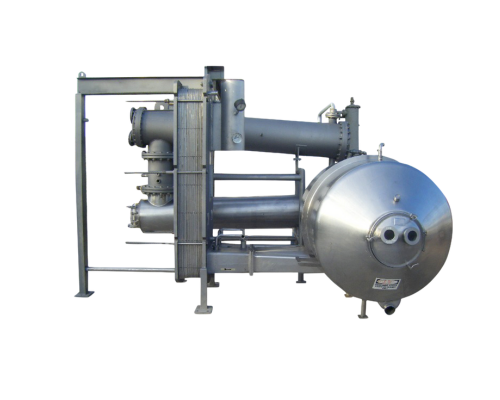
At its core, a shell & tube heat exchanger is exactly what the name implies: a bundle of tubes enclosed inside a larger cylindrical shell.
One fluid flows through the tubes while another flows around the outside of the tubes within the shell. Heat transfers between the two fluids without them mixing together. This allows companies to cool, heat, condense, or evaporate process fluids efficiently and safely.
Because of their rugged design, shell & tube heat exchangers are commonly used in industrial refrigeration systems, chemical processing, food production, beverage manufacturing, oil & gas operations, pharmaceutical facilities, and many other industrial applications.
They are especially valued in environments involving:
- High pressures
- Large temperature swings
- Heavy-duty industrial loads
- Refrigerants like ammonia
- Fouling or contaminated fluids
- Continuous operation requirements
Simply put, they are built for tough jobs.
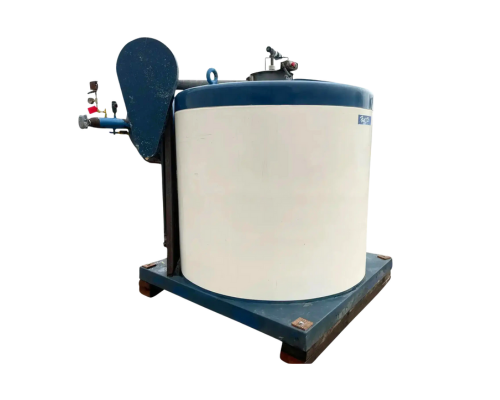
Image from Genemco
Link to Shell & Tube Heat Exchangers
Industries That Utilize Shell & Tube Heat Exchangers
Shell & tube heat exchangers are found in an enormous range of industries because heat transfer is essential to so many industrial processes.
Food Processing
Food manufacturers rely heavily on heat exchangers for:
- Cooling sauces, soups, and dairy products
- Pasteurization systems
- Refrigeration loops
- Product heating and chilling
- Oil and fat processing
From frozen foods to dairy plants, shell & tube units help maintain precise temperatures while standing up to demanding washdown and production environments.
Industrial Refrigeration & Cold Storage
Industrial refrigeration facilities use shell & tube exchangers as:
- Condensers
- Evaporators
- Oil coolers
- Economizers
- Ammonia system components
Cold storage warehouses, ice plants, food distribution centers, and refrigerated processing facilities all depend on reliable heat transfer equipment to protect product integrity.
Beverage Manufacturing
Breweries, distilleries, juice plants, and beverage bottlers use shell & tube exchangers for:
- Wort cooling
- Glycol systems
- Refrigeration support
- Process cooling
- CIP systems
Chemical Processing
Chemical plants often require equipment capable of handling:
- Corrosive fluids
- High pressures
- Extreme temperatures
Shell & tube exchangers are frequently selected because they can be customized with different tube materials and configurations.
Oil & Gas
The oil & gas industry relies on shell & tube heat exchangers for:
- Refining processes
- Compressor cooling
- Gas processing
- Heat recovery
- Lubrication systems
Their ability to withstand harsh operating conditions makes them ideal for energy-sector applications.
Pharmaceutical & Biotechnology
Temperature precision and sanitation are critical in pharmaceutical operations. Shell & tube systems help support:
- Sterile processing
- Cooling applications
- Process heating
- Clean utility systems
How Shell & Tube Heat Exchangers Compare to Other Heat Exchanger Types
Different applications call for different heat exchanger technologies. Here’s how shell & tube exchangers compare to several other common styles used throughout refrigeration and food processing industries.
Shell & Tube vs. Plate Heat Exchangers
Plate heat exchangers use thin corrugated metal plates stacked together to transfer heat between fluids. They are often more compact and efficient for clean liquid-to-liquid applications.
Plate Heat Exchanger Advantages
- Compact footprint
- High thermal efficiency
- Lower refrigerant charge
- Easier expansion capacity in some designs
Shell & Tube Advantages
- Better for high pressures and temperatures
- More tolerant of fouling
- Easier to mechanically clean in heavy industrial environments
- Better suited for ammonia refrigeration systems
- Typically more durable in rugged industrial settings
In many industrial refrigeration facilities, shell & tube designs remain preferred because reliability and durability often outweigh compactness.
Shell & Tube vs. Scraped Surface Heat Exchangers (Votators)
Scraped surface heat exchangers — commonly referred to by many as “Votators” — are designed for highly viscous or sticky products.
These systems use internal blades that continuously scrape product from the heat transfer surface to prevent buildup.
Common Applications
- Ice cream
- Peanut butter
- Sauces
- Chocolate
- Processed cheese
- Thick food products
Key Difference
Shell & tube exchangers handle utility-side and general process cooling/heating extremely well, but scraped surface exchangers are specifically engineered for products that would otherwise foul standard heat transfer surfaces very quickly.
Shell & Tube vs. Tube-in-Tube Heat Exchangers
Tube-in-tube (or double-pipe) heat exchangers consist of one pipe inside another pipe.
They are relatively simple and effective for smaller-capacity applications.
Tube-in-Tube Advantages
- Simple construction
- Good for smaller systems
- Flexible installation
Shell & Tube Advantages
- Much larger capacity capability
- More scalable for industrial operations
- Better efficiency for high-volume processes
- Easier maintenance access on larger systems
Tube-in-tube designs are common in smaller or specialized applications, while shell & tube exchangers dominate larger industrial facilities.
Shell & Tube vs. Plate-Fin Heat Exchangers
Plate-fin heat exchangers are highly compact systems commonly used in:
- Cryogenic applications
- LNG processing
- Aerospace
- Specialized gas processing
Plate-Fin Advantages
- Extremely compact
- Very high heat transfer efficiency
- Excellent for gas-to-gas applications
Shell & Tube Advantages
- Easier maintenance and repair
- Greater durability in industrial environments
- Better handling of dirty or fouling fluids
- Longer service life in many industrial applications
For many food processing and refrigeration facilities, the rugged simplicity of shell & tube exchangers makes them the practical long-term solution.
Why Industrial Facilities Continue Choosing Shell & Tube Heat Exchangers
Even with newer technologies available, shell & tube heat exchangers remain a cornerstone of industrial systems because they offer:
- Proven long-term reliability
- Excellent durability
- Strong performance under harsh conditions
- Easier serviceability
- Flexibility across many applications
- Compatibility with ammonia refrigeration systems
- Lower risk in heavy-duty industrial environments
Sometimes “tried-and-true” really is the best solution.
Image from Genemco
Link to Shell & Tube Heat Exchangers
The Reality of Equipment Lead Times
Anyone in industrial refrigeration or food processing knows the challenge: lead times.
A facility has a critical failure. Production is on the line. A replacement exchanger may take months to manufacture and ship. Meanwhile, operations still need to run.
That’s where companies like Genemco can help bridge the gap.
At Genemco, the goal is not to replace OEMs or interfere with long-term equipment sales. In fact, many OEMs, contractors, and engineering firms work with Genemco specifically to help support their customers during emergencies or supply chain delays.
Think of it less as competition — and more as support.
If a customer is facing a six-month lead time on a new heat exchanger, they may need a temporary solution now to keep product moving and operations running safely. A quality used or surplus heat exchanger can act as a practical short-term solution — a “bandaid” or even a “tourniquet” — until the permanent equipment arrives.
And when that happens, the OEM still wins the long-term project while becoming the hero who helped keep the customer operational in the meantime.
That type of partnership mentality matters in this industry.
Why Companies Choose Genemco for Heat Exchanger Equipment
Genemco’s inventory includes a wide range of industrial refrigeration and food processing equipment, including shell & tube heat exchangers from respected manufacturers.
Companies often turn to Genemco because of:
- Large available inventory
- Faster equipment availability
- Cost savings compared to new
- Experience in industrial refrigeration and food processing
- Support for urgent breakdown situations
- Equipment sourcing capabilities
- Global shipping experience
For many facilities, finding the right equipment quickly can mean the difference between staying operational and experiencing costly downtime.
And in industries where every hour matters, responsiveness matters too.
Final Thoughts
Shell & tube heat exchangers have remained an industrial staple for decades because they continue delivering dependable performance where it matters most.
Whether in food processing, cold storage, beverage manufacturing, chemical processing, or industrial refrigeration, these systems help keep production moving safely and efficiently.
While newer exchanger technologies each have their place, shell & tube exchangers continue to offer the rugged durability, serviceability, and versatility that industrial facilities rely on every day.
And when unexpected failures or long lead times threaten operations, having a trusted equipment partner like Genemco can help facilities, OEMs, and contractors keep customers running until permanent solutions arrive.


