
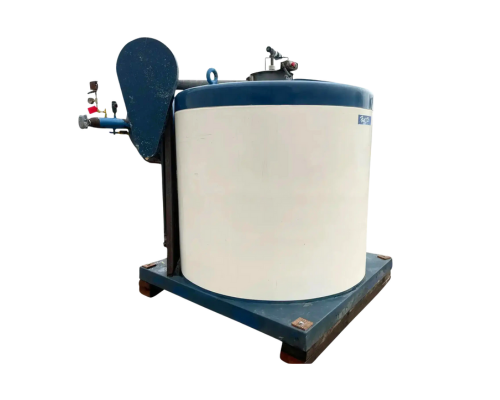
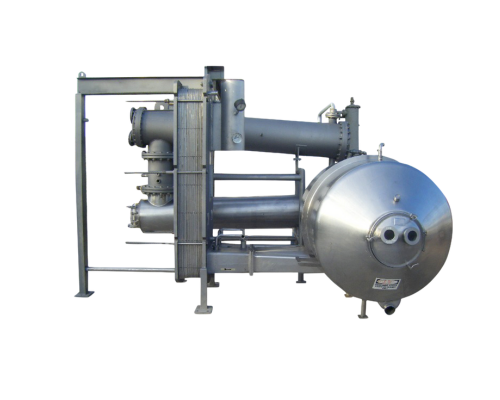
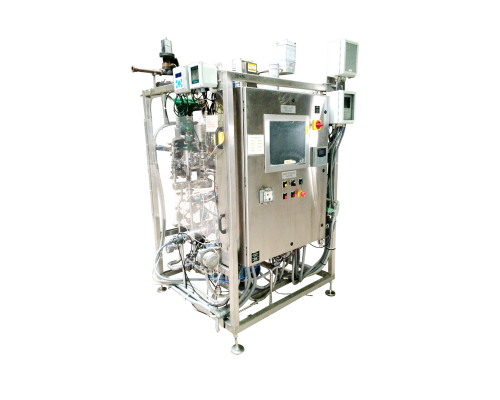
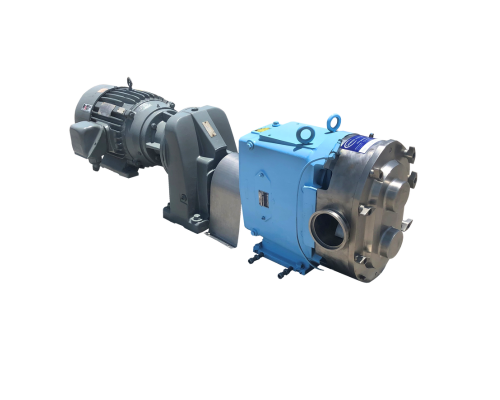

When people think about an industrial refrigeration system, they usually picture the big pieces of equipment—the compressors, evaporative condensers, vessels, or evaporators. Those are the components that often get the attention because they're large, powerful, and easy to spot on the engine room floor.
But every experienced refrigeration technician, plant engineer, or maintenance manager knows that the smaller supporting components are just as important. A refrigeration system is only as reliable as every piece working together, and tube-in-tube heat exchangers quietly play a vital role in maintaining efficiency, protecting equipment, and supporting stable system operation.
Although their design is relatively simple, tube-in-tube heat exchangers are found throughout industrial refrigeration systems, helping facilities control temperatures, recover energy, and keep critical equipment operating within designed limits.
Let's take a look at where tube-in-tube heat exchangers fit into industrial refrigeration systems and why they continue to be a dependable solution across food processing plants, cold storage warehouses, distribution centers, breweries, meat processors, and countless other industrial facilities.
Image from Genemco
Link to Tube-in-Tube Heat Exchangers
Small Component, Big Responsibility
Industrial refrigeration is all about moving heat.
Every compressor, condenser, evaporator, and vessel exists for one reason—to transfer heat from one place to another as efficiently as possible.
Tube-in-tube heat exchangers help make that process happen.
Their concentric tube design allows two separate fluids to exchange heat without mixing. One fluid flows through the inner tube while another circulates through the outer annular space, transferring heat through the tube wall.
Because of their durable construction and straightforward design, they're well suited for demanding industrial environments where reliability often matters just as much as efficiency.
Supporting Ammonia Refrigeration Systems
Ammonia has long been recognized as one of the most efficient refrigerants used in industrial refrigeration.
Facilities processing food, beverages, dairy products, meat, frozen foods, and cold storage products depend on ammonia systems every day because of their excellent thermodynamic performance and energy efficiency.
Tube-in-tube heat exchangers are commonly integrated into ammonia refrigeration systems for various auxiliary cooling duties, helping maintain proper operating temperatures throughout the system.
By supporting stable operating conditions, they contribute to improved system performance and equipment longevity.
Secondary Glycol Loops
Many refrigeration systems use secondary glycol loops to safely transfer cooling throughout a facility without circulating refrigerant directly into production areas.
Tube-in-tube heat exchangers are often used within these systems to transfer heat efficiently between glycol and other process fluids.
Applications may include:
- Food processing plants
- Beverage production
- Pharmaceutical facilities
- Ice production
- Cold storage warehouses
Maintaining consistent glycol temperatures helps ensure stable cooling throughout the entire process.
Oil Cooling
Compressors work hard.
Whether it's a rotary screw compressor operating around the clock or a reciprocating compressor handling fluctuating loads, lubricating oil absorbs a tremendous amount of heat during normal operation.
If oil temperatures become too high, lubrication performance can decline, equipment wear may increase, and compressor efficiency can suffer.
Tube-in-tube heat exchangers are frequently used to cool compressor oil by transferring heat to another cooling medium before the oil is recirculated through the lubrication system.
Keeping oil within its recommended operating temperature helps protect one of the most valuable assets in the engine room.
Refrigerant Subcooling
Every bit of refrigeration efficiency matters.
Subcooling liquid refrigerant before it reaches expansion devices can improve system performance by reducing flash gas formation and increasing refrigeration capacity.
Tube-in-tube heat exchangers are sometimes incorporated into subcooling circuits to improve liquid refrigerant conditions before it continues through the refrigeration cycle.
For facilities operating around the clock, even relatively small efficiency improvements can translate into meaningful energy savings over time.
Heat Recovery
One of the most overlooked opportunities in industrial refrigeration is recovering heat that would otherwise be rejected to the atmosphere.
Many facilities are discovering that waste heat generated during refrigeration can be redirected for useful purposes throughout the plant.
Recovered heat may be used for:
- Washdown water
- Process water heating
- Boiler makeup water
- Space heating
- Cleaning operations
- Domestic hot water systems
Tube-in-tube heat exchangers help transfer that usable heat to another fluid stream, allowing facilities to make better use of energy they've already paid to generate.
Instead of viewing heat as waste, processors can often transform it into another valuable resource.
Compressor Cooling
Industrial compressors generate significant heat during compression.
Managing those temperatures helps maintain reliable operation while reducing stress on internal components.
Tube-in-tube heat exchangers may be used within compressor cooling systems to regulate operating temperatures and help maintain consistent performance during demanding production schedules.
For plants operating twenty-four hours a day, dependable compressor cooling contributes to improved reliability and fewer unexpected interruptions.
Process Cooling Applications
Industrial refrigeration extends far beyond keeping freezers cold.
Many manufacturing processes rely on controlled cooling to maintain product quality and production efficiency.
Tube-in-tube heat exchangers support process cooling applications involving:
- Food processing
- Dairy manufacturing
- Beverage production
- Meat and poultry processing
- Seafood processing
- Pharmaceutical manufacturing
- Chemical processing
- Ice production
- Industrial manufacturing
Whether cooling ingredients, production equipment, or process fluids, reliable heat transfer helps facilities maintain consistent operations.
Why Refrigeration Professionals Continue to Trust Tube-in-Tube Heat Exchangers
Industrial refrigeration systems are expected to operate reliably under demanding conditions for years.
That's one reason tube-in-tube heat exchangers have remained a trusted solution for decades.
Their advantages include:
- Rugged industrial construction
- Reliable heat transfer performance
- Excellent durability in demanding environments
- Straightforward maintenance
- Long service life
- Flexible installation options
- Compatibility with a variety of industrial cooling applications
- Dependable performance in continuous-duty refrigeration systems
Sometimes the best equipment isn't the one with the most features—it's the one that quietly performs its job day after day without demanding attention.
Why Industrial Refrigeration Facilities Choose Genemco
Every refrigeration professional has experienced it.
A critical heat exchanger develops a leak. A compressor cooler fails unexpectedly. Production managers are asking how quickly the system can be restored while maintenance teams scramble to locate replacement equipment.
Unfortunately, new equipment isn't always immediately available.
Current manufacturing schedules can stretch weeks or even months, and most facilities simply don't have that kind of time.
That's where Genemco comes in.
For more than three decades, we've helped industrial refrigeration professionals source quality used equipment that helps facilities return to operation faster.
Our extensive inventory of industrial refrigeration equipment often includes heat exchangers, compressors, condensers, evaporators, vessels, pumps, and many other critical system components that are available for prompt shipment.
When you work with Genemco, you gain access to:
- One of the industry's largest inventories of used industrial refrigeration equipment
- Equipment available for immediate shipment in many cases
- Experienced refrigeration equipment specialists
- Pressure testing and inspection services on many applicable units
- Worldwide shipping capabilities
- Decades of experience serving industrial refrigeration professionals
Our focus has always been simple: reduce downtime whenever possible and help customers get back to making product.
Image from Genemco
Link to Tube-in-Tube Heat Exchangers
A Partner for OEMs When Time Isn't on Your Side
Equipment manufacturers build the future of industrial refrigeration.
At Genemco, we respect that role, and we're not interested in taking new equipment sales away from OEMs.
Instead, we see an opportunity to strengthen the relationships OEMs have already built with their customers.
Imagine you've sold a replacement heat exchanger as part of a larger refrigeration upgrade. Your customer is excited about the new equipment—but manufacturing lead times mean delivery is still six months away.
Meanwhile, their existing unit fails next week.
They don't need a permanent replacement today—they need a way to keep ammonia circulating, compressors protected, and production moving until the new equipment arrives.
That's where Genemco can help.
Think of us as your relief pitcher. You've already won the confidence of your customer and secured the long-term solution. We simply step in during the difficult innings, providing quality used equipment that helps stabilize operations until your new equipment is ready to take the field.
When installation day arrives, your customer still receives the equipment they purchased from you, and they'll remember that you found a practical way to keep their plant running instead of telling them to wait.
To us, that's what partnership is all about. We help support your customer, protect your reputation, and keep production moving until the permanent solution is in place.
Final Thoughts
Industrial refrigeration systems depend on countless components working together, and tube-in-tube heat exchangers are one of those dependable pieces that often operate quietly in the background while performing an essential job.
From ammonia refrigeration systems and secondary glycol loops to oil cooling, refrigerant subcooling, heat recovery, compressor cooling, and process cooling applications, these heat exchangers contribute to reliable, efficient system performance across a wide range of industries.
Whether you're replacing a failed component, upgrading an existing refrigeration system, expanding production capacity, or searching for an interim solution while waiting for new equipment, Genemco is ready to help.
Because in industrial refrigeration, uptime isn't just a goal—it's what keeps products frozen, production lines operating, and businesses serving customers every single day.


