

In food processing, temperature control is rarely just about turning the heat up or down.
The right amount of heat, applied for the right amount of time, can make the difference between a product that meets specifications and one that doesn't. Whether the goal is to preserve color and texture, deactivate enzymes, pasteurize a product, cook it, dry it, or prepare it for the next stage of production, industrial food processors rely on specialized thermal processing equipment to get the job done.
Two pieces of equipment you'll often see in these applications are industrial blanchers and heat tunnels.
While they can look similar from the outside—both may use conveyors, stainless-steel construction, controlled temperatures, and continuous product flow—they serve different purposes.
And when a production line needs one, the last thing a processor wants to hear is, "The new one has a six-month lead time."
That's where used equipment can sometimes make a very practical difference.
What Is an Industrial Blancher?
An industrial blancher is designed to expose food products to controlled heat for a specific period of time, typically using hot water, steam, or another controlled heating method.
Blanching is especially common in fruit and vegetable processing. Rather than fully cooking the product, the process provides a short, controlled heat treatment that can help deactivate enzymes, preserve color and texture, soften the product, remove surface contaminants, and prepare the food for additional processing such as freezing, drying, or canning.
The important part is control.
A blancher isn't simply a large pot of boiling water. Industrial blanching equipment is designed around variables such as product type, product size, belt speed, temperature, residence time, and production capacity.
Different blanchers may use belt, drum, screw, or other conveying systems to move product through the heating zone.
In other words, the blancher is doing more than just heating the food. It's delivering a repeatable thermal treatment as part of a larger production process.
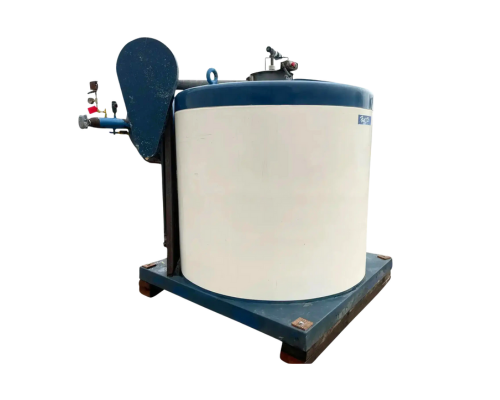
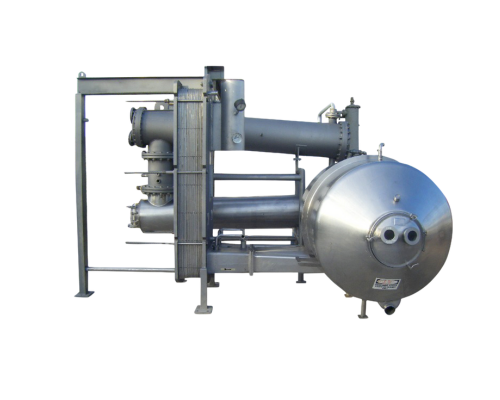
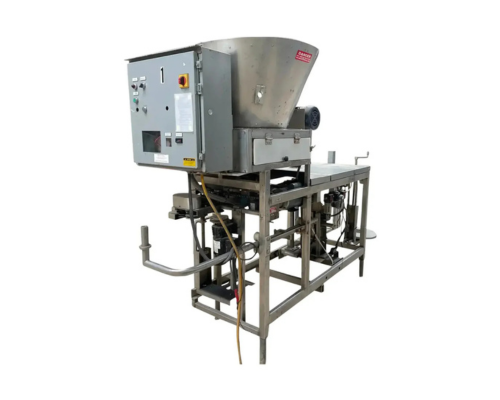
Image from Genemco
Link to Blanchers & Heat Tunnels
What Is a Heat Tunnel?
A heat tunnel is a continuous processing system that moves a product through an enclosed, controlled heating environment.
Depending on the application, heat tunnels can be used for processes such as cooking, baking, drying, warming, curing, pasteurizing, or setting a product. The equipment can be configured around the product and the specific thermal process required.
Some heat tunnels use gas, steam, electric heat, hot air, or other methods to transfer heat to the product.
The conveyor carries the product through the tunnel while temperature, airflow, belt speed, and residence time are controlled to achieve the desired result.
Genemco's inventory, for example, has included stainless-steel tunnel ovens, gas-fired tunnel ovens, steam tunnels, warming tunnels, pasteurizing equipment, and cooling/process tunnels.
That variety is important because "heat tunnel" doesn't describe just one machine. It's more of a category of continuous thermal processing equipment.
Blancher vs. Heat Tunnel: What's the Difference?
The easiest way to think about the difference is this:
A blancher is generally designed around a specific short-duration heat treatment, while a heat tunnel is a broader piece of continuous thermal-processing equipment that can perform a variety of heating-related processes.
| Industrial Blancher | Heat Tunnel | |
|---|---|---|
| Primary purpose | Controlled blanching/pre-treatment | Heating, cooking, drying, pasteurizing, warming, curing, etc. |
| Common products | Fruits and vegetables | Food products, packaged foods, prepared foods and other products requiring controlled heating |
| Heating methods | Commonly hot water or steam | Steam, gas, electric, hot air and other methods |
| Product handling | Often continuous | Typically continuous |
| Main focus | Specific thermal treatment and residence time | Controlled heating environment and thermal process |
| Typical downstream process | Freezing, drying, canning or further processing | Packaging, cooling, drying, cooking, pasteurization or other processing |
There can certainly be overlap. Some equipment may be marketed or configured differently depending on the application, and a processor may use similar conveyor-based technology for very different purposes.
The key is not simply finding a machine labeled "blancher" or "heat tunnel."
It's finding a machine that fits the actual process.
What Industries Use Industrial Blanchers?
Blanchers are particularly common in food processing applications where raw products need a controlled thermal pre-treatment.
Fruit & Vegetable Processing
This is one of the most recognizable applications for blanching.
Vegetables such as peas, green beans, carrots, corn, broccoli, potatoes, and other produce may be blanched before being frozen, canned, dried, or incorporated into prepared foods.
Blanching can help stabilize the product and maintain characteristics such as color, texture, and flavor during subsequent processing and storage.
Frozen Food Processing
Blanching is frequently part of the front end of frozen vegetable production.
The product may be blanched, cooled, and then sent into additional processing and freezing equipment. The thermal treatment becomes one piece of a much larger continuous production line.
Canning & Shelf-Stable Food Production
Processors producing canned vegetables and other shelf-stable products can use blanching as part of their preparation process before additional cooking, filling, or preservation steps.
Prepared Foods
Blanchers can also be found in facilities producing prepared meals and other processed foods where vegetables or other ingredients need to be thermally treated before becoming part of the finished product.
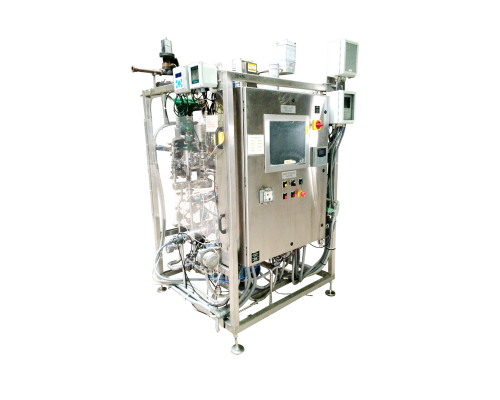
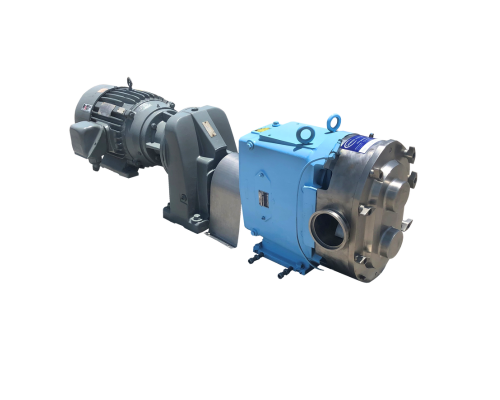
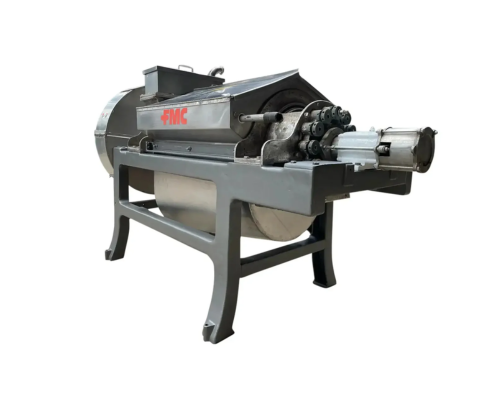
Image from Genemco
Link to Blanchers & Heat Tunnels
What Industries Use Heat Tunnels?
Heat tunnels have a broader range of applications because they aren't limited to the blanching process.
They can be found throughout the food and beverage processing industry, including:
- Prepared foods
- Frozen foods
- Fruit and vegetable processing
- Bakery and snack production
- Meat and protein processing
- Beverage and packaging applications
- Canning and shelf-stable foods
- Sauce and condiment production
- Food ingredients and specialty processing
Depending on the design, a tunnel may be used to heat, cook, dry, warm, pasteurize, or otherwise thermally process a product.
And just as importantly, tunnels can be integrated into larger production lines with conveyors, fillers, coolers, freezers, packaging equipment, and other processing systems.
Why Does Used Equipment Make Sense for These Applications?
Here's where the conversation gets practical.
In a perfect world, every production project would move according to schedule. A new piece of equipment would be ordered, manufactured, delivered, installed, commissioned, and running exactly when the plant needed it.
But anyone who's worked in industrial refrigeration or food processing knows that's not always how it goes.
Equipment can have long lead times. Projects get accelerated. Production demands change. Existing equipment fails. A customer needs additional capacity sooner than expected.
And production doesn't necessarily stop just because the new equipment isn't ready yet.
That's one reason pre-owned industrial equipment can be worth considering.
Genemco specializes in used industrial refrigeration and food processing equipment, with more than 35 years in the industry and more than 10,000 customers served globally since 1989. Its inventory has included blanchers, cookers, tunnel ovens, pasteurizing tunnels, cooling tunnels, and other food processing equipment.
A used blancher or heat tunnel may provide a way to bridge a production gap, add temporary capacity, or keep a facility moving while a long-term solution is being manufactured.
It's not always about replacing new equipment.
Sometimes it's about buying time.
OEMs: We Don't Want to Take Your Sale
This is an important part of the conversation.
If you're an OEM and you've just sold your customer a new blancher, heat tunnel, processing system, or other piece of equipment, we don't want to take that sale away from you.
We want to help you make the sale work.
Think about the situation from your customer's perspective.
You've recommended the right new equipment. They've approved the project. The order is moving forward.
But there's one problem:
The equipment has a long lead time.
Meanwhile, their existing machine is struggling—or they've already lost production capacity.
They still have employees to keep busy.
They still have customers waiting on product.
They still have orders to fill.
And they still have a plant that needs to run.
That's where Genemco can potentially help.
Think of us as the bandaid—or, when the situation is serious enough, the tourniquet.
We're not trying to replace the permanent solution you've sold your customer. We're trying to help keep the operation running until that solution arrives.
You make the sale. You remain the hero. We help bridge the gap.
Your customer gets a way to keep production moving, and you get to continue delivering the long-term solution you originally recommended.
Once the new equipment arrives, the temporary equipment can be removed and the customer can move forward with the permanent solution.
That's not competition.
That's partnership.
Why Consider Genemco for a Blancher or Heat Tunnel?
When you're looking for used food processing equipment, the goal isn't simply to find something that looks similar to the machine you need.
You need to find equipment that makes sense for the application.
That means looking at things like:
- Product type
- Required capacity
- Belt or conveying configuration
- Heating method
- Temperature requirements
- Residence time
- Product dimensions
- Stainless-steel construction
- Available footprint
- Electrical and utility requirements
- Integration with the existing production line
That's where experience matters.
Genemco has been buying, selling, and supporting used industrial refrigeration and food processing equipment since 1989. Its inventory includes equipment across both sides of the process—from thermal processing equipment to refrigeration and cooling equipment used later in the production cycle.
And because inventory is already in existence, a used piece of equipment can sometimes be available much sooner than a newly manufactured machine.
Instead of asking, "How long until the new machine is built?" you can ask, "What is available now that can help us keep moving?"
Keep the Line Moving
In food processing, downtime doesn't wait for a purchase order.
A plant may have the perfect long-term equipment solution on the way, but that doesn't necessarily solve today's production problem.
Whether you're a processor looking for a replacement, an engineer trying to keep a project on schedule, or an OEM looking for a way to support your customer through a long equipment lead time, a used blancher or heat tunnel may be worth considering.
Sometimes the best solution isn't choosing between new equipment or used equipment.
It's using both strategically.
The new equipment is the long-term answer.
The used equipment helps keep things moving until you get there.
And when your customer needs that kind of bridge, Genemco is here to help keep the operation in motion.


