

Walk into a bakery or snack-food plant and you'll quickly realize that making something look simple on the grocery-store shelf can be anything but simple behind the scenes.
A cracker that looks like a cracker. A cookie that looks like a cookie. A baked snack that seems like it should be easy to make.
But at an industrial scale, getting the same color, texture, moisture level, and finish across thousands—or millions—of pieces takes a carefully controlled process.
That's where industrial heat tunnels can come into play.
Heat tunnels provide a controlled environment for heating, baking, drying, warming, curing, setting, or other thermal-processing applications. Depending on the equipment and product, they can be incorporated into continuous production lines where product moves through the tunnel at a controlled rate.
For bakeries and snack manufacturers, that ability to apply consistent heat over a defined period can be an important part of producing a product that customers recognize every time they open the package.
Where Do Heat Tunnels Fit Into Bakery Production?
Industrial bakeries produce a huge variety of products, and not every product needs the same thermal process.
Cookies may need a carefully controlled bake to develop the right color and texture. Crackers may require baking and moisture removal. Bread products need the right combination of heat and residence time to achieve the desired internal structure and exterior finish.
Heat tunnels can also be used for applications beyond traditional baking.
Depending on the process, tunnel equipment may be used for:
- Baking
- Drying
- Toasting
- Warming
- Setting
- Curing
- Pasteurizing
- Moisture removal
- Finishing or conditioning products
The tunnel may be the primary cooking system, or it may be one step within a larger automated production line.
Either way, the objective is generally the same: apply controlled heat consistently as product moves through production.
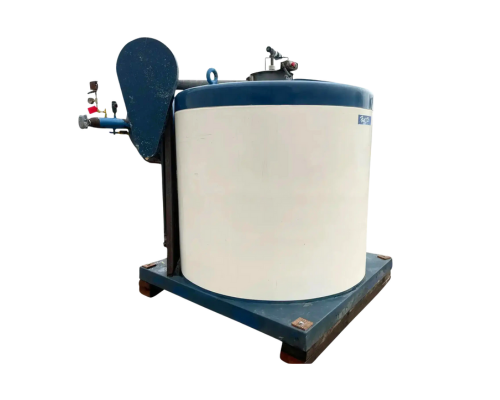
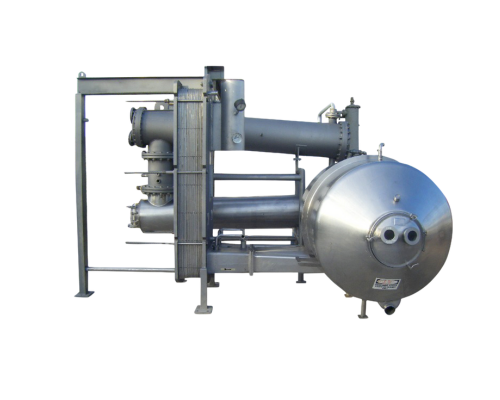
Image from Genemco
Link to Blanchers & Heat Tunnels
Why Consistency Is Everything in Baking
At home, putting a tray of cookies in the oven for an extra minute probably isn't a crisis.
In an industrial bakery, it can be a different story.
A small change in temperature, conveyor speed, airflow, or residence time can affect the finished product. It can change color. It can change moisture. It can change texture. And when that difference is multiplied across thousands of pieces, it can become a pretty expensive problem.
That is why industrial tunnel systems are designed around controlled processing conditions.
Rather than relying on someone to open an oven door and check whether a batch “looks about right,” a continuous tunnel can be engineered around specific production requirements.
The product enters.
It travels through the designated thermal zones.
And it exits having gone through a repeatable process.
That's the kind of consistency industrial food production is built around.
Heat Tunnels in Snack Food Production
Snack manufacturing presents many of the same challenges.
Think about crackers, baked chips, pretzels, snack mixes, tortilla products, cereal-based snacks, and other baked or dried foods.
Many of these products depend on controlling moisture and heat to achieve their final characteristics.
A product that's too moist may not have the desired crispness or shelf stability. Too much heat can affect color, flavor, texture, or yield.
A properly configured heat tunnel can provide the controlled thermal environment needed to achieve the desired result while keeping product moving continuously through the line.
For a snack manufacturer, that can mean more than simply getting the product cooked.
It can mean getting the same product out of the line over and over again.
It's About More Than Just Temperature
When people hear “heat tunnel,” it's easy to think the main question is simply, “How hot does it get?”
In reality, industrial thermal processing is more complicated than that.
Temperature is important, but so are:
- Residence time
- Conveyor speed
- Airflow
- Heating method
- Number of temperature zones
- Product thickness
- Product moisture
- Production rate
- Belt width
- Heat distribution
- Controls and instrumentation
Two products might both be baked at a similar temperature but require completely different processing conditions.
That's why choosing a tunnel based solely on its maximum temperature isn't enough.
The equipment needs to make sense for the product.
When a Heat Tunnel Becomes a Production Bottleneck
Here's another thing that tends to become obvious pretty quickly in a food plant:
Every piece of equipment has to keep up with the rest of the line.
If the mixer can produce more product than the oven can handle, the oven becomes the bottleneck.
If the oven can process more than the packaging line can handle, the problem simply moves downstream.
And if the tunnel goes down completely, everything can come to a stop.
That's why having the right thermal-processing capacity matters.
A heat tunnel may be a critical part of maintaining production throughput, especially for facilities running continuous, high-volume operations.
Choosing a Used Heat Tunnel for Bakery or Snack Production
When you're looking at used equipment, it's tempting to start with the price.
But the better place to start is the application.
A used heat tunnel should be evaluated based on factors such as:
- What product will be processed?
- What is the desired bake or thermal profile?
- What production rate is required?
- What belt width is needed?
- What conveyor speed is available?
- How many heating zones are required?
- What heating source does the tunnel use?
- What utilities are available at the facility?
- What controls are included?
- How much floor space is available?
- How will it integrate with the existing production line?
The cheapest tunnel isn't necessarily the best deal if it doesn't fit the process.
The right used tunnel can be a much better investment when it matches the production requirements and can be incorporated into the existing operation.
Why Consider Genemco for Used Heat-Tunnel Equipment?
New equipment certainly has its place.
But sometimes a bakery or snack manufacturer needs equipment on a timeline that doesn't line up with a new-equipment lead time.
Maybe production has increased.
Maybe a facility is adding a new product.
Maybe an existing tunnel needs to be replaced.
Or maybe something went down on a Tuesday afternoon and suddenly everyone in the plant is very interested in what equipment is available right now.
That's where used equipment can offer a practical alternative.
Genemco has been serving the industrial refrigeration and food processing industries since 1989. Our inventory includes used food-processing equipment and various tunnel systems, and inventory changes regularly as equipment comes in and sells. (genemco.com)
One of the biggest advantages is simple: used equipment already exists.
Instead of waiting for a new machine to be manufactured, a used heat tunnel may already be available and ready to be evaluated for your application.
For a manufacturer trying to maintain production, that can turn a long wait into a much more manageable situation.
And Genemco understands that buying used isn't simply about finding an old machine and putting it on a truck. The equipment still needs to make sense for the application, production requirements, and existing system.
OEMs: We Want to Help You Deliver on Your Promise
If you're an OEM, we know something important about your business:
Your customer isn't just buying a machine.
They're buying your expertise, your solution, and your confidence that you can help them get where they need to go.
That's why we're not looking to take a sale away from you.
If you've sold your customer a new oven, heat tunnel, processing system, or other piece of equipment, we want you to keep that sale.
What happens when the customer asks, “How soon can we get it?”
And the answer isn't as soon as they'd like?
That's where things can get uncomfortable.
The customer still has production to run. Orders still need to go out. Employees still need equipment to work with. And the new equipment is still working its way through the manufacturing and delivery process.
Instead of leaving your customer with two choices—wait or struggle—you can give them another option.
Call Genemco.
A quality used heat tunnel may be able to help keep their operation running while their new equipment is being built.
It may not be their forever machine.
That's okay.
Think of it as the equipment equivalent of a bandaid or a tourniquet—something that helps stabilize the situation until the long-term solution arrives.
And there's an important difference here:
We're not trying to become the customer's new OEM.
We're helping you keep your customer producing until you can deliver the equipment you've already sold them.
That's good for the customer.
It's good for you.
And it can turn a frustrating lead-time conversation into a solution-oriented one.
You don't have to have the equipment sitting on their floor today to still be the person who helped them solve today's problem.
We're happy to help with the in-between.
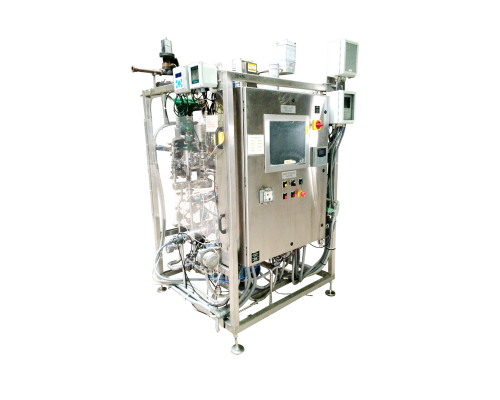
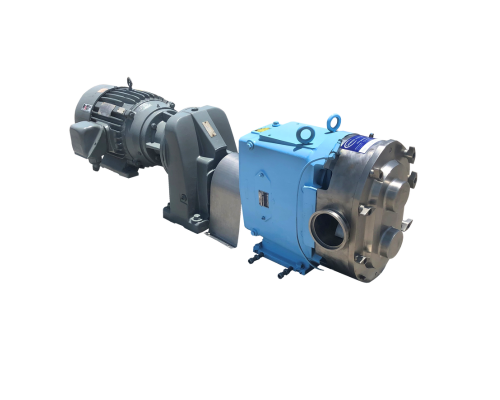
Image from Genemco
Link to Blanchers & Heat Tunnels
Keep the Production Line Baking
Bakery and snack production depends on repeatability.
The same product needs to come off the line with the same characteristics whether it's Monday morning or Friday afternoon. Industrial heat tunnels can help manufacturers maintain the controlled thermal conditions needed to make that possible.
And when a new tunnel isn't available on the timeline the production floor demands, used equipment can provide another path forward.
At Genemco, we're here to help manufacturers find quality used equipment that fits the application and helps keep production moving.
Because sometimes the long-term plan is already in motion.
You just need something to keep the oven warm while you wait for it to arrive.


