

Not every food product coming off a production line is something you'll find on a grocery store shelf.
Some products are ingredients.
They're the sauces, fillings, prepared components, concentrates, vegetable blends, fruit preparations, cooked ingredients, and specialty products that eventually become part of something else.
And while the end consumer may never see the processing equipment behind them, the same thing still matters: consistency, quality, and a process that works day after day.
Industrial heat tunnels can play an important role in making that happen.
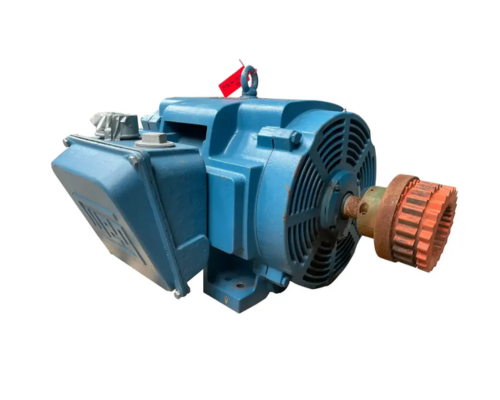
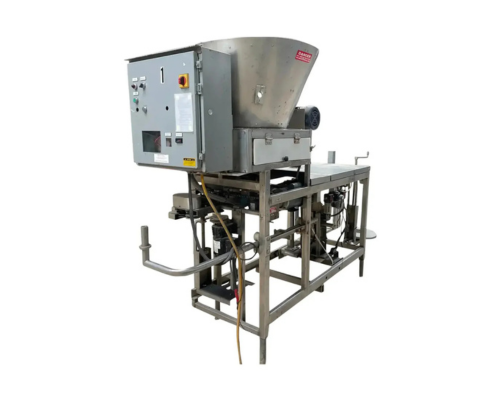
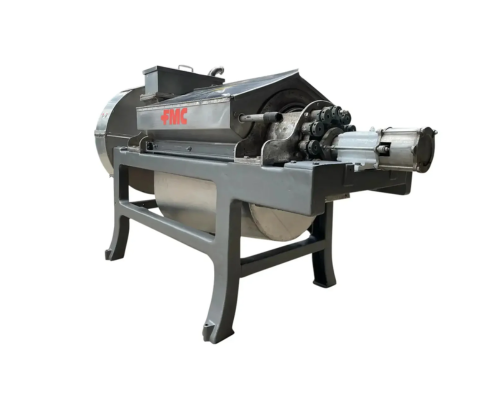
Image from Genemco
Link to Blanchers & Heat Tunnels
Where Heat Tunnels Fit Into Ingredient Processing
Food ingredient and specialty processing covers a wide range of products, which means heat tunnels can have a wide range of applications.
Depending on the product and process, a heat tunnel may be used for heating, cooking, warming, pasteurizing, drying, setting, or cooling.
A food ingredient may need to be thermally treated before it is blended with other ingredients. A prepared component may need to be heated to a specific temperature before packaging. A product may need controlled cooling after a heating step. Another application may require drying or setting before the ingredient moves to the next stage of production.
The specific process varies, but the objective is often the same:
Control the process. Keep it consistent. Keep production moving.
And when you're producing ingredients at commercial scale, "close enough" usually isn't good enough.
From Basic Ingredients to Specialty Products
Heat tunnels can support the production of a surprisingly broad range of food ingredients and specialty products.
Applications can include:
- Fruit and vegetable preparations
- Purees and fruit fillings
- Vegetable blends
- Cooked vegetable ingredients
- Sauces and bases used in other food products
- Soup and stew components
- Gravies and prepared fillings
- Bakery fillings and toppings
- Specialty prepared foods
- Ready-to-use ingredients
- Cooked or thermally treated meat and protein ingredients
- Products destined for further processing or packaging
The equipment may look different depending on the application, but the need for controlled thermal processing remains a common thread.
Why Thermal Control Matters
When you're producing an ingredient that will eventually become part of another product, consistency becomes even more important.
A manufacturer may be supplying the same ingredient to multiple customers—or sending that ingredient into several different production lines. If the characteristics of the ingredient change from batch to batch, those changes can follow it all the way downstream.
Heat can affect things like:
- Texture
- Viscosity
- Color
- Moisture
- Flavor
- Product stability
- Microbial control
- Overall product quality
That's why heat tunnels are designed around controlled conditions rather than simply "getting the product hot."
Temperature, residence time, conveyor speed, airflow, heating method, and other process variables may all need to work together.
For a specialty processor, that control can be the difference between a process that runs smoothly and one that requires constant adjustments.
Heat Tunnels Can Help Connect the Steps
Food ingredient processing is rarely just one machine doing one job.
A product might be washed, cut, blended, heated, cooled, mixed, filled, packaged, frozen, or sent to another processing facility—all as part of a much larger production chain.
A heat tunnel can serve as a transition point within that chain.
For example, a thermal treatment may prepare an ingredient for the next step, while a cooling tunnel can bring product temperatures down afterward. In other applications, a warming or heating tunnel may help prepare a packaged ingredient for labeling, secondary packaging, or further handling.
The important thing is how the equipment fits into the entire process, not just what the nameplate says.
That's especially important when considering used equipment.
Choosing a Used Heat Tunnel for Food Ingredients
There isn't one universal heat tunnel for food ingredient processing.
The right equipment depends on the application.
Before purchasing, processors should consider:
What is the product?
Different ingredients respond differently to heat. Product characteristics, viscosity, moisture content, particle size, and packaging can all affect the process.
What does the thermal process need to accomplish?
Is the goal cooking, pasteurization, warming, drying, setting, or something else?
How much product needs to go through the tunnel?
Production rate and desired throughput help determine the appropriate conveyor and tunnel configuration.
What heating method is required?
Hot water, steam, heated air, and other methods may be appropriate depending on the application.
What happens next?
Cooling, freezing, mixing, filling, packaging, or another processing step may follow the heat tunnel.
How does it fit the existing line?
Footprint, conveyor configuration, controls, utilities, and connection points all matter.
Finding a machine that physically fits in the building is one thing.
Finding one that fits the process is another.
Why Choose Genemco for Used Food Processing Equipment?
When a processor needs equipment, timing can be just as important as price.
New equipment can be an excellent long-term investment, but manufacturing schedules and lead times don't always cooperate with production schedules.
That's one reason used equipment can be worth considering.
At Genemco, we've been in the used industrial equipment business since 1989. Our inventory includes a variety of food processing equipment, including heat tunnels and related thermal-processing equipment.
Because the equipment is already manufactured, used equipment can sometimes provide an option when a facility needs capacity or a replacement sooner than a new machine can be delivered.
And there's another advantage to working with a company that has been around the industry for decades: you're not just buying a piece of equipment.
You're working with people who understand that the machine has to make sense for the application.
Whether you're adding capacity, replacing equipment, dealing with an unexpected failure, or looking for a temporary solution while new equipment is being built, Genemco can help you explore what's available.
OEMs: Let Us Help You Keep the Customer Moving
If you're an OEM, we know what you don't want to hear:
"Your customer bought from you, but Genemco sold them something instead."
That's not the relationship we're looking for.
We don't want to take your sale.
We want to help you protect it.
Sometimes you've already sold the customer the right long-term equipment. The drawings are done. The order is placed. Everyone is moving forward.
The only problem?
They need something now.
Maybe a piece of existing equipment failed. Maybe demand increased unexpectedly. Maybe the new system has a long manufacturing lead time.
That's where Genemco can be useful.
Think of us as the bandaid or tourniquet that helps keep the operation going while you deliver the permanent solution.
You stay focused on building and delivering the equipment you've sold. Your customer gets a potential way to keep producing while they wait.
And most importantly, you remain the hero.
We're not trying to replace the equipment you're selling. We're helping fill the gap between the customer's immediate need and the long-term solution you've already provided.
Sometimes being the hero isn't about having the equipment available tomorrow.
It's about helping your customer find a way to make it through until tomorrow gets here.
That's where we can help.
Image from Genemco
Link to Blanchers & Heat Tunnels
Keep the Ingredients—and the Operation—Moving
Food ingredients and specialty products may be one step removed from the finished product, but they are still critical to the food supply chain.
When a thermal-processing step needs to be consistent, reliable, and integrated into a larger production process, an industrial heat tunnel can be an important part of the equation.
And when the right equipment is needed sooner than a new machine can be built, quality used equipment can provide another path forward.
At Genemco, we understand that sometimes the biggest challenge isn't figuring out what equipment you need.
It's figuring out how to keep producing while you're waiting for it.
That's where our experience, inventory, and industry knowledge can help keep your operation moving.


